
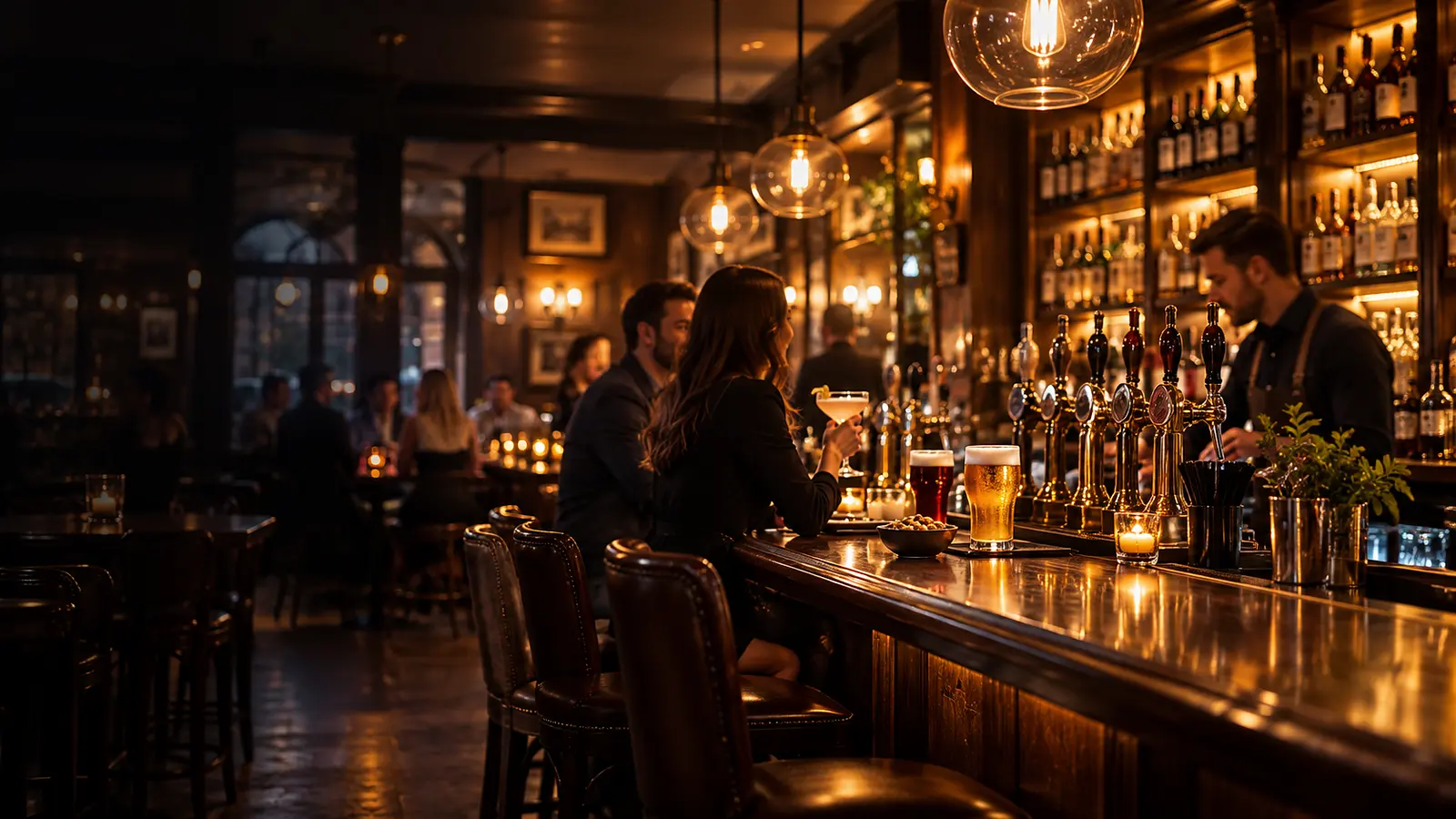
19 hospitality venues close a week. Can a pub or restaurant still get a loan?
Britain lost 977 pubs, bars and restaurants in a year to September 2026. How lenders see hospitality now and how to fund the quiet months.
In this guide
- How many hospitality venues are closing in 2026?
- Why are pubs and restaurants closing?
- Do lenders see hospitality as high risk?
- How can a restaurant or pub fund the quiet months after Christmas?
- What help is coming for hospitality from April 2027?
- Is now a good time to buy a pub or restaurant?
- Which hospitality businesses can get finance?
- What do the closure figures mean for your funding?
Britain lost 977 licensed hospitality venues in the year to September 2026, almost 19 a week, according to the NIQ Hospitality Market Monitor published on 30 October. With Christmas trading weeks away and the quiet months of January and February to follow, many pub, restaurant and bar owners are asking the same thing. Will a lender still back a hospitality business when venues are closing? The short answer is yes, if your trading supports it. Here is what the figures show, how lenders look at hospitality now, and the funding that helps venues get through the winter. Smart Funding Solutions is a broker, not a lender. We compare whole of market options and arrange business finance from £10,000 to £20 million.
How many hospitality venues are closing in 2026?
The Market Monitor from CGA by NIQ tracks the number of licensed venues in Britain. These are the headline figures for the third quarter of 2026.
- Total venues. 98,319 licensed premises at the end of September, down 1.0% on a year earlier.
- Net closures. 977 over twelve months, or almost 19 a week.
- The last quarter. 245 fewer sites than in June. In those three months 2,436 venues closed and 2,191 opened, often in the same premises.
- Casual dining. Down 2.2% on the year and 23.4% smaller than at the start of 2020.
- Hotels and parks. Licensed hotels rose 0.2% over the year, and holiday and caravan parks rose 0.7%.
Karl Chessell of CGA by NIQ told the Morning Advertiser that "net closures of nearly 1,000 licensed premises in the last 12 months highlight the pile-up of challenges facing hospitality." Our earlier hospitality news report covered the pub closure figures and what the trade asked for before the Budget.
Why are pubs and restaurants closing?
Costs, mostly. NIQ says sales growth at managed hospitality groups has been below inflation for 16 months in a row, so takings that look steady are worth less each month. Consumer price inflation was 3.5% in September, as our inflation report explains, and food, energy and wages all sit near the top of a venue's cost list.
Wages rise again next spring. The government confirmed on 28 October that the National Living Wage goes up to £13.21 an hour from April 2027, a 3.9% rise, with the rate for 18 to 20 year olds rising to £11.27. For a venue with a large part-time team that is a real increase in the monthly payroll.
Borrowing costs may also move. The Bank of England announces its next decision on Thursday 5 November, and our post on what a rise to 4% means for business loans shows which facilities would cost more. Even so, NIQ's survey with Zonal found 37% of sector leaders optimistic about the next twelve months, so not everyone is cutting back.
Do lenders see hospitality as high risk?
Some do, and closure headlines do not help. But lenders do not decide on the sector average. They look at your own trading, and a venue with steady card takings, sensible rent and an owner who knows the numbers is still a business they want to fund. Being honest about a quiet month, with a plan for it, counts for more than a perfect set of accounts.
- Bank statements and card takings. Most lenders read the last three to six months of statements first. Our guide to how lenders assess applications explains what they look for.
- Accounts and forecasts. Have your latest accounts, management figures and a simple cash flow forecast ready. Check the full list of documents lenders ask for.
- Credit history. A missed payment is not the end, and bad credit business loans exist for owners with a mark on their file.
- Losses. A loss in one year can still be funded where trading has turned, see loss making business finance.
How can a restaurant or pub fund the quiet months after Christmas?
December is the busiest month for most venues, then January and February can bring a VAT bill, rent and lower takings at the same time. The right funding depends on how you get paid and what the gap is for.
- Card takings. A restaurant merchant cash advance is repaid as a share of card sales, so you pay back less in a quiet week. Read how a merchant cash advance works and try the MCA calculator.
- Short gaps. Working capital loans and short-term business loans cover stock, staff and rent for a few months.
- Repeat gaps. A revolving credit facility lets you draw in the quiet weeks and repay when trade picks up. Our seasonal business finance guide compares the options.
- Tax bills. Restaurant VAT funding spreads a VAT quarter over several months, and VAT loans work the same way for pubs and hotels. If HMRC is already chasing, compare Time to Pay and a tax loan.
The business loan calculator shows what a monthly repayment would look like before you apply.
What help is coming for hospitality from April 2027?
The Budget on 28 October set out a business rates package for England, detailed in the government's information letter to councils. It starts on 1 April 2027.
- Small Business Rate Relief. For retail, hospitality and leisure properties, full relief now reaches a rateable value of £18,000, up from £12,000, with tapered relief up to £21,000. Our post on the £18,000 rates threshold explains who qualifies.
- Pubs. Pubs, social clubs and most live music venues get an extra 20% relief, taking it from 15% to 35% for the 2027 to 2028 and 2028 to 2029 rates years.
- Bills capped. Eligible retail, hospitality, leisure and pub bills are capped by inflation for two years, until 31 March 2029.
Our Budget 2026 summary covers the other measures. Lower rates bills help, but they arrive after this winter, so many venues still need funding in place for January.
Is now a good time to buy a pub or restaurant?
For some buyers, yes. The figures show venues changing hands as well as closing, with 2,191 openings in three months, often in premises another operator has left. A site with a working kitchen, a licence and a fair lease can cost far less to open than a bare unit.
- Buying a restaurant or takeaway explains what lenders want to see on a purchase.
- Pub mortgages fund a freehold pub, and our guide on buying and funding a pub covers leaseholds and tenancies.
- Commercial mortgages fund freehold premises, and the loan to buy a business calculator shows what you could borrow.
- Fit out and refurbishment finance covers the work to reopen a tired site, and kitchen equipment finance spreads the cost of new kit.
Which hospitality businesses can get finance?
Lenders fund most of the trade, from a single café to a group of pubs. Our sector pages explain what lenders look for in each.
- Restaurant loans
- Bar and pub loans
- Hospitality business loans
- Hotel funding
- Café and coffee shop loans
- Takeaway business loans
What do the closure figures mean for your funding?
Closures make some lenders more careful, but they still fund venues with sound trading, and a broker knows which ones are active in hospitality right now. The best time to arrange funding for the quiet months is before Christmas, while your December takings are still to come, not in February when the VAT bill lands. If you need it, do it now, and compare the total you repay, not just the monthly figure.
Check how much you could borrow with our borrowing guide, then get your Instant Quotes to see your lender matches instantly, with no credit check. A broker then searches the wider market for you. Read how Instant Quotes work if you are new to it. Lenders make every decision, and all finance is subject to status.
This guide is general information, not financial advice. Lenders set their own criteria, rates and terms, and all finance is subject to status.
The weekly newsletter
Get articles like this by email
Our new articles on lending, rates and tax, and what each one means if you plan to borrow.
- New articles every Friday
- What the news means for borrowing
- Unsubscribe in one click
Want to talk your situation through?
Not ready for the full application? Leave a few details and a broker will call you to talk it through. There's no obligation.
- One short conversation, no paperwork yet
- Whole-of-market search across the whole market
- Or call us on 01244 267694
Common questions
How many pubs and restaurants closed in 2026?
The NIQ Hospitality Market Monitor found 977 net closures of licensed venues in the twelve months to September 2026, almost 19 a week, leaving 98,319 licensed premises in Britain.
Why are so many hospitality businesses closing?
Rising costs are the main reason. Sales growth at managed groups has been below inflation for 16 months, and food, energy and wage bills keep rising, with the National Living Wage going up to £13.21 an hour in April 2027.
Can I get a business loan for a pub or restaurant?
Yes. Lenders look at your own trading, bank statements and card takings rather than the sector headlines. Restaurant loans and bar and pub loans explain the options.
Do lenders see hospitality as high risk?
Some lenders treat it with more care, but many are active in hospitality. A clear cash flow forecast, steady card takings and up to date accounts improve your chances, and a broker can point you to lenders who fund venues like yours.
How do restaurants fund the quiet months after Christmas?
Common options are a merchant cash advance repaid from card takings, a working capital loan, a revolving credit facility and VAT funding to spread the January VAT bill.
What business rates help is there for hospitality from April 2027?
From 1 April 2027 full Small Business Rate Relief for retail, hospitality and leisure properties in England reaches a rateable value of £18,000, pubs get relief of 35%, and eligible bills are capped by inflation until March 2029, according to the government letter.
Is it a good time to buy a pub or restaurant?
It can be. Many venues reopen under new owners, often in premises that already have a kitchen and licence. Lenders will want to see the trading history, the lease and your experience, see buying a restaurant.
Our clients say
Trusted by UK businesses across every sector.
“Simon was fast, kept us updated at all stages and was a real pleasure to work with on our asset finance. I highly recommend this company: excellent service all round.”
“Spoke with Simon, who managed to get me the loan I needed promptly. The whole process was very smooth and was completed within a few days.”
“Getting a business loan can feel like a bit of a minefield, but everything was broken down for me in great detail. Will use again in the future!”
“Simon was a pleasure to deal with and helped us find a business loan that matched our growth goals and future expansion plans.”
“I couldn’t source funding for my business, but the team got in touch within an hour and had it sorted within 24 hours. Fantastic service, and I would definitely use them again.”
UK lenders
Need help applying this to your business?
A short conversation is often enough to know which lenders will look at your case and how to present it. There is no obligation.