
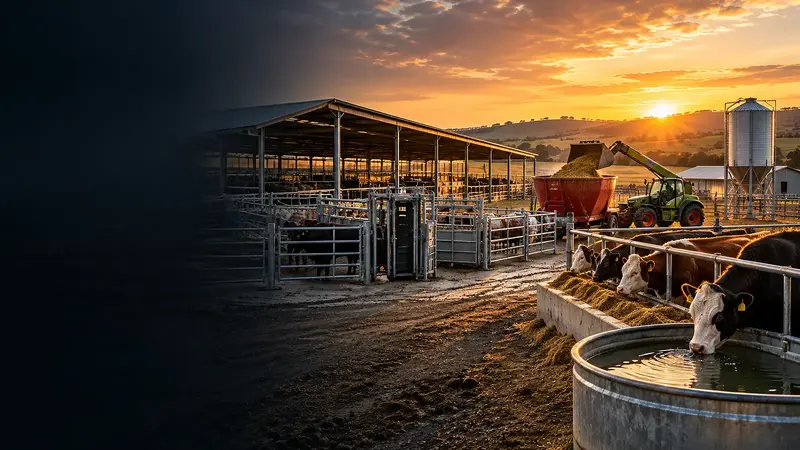
Livestock finance for cattle, dairy and sheep farms
Buying stock ties up cash for months before it earns: heifers take time to come into milk, and store cattle or lambs need a finishing period before sale.…
Finance for farm machinery, livestock, buildings, land and seasonal inputs, with repayment profiles that can follow harvest and sale income. See your options.
Explore funding options Prefer a quick call back? Leave your number
“He is fair and always gives advice that is in the best interest of his clients.”
In short
What you need to know.
Lenders look for a cash flow forecast that shows the farm's seasonal pattern, plus accounts, tenure, existing borrowing and security.
A transaction we arranged
£25,000
£25,000. A farm shop, funded by a lender that understands rural business.
Seasonal food stock, supplier payments and refrigeration/equipment spend.
Read the transactionAbout agricultural finance
Specialist knowledge. Better outcomes.
It is for arable, livestock, dairy, mixed and contracting businesses that need to buy equipment or stock, improve buildings or carry input costs until crops and animals are sold. Smart Funding Solutions is a broker, not a lender; we search our panel of 300+ lenders, including agricultural specialists, for finance that fits your farm's cash flow.
Each option suits a different need. Start with the one closest to yours; we will compare the rest for you.
Buying stock ties up cash for months before it earns: heifers take time to come into milk, and store cattle or lambs need a finishing period before sale.…
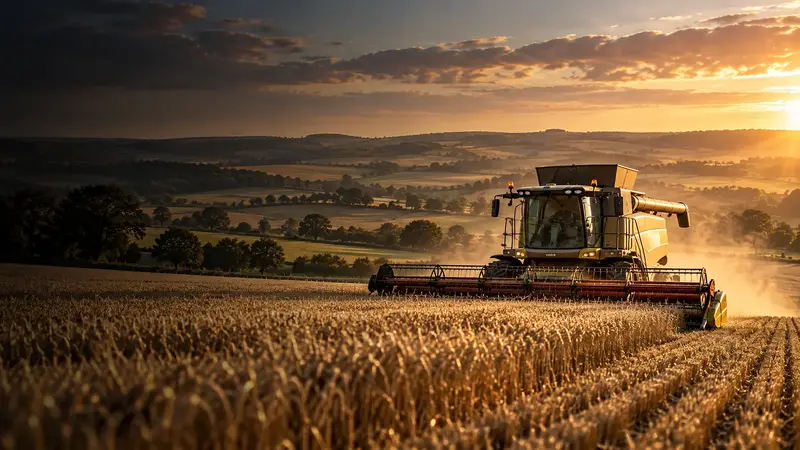
Most farms buy a combine on hire purchase, often with a balloon to reduce instalments, because they keep the machine for years and may claim capital…
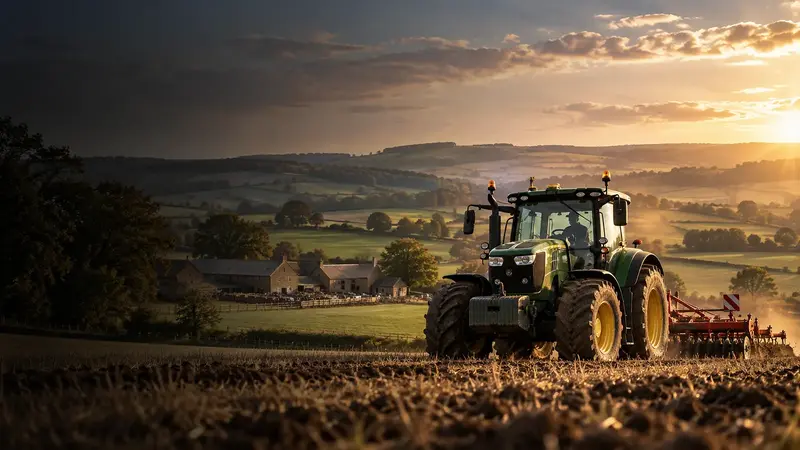
Count the hours. A tractor that will work most of the year is usually best bought on hire purchase, so the farm owns it at the end. Leasing or…
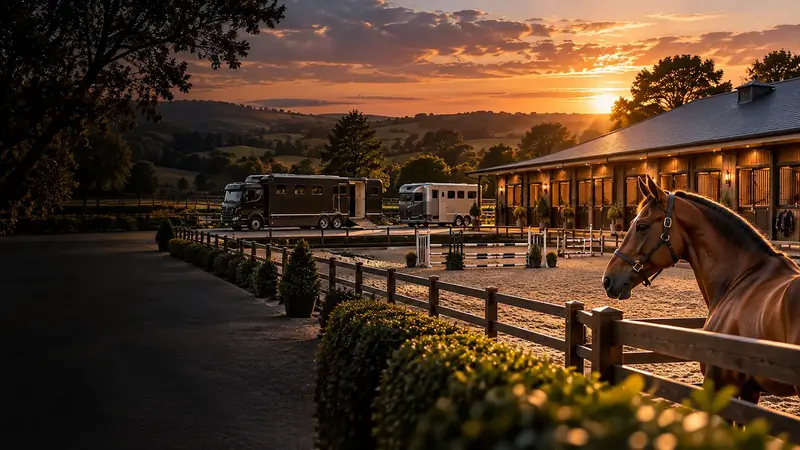
Farm diversification finance for new enterprises on the holding
Agricultural equipment finance for a whole farm machinery fleet

Forestry finance for woodland owners, contractors and sawmills

Horticulture finance for nurseries, glasshouse and fruit growers
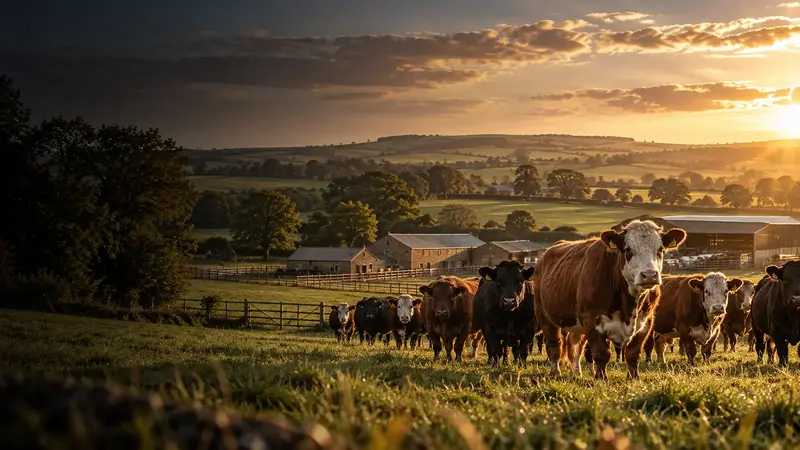
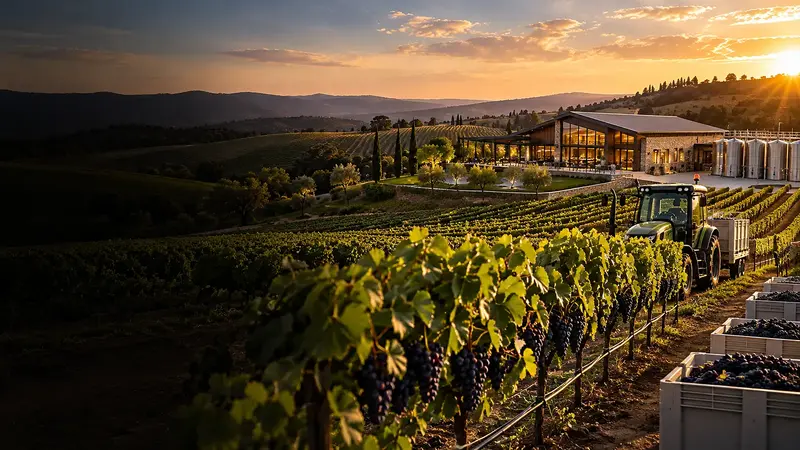

Equestrian finance for livery yards, riding schools and horse businesses
A new shed, grain store or livestock building is usually funded with a term loan secured on land, an agricultural mortgage or, for some prefabricated and modular buildings, asset finance. Smart Funding Solutions is a whole-of-market commercial finance broker, so we search both agricultural specialists and mainstream business lenders and match the repayments to when your farm actually earns.
Not always. In England, Part 6 of Schedule 2 to the General Permitted Development Order allows some agricultural buildings on units of 5 hectares or more without a full planning application, where the building is reasonably necessary for agriculture on that unit and stays within limits on floor area, height and distance from trunk and classified roads. Before you build, you apply to the local planning authority to decide whether prior approval is needed for the siting, design and external appearance, and work cannot start until that is settled. Smaller holdings have narrower rights, livestock buildings and slurry stores close to homes and other occupied buildings are excluded, and Wales, Scotland and Northern Ireland have their own rules.
Lenders typically want the prior approval decision or planning consent before they release funds, so get it in hand while you gather quotes.
A steel portal frame shed that will stand for decades often suits a longer secured loan, while a modular building or a building that comes with handling equipment may suit asset finance. Farms with existing borrowing can look at farm refinance to bring it together, and livestock keepers at livestock finance for the animals that will fill the new housing. Instant Quotes shows which lenders on our panel may suit your farm, with no credit search.
Asset finance is the most common way farms fund machinery. With hire purchase you pay fixed instalments and own the equipment at the end; with leasing you use it for a set period without owning it, which suits equipment you replace regularly. Some agricultural lenders offer seasonal or annual repayment profiles, so larger payments fall when income arrives after harvest or sale. Used equipment can often be financed as well.
Buying cattle, sheep or other stock ties up a lot of capital, particularly for high-genetic-merit animals. Some specialist lenders may consider funding livestock, subject to their criteria, which spreads the cost so a herd can be expanded or replaced without draining working capital. Where they do not, a working capital facility or a loan secured on other assets may be used instead.
Farm cash flow is lumpy: costs come months before income. A revolving credit facility or agricultural overdraft lets you draw funds for inputs and repay when crops or stock are sold, paying interest only on what you use. Short-term working capital loans can also bridge a specific gap.
An unsecured loan provides a lump sum repaid monthly, usually with a personal guarantee. A secured loan uses land, buildings or other assets as security, which usually allows larger amounts and longer terms but puts the asset at risk if repayments are missed.
Buying land or a farm, or building new sheds and stores, is usually funded with an agricultural or commercial mortgage secured on the property. Terms tend to be long, reflecting the value of the asset. Bridging finance can help when you need to complete a land purchase quickly before longer-term funding is arranged.
Match the loan to what it pays for: hire purchase for machinery, a secured loan or agricultural mortgage for land and buildings, and a seasonal facility or short-term loan for inputs repaid after harvest or sale. Smart Funding Solutions, a whole-of-market commercial finance broker, approaches agricultural lenders that understand farm cash flow, tenancies and scheme income, alongside mainstream business lenders.
From our lender records, Oxbury Bank offers farm loans, hire purchase and livestock loans, and Alchemy Business Finance offers machinery finance and refinance for farms. Other lenders on our panel fund farms through general business and asset finance.
Detailed guides: farm machinery finance, combine harvester finance, livestock finance, buying farmland, diversification, arable farms and farm refinance. Official schemes are listed on GOV.UK: funding for farmers, growers and land managers. Instant Quotes shows which lenders on our panel may suit your farm.
Yes. Solar panels on farm building roofs, ground-mounted arrays and battery storage can be funded on asset finance or a business loan, with repayments set against the savings on your energy bill and any income from power you export. Smart Funding Solutions searches the market for lenders that fund renewable equipment for farms and helps you present the numbers.
Yes, a diversification project can be funded, from a farm shop or holiday lets to event space, storage units or a café. Lenders judge the new venture on its own plan and figures as well as on the farm's, so show the demand, the costs, the planning position for any change of use and who will run it day to day. Our guide to farm diversification finance covers the options in more depth.
For the solar side, see renewable energy finance and our article on renewable energy business loans. Instant Quotes shows which lenders on our panel may fund solar or battery kit for your farm, with no credit search.
Yes, although most farm purchases are funded with an agricultural mortgage rather than an unsecured loan because of the sums involved. Lenders will look at the farm's income, your experience, the deposit you can put in and the value of the land and buildings. Some buyers combine a mortgage with asset finance for machinery and a working capital facility for the first season.
Defra and the devolved governments run grant schemes for farm productivity, equipment and environmental improvements, and these change regularly. Check the current schemes in GOV.UK guidance on funding for farmers, growers and land managers. Grants often cover only part of a project's cost, so finance is frequently used alongside them.
Farm accounts for recent years and recent bank statements
Cash flow forecasts that show the seasonal pattern of income and costs
Sources of income, including crop and livestock sales, contracts, diversification and any support payments
Whether the land is owned or tenanted, and the length of any tenancy
Existing borrowing and security
Credit history of the business and its owners
For equipment, the make, model, age and supplier; for property, a valuation
Farm lending rests on land, but three changes in recent years have altered how lenders read a farming business.
Our panel includes an agricultural specialist bank that offers livestock loans and hire purchase alongside general asset lenders that fund farm machinery.
Older agricultural tenancies can give lifetime or succession security, while farm business tenancies run for a fixed term. Lenders match loan terms to the tenancy and value owner-occupied land as security.
Direct payments in England are being phased out through delinked payments, and income from environmental schemes is taking their place. Lenders want to see what replaces the old payment; see delinked payments and our news on the SFI26 application window.
Reforms to agricultural and business property relief change how some farm estates will be taxed on death. Lenders ask about succession plans, since a large tax bill can force land sales; see the APR and BPR reforms.
How the main business finance structures work. Lenders set their own terms, so treat this as a guide to the questions to ask.
| Option | How you repay | Security | Often used for |
|---|---|---|---|
| Unsecured business loan | Fixed instalments, usually monthly | No charge over assets; a personal guarantee is usually required | Growth, stock, tax bills and cash flow |
| Secured business loan | Fixed instalments, often over a longer term | A charge over property or other assets | Larger sums, property and refinancing |
| Revolving credit facility | Interest on what you draw; repay and redraw | Varies by lender and case | Recurring or uneven cash flow gaps |
| Merchant cash advance | A share of future card takings | No charge over assets | Card-taking businesses with uneven months |
| Asset finance | Regular payments over the life of the asset | The asset being financed | Equipment, vehicles and machinery |
| Invoice finance | Settled as customers pay their invoices | Your unpaid invoices | Businesses waiting on customer payment |
General information only. Every lender has its own criteria, and all finance is subject to status.
We work with sole traders, partnerships, limited companies and LLPs farming in the UK. Any broker fee is disclosed separately before you proceed. Fishing businesses have their own guide to commercial fishing finance. For finance in other sectors, see our SME loans hub.
It can be harder, but not always impossible. Some specialist lenders look more closely at the farm's assets, income and experience than at past credit problems. Asset finance and secured lending can be more accessible because the lender holds security. A realistic plan, an explanation of what went wrong and up-to-date accounts all help.
Yes, some lenders offer seasonal or annual repayment profiles on agricultural finance, so payments fall when income from harvest, milk or stock sales arrives. This is most common on hire purchase for tractors and harvest machinery, and on short-term facilities for inputs. Not every lender offers it, so it is worth asking at the outset. Our farm machinery finance page explains how seasonal agreements work.
Yes, but new entrants usually have fewer options than established farms because lenders want evidence that the business can repay. They look at your practical experience, any tenancy or contract farming agreement, a realistic budget and cash flow forecast, and your own contribution. Asset finance for machinery is often easier to obtain early on than a large unsecured loan. Our guide to writing a business plan for funding can help.
Yes, tenant farmers regularly borrow for machinery, livestock and working capital without owning land. Machinery and equipment can be secured on the assets themselves, while unsecured or short-term facilities rely more on trading figures and personal guarantees. Lenders check the remaining term of your tenancy, because a short tenancy limits how long they are willing to lend for. Buying land is a different case covered on our agricultural land finance page.
Asset finance for a tractor or other machinery can be arranged within a few working days in straightforward cases, once the lender has the supplier's quote, accounts and bank statements. Borrowing secured on land or buildings takes longer, because it needs a valuation and legal work, and existing lenders may have to consent. Planning ahead of key seasons, such as before harvest or input buying, avoids a rushed application.
Yes. Buying a farm with its trading business is usually funded with an agricultural mortgage on the land, asset finance or a term loan for machinery and stock, and your own contribution, sometimes with part of the price deferred. Lenders look at your farming experience, the farm's margins and any tenancy or environmental scheme income. See agricultural land finance and acquisition finance.
GOV.UK lists the current grants and schemes for farmers, growers and land managers (GOV.UK: funding for farmers). Grants rarely cover the whole cost, so many farms use borrowing alongside them; Instant Quotes shows which lenders on our panel fit your farm.
Match the finance to the purpose: hire purchase for machinery, a secured loan or agricultural mortgage for land and buildings, and a seasonal facility for inputs. Lenders want accounts, a seasonal cash flow forecast and tenure details. Smart Funding Solutions, a whole-of-market commercial finance broker, approaches agricultural lenders on its panel, including Oxbury Bank and Alchemy Business Finance, and mainstream lenders.
A new farm building is usually funded with a term loan secured on land, an agricultural mortgage or, for some prefabricated and modular buildings, asset finance. Lenders look at what the building earns or saves, the farm's accounts and cash flow across the year, the security available including tenancy length for tenant farmers, and the planning position. Smart Funding Solutions, a whole-of-market commercial finance broker, searches agricultural and mainstream lenders.
Not always. In England, some agricultural buildings on units of 5 hectares or more are permitted development under Part 6 of the General Permitted Development Order, within limits on size, height and distance from trunk and classified roads, but you must apply to the local planning authority to decide whether prior approval is needed for siting, design and appearance before work starts. Smaller holdings have narrower rights and Wales, Scotland and Northern Ireland have their own rules.
Yes. Rooftop solar, ground-mounted arrays and battery storage on farms can be funded on asset finance or a business loan, with repayments set against energy bill savings and any export income. Lenders weigh how much power the farm uses on site, the installer's quote and grid connection, and the roof or land, including landlord consent for tenant farmers. Smart Funding Solutions searches the market for lenders that fund renewable kit for farms.
Yes, diversification projects such as farm shops, holiday lets, event space and storage units can be funded. Lenders judge the new venture on its own plan and figures as well as the farm's, so show the demand, the costs, the planning position for any change of use and who will run it.
Stock, fleet and working capital for dairy distribution.

Most businesses fund solar panels, batteries, heat pumps and EV chargers with hire purchase or leasing, using the equipment as…
Freight forwarders and shipping agents mostly need working capital, because they pay carriers, ports and sometimes duty and VAT…
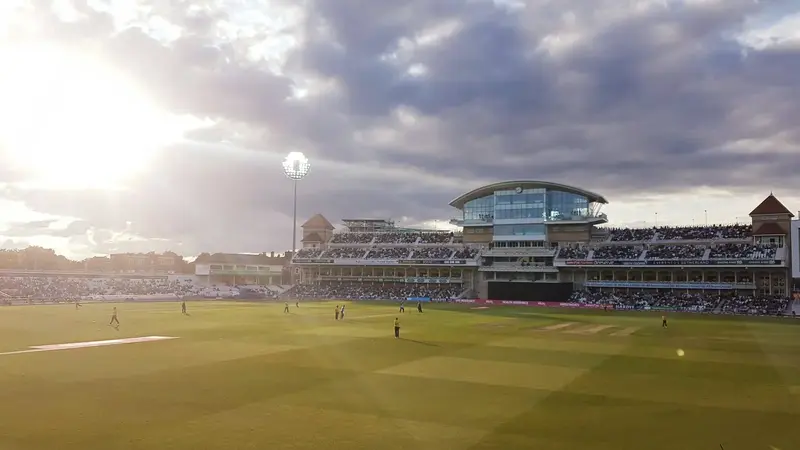
How a sports business is funded depends mostly on whether it is a commercial business or a community club. Commercial venues,…

Tech and media firms are usually funded according to how they earn. Managed service providers with monthly contracts can use…

Most business aircraft are funded with the aircraft itself as security, through hire purchase, an aircraft (chattel) mortgage,…

Operators planning to run a coach for most of its life usually choose hire purchase, adding a balloon to cut monthly payments.…
What our clients say
“Simon was fast, kept us updated at all stages and was a real pleasure to work with on our asset finance. I highly recommend this company: excellent service all round.”
“Spoke with Simon, who managed to get me the loan I needed promptly. The whole process was very smooth and was completed within a few days.”
“Getting a business loan can feel like a bit of a minefield, but everything was broken down for me in great detail. Will use again in the future!”
“Simon was a pleasure to deal with and helped us find a business loan that matched our growth goals and future expansion plans.”
“I couldn’t source funding for my business, but the team got in touch within an hour and had it sorted within 24 hours. Fantastic service, and I would definitely use them again.”

Chat with Smart Funding
We usually reply in seconds
Please don't share bank details or passwords here. Calls on 01244 267694.