

Equestrian finance for livery yards, riding schools and horse businesses
Equestrian finance funds horse businesses such as livery yards, riding schools, competition and breeding yards, and horse…
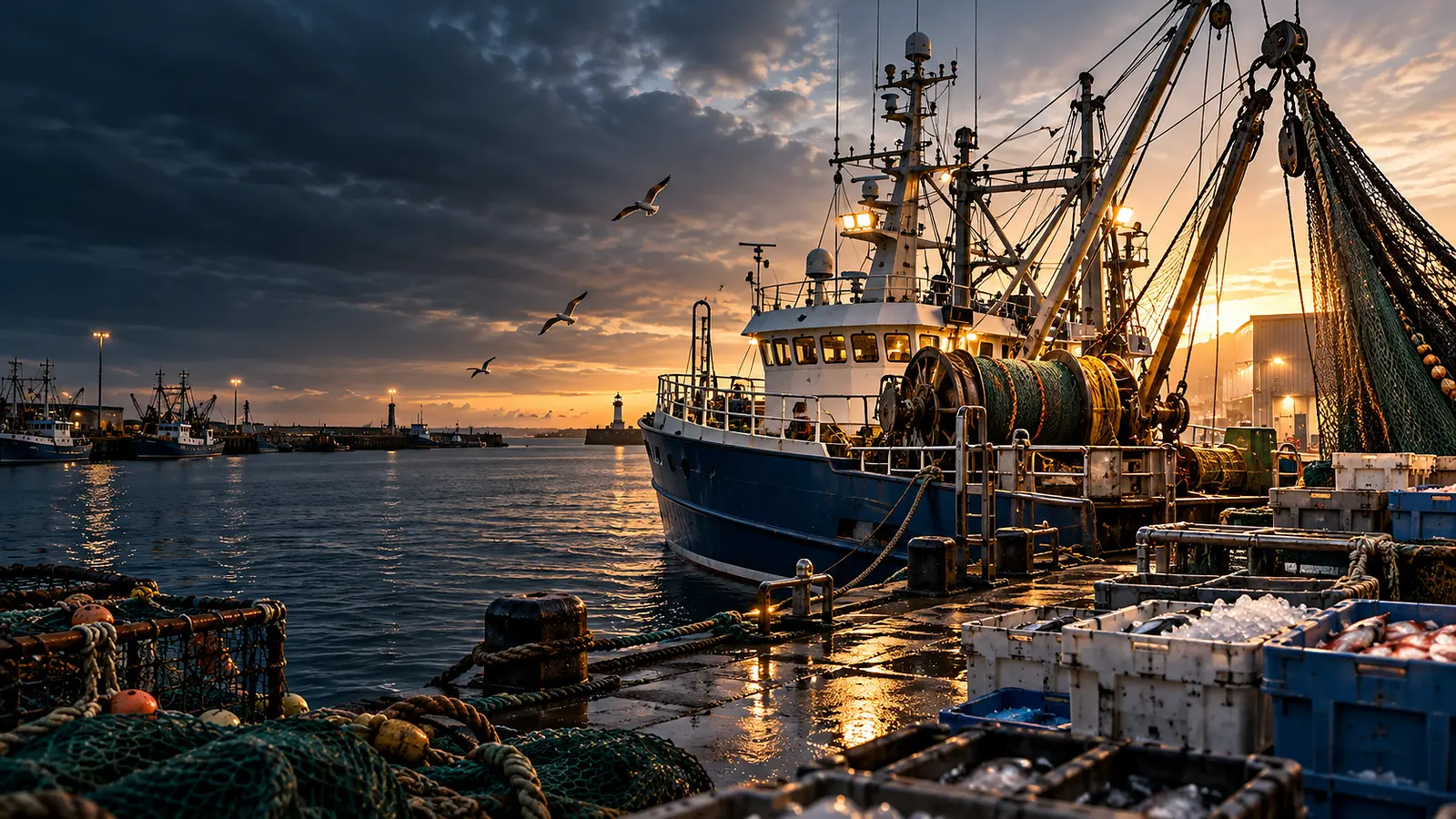
How skippers and owners fund fishing vessels, engines, gear and refits, why licences and registration matter to lenders, and what to prepare.
“The team go out of their way to find you the best deal and are on top form.”
In short
What you need to know.
Licences, entitlements and quota often carry as much value as the hull but are hard for lenders to take as security. Lenders focus on the vessel survey and valuation, its registration, landings history, the skipper's experience and insurance.
About fishing boat finance
Specialist knowledge. Better outcomes.
Commercial fishing businesses range from a single under-10 metre boat potting for crab and lobster to multi-vessel companies running trawlers and scallop dredgers, plus the merchants and processors who buy their catch. Owners typically need finance for three things: buying a vessel, keeping it working through engine replacements and refits, and carrying costs through the weeks when weather keeps boats in harbour. Smart Funding Solutions is a broker, not a lender. We search our panel of 300+ lenders and arrange facilities from £10,000 to £20 million. This page sits within our agricultural, food production and farm finance section, alongside land-based primary producers.
Fishing income is uneven in ways lenders need to understand. Catches sold through a fish market or auction are usually settled quickly after each landing, while catch sold to merchants or processors may be paid on agreed terms. Weather can keep smaller boats tied up for weeks in winter. Prices move with supply, demand and export conditions, particularly for shellfish sold to European buyers, where health certification and border checks affect timing. Many vessels pay crew a share of the catch after costs rather than a wage, so a good week benefits everyone and a poor one is shared, but the owner still carries fuel, maintenance, insurance and finance costs.
A UK fishing boat used commercially must be registered as a fishing vessel and hold a fishing licence. For smaller boats, the licence is issued against an entitlement that is usually bought from another vessel; GOV.UK explains how to get a fishing vessel licence for vessels 10 metres or under. To register a marine mortgage, the vessel must be on the UK Ship Register with full rather than simple registration, so buyers often need to change the registration as part of the purchase. Because a boat without its licence can be worth far less, lenders check that the licence is attached to the vessel and often ask for an undertaking that it will not be transferred away without their consent.
A vessel mortgage means the boat can be taken if payments stop, and in a weather-dependent business that risk is real after a bad winter. Personal guarantees are common for sole traders and owner-run companies. Borrowing of £25,000 or less by sole traders and small partnerships can be regulated consumer credit, which brings additional protections. Grants can reduce how much you need to borrow: in England, the Fishing and Coastal Growth Fund supports investment in the fishing and seafood sector, and Scotland, Wales and Northern Ireland run their own schemes. Grants usually require you to pay first and claim afterwards, so bridging that gap may still need finance. Buying into a vessel in partnership, or leasing a boat before committing to buy, are alternatives for newer skippers.
An independent marine survey covering hull, machinery and condition, and a valuation from a surveyor who knows the fishing market.
Age, construction material, refit history and engine hours affect the term a lender will offer.
Records of landings and sales notes over recent years, showing what the boat and skipper have actually earned.
Experience in the fishery, certificates of competency and the stability of the crew.
Hull and machinery cover with the lender's interest noted, plus protection and indemnity cover for crew and third parties.
Up-to-date Maritime and Coastguard Agency inspections and compliance with the relevant code for the vessel's size.
Fishing lenders look past the boat to the rights and records that let it earn.
Aircraft are financed in a similar way, with registration and survey at the centre; see aviation finance.
Many vessels fish against quota held through producer organisations or leased from other holders. Lenders ask how much the business owns, how much it leases and what leasing costs each year.
One marine asset lender on our panel funds workboats, charter vessels and hire fleets but not fishing boats or wooden hulls. Fishing cases go to lenders that accept them, which saves time and credit searches.
First-sale prices move with season, species and market. Lenders look at landings over several years rather than the best one.
Grant schemes can fund safety, efficiency and processing kit, reducing what needs to be borrowed; see the Fishing and Coastal Growth Fund.
How the main business finance structures work. Lenders set their own terms, so treat this as a guide to the questions to ask.
| Option | How you repay | Security | Often used for |
|---|---|---|---|
| Unsecured business loan | Fixed instalments, usually monthly | No charge over assets; a personal guarantee is usually required | Growth, stock, tax bills and cash flow |
| Secured business loan | Fixed instalments, often over a longer term | A charge over property or other assets | Larger sums, property and refinancing |
| Revolving credit facility | Interest on what you draw; repay and redraw | Varies by lender and case | Recurring or uneven cash flow gaps |
| Merchant cash advance | A share of future card takings | No charge over assets | Card-taking businesses with uneven months |
| Asset finance | Regular payments over the life of the asset | The asset being financed | Equipment, vehicles and machinery |
| Invoice finance | Settled as customers pay their invoices | Your unpaid invoices | Businesses waiting on customer payment |
General information only. Every lender has its own criteria, and all finance is subject to status.
| Need | How it is commonly funded | Main consideration |
|---|---|---|
| Buying a fishing vessel | Marine loan or hire purchase secured by a registered mortgage over the vessel | Full registration is needed before a mortgage can be registered, and the lender relies on a marine survey |
| Engine, gearbox and electronics | Asset finance on the equipment, or a loan secured on the vessel | Once fitted, an engine is hard to repossess separately, so lenders often look to the whole vessel |
| Raising cash against a boat you own | Asset refinancing secured on the vessel | Adds debt to a working asset; valuation and condition drive the amount |
| Licence entitlement or quota | A secured business loan against other assets, or an unsecured loan | Few lenders will take licences or quota as security on their own |
| Fuel, gear and running costs through quiet months | A working capital loan or revolving facility | Repayments continue whether or not the boat goes to sea |
| Merchant or processor waiting on customer payments | Invoice finance, including export invoice finance for overseas buyers | Works only where sales are on credit terms to business customers |
Vessel finance is a narrower market than general equipment finance, and lenders differ in the age, size and construction of boats they accept. Steel and glass-fibre vessels are more widely financed than wooden ones. For a broader comparison of ownership and rental structures, see hire purchase vs leasing.
Take £200,000 borrowed to buy a second-hand vessel, repaid over 7 years. The figure is an example, not a valuation. Marine finance on our panel that does not exclude fishing boats shows 8% to 16.5% a year.
| Rate | Monthly repayment | A year | Total interest | Total repaid |
|---|---|---|---|---|
| 8% a year | £3,117.24 | £37,406.91 | £61,848.40 | £261,848.40 |
| 16.5% a year | £4,029.58 | £48,354.93 | £138,484.54 | £338,484.54 |
That is roughly £37,407 to £48,355 a year to cover from landings after fuel, crew shares, insurance and maintenance. Lenders test it against several years of sales notes, not the best season, and look for reserves to cover the weeks when the boat cannot sail. A shorter term raises the monthly figure but cuts the total interest, and an older vessel may only be offered a shorter term. If you own a boat outright and need cash, asset refinancing can raise money against it. Indicative ranges from lenders on our panel, checked October 2026; your rate depends on your circumstances.
Instant fishing boat finance quotes
Tell us how much you need. Instant Quotes shows which lenders on our panel fit your business, then a broker helps you choose between hire purchase, leasing and a loan.
Prefer to talk it through? Call 01244 267694
Yes, most vessel purchases are second-hand. Lenders will rely on a recent marine survey, and older or wooden boats may attract a shorter term or a larger deposit. Used equipment finance principles apply, with the added need for proper registration.
It is harder but possible where the skipper can show years of crew experience, earnings records, a meaningful deposit and a realistic plan for the fishery. A first, smaller vessel or a share in a boat is often the stepping stone.
Some do, but those vessels earn differently from fishing boats and are assessed on bookings or contracts. Larger merchant and cargo operations are covered in our guide to shipping business loans.
Most fishing boat finance needs a cash deposit, because lenders rarely lend the full value of a vessel. The amount depends on the boat's age, survey, condition and registration, your track record as a skipper, and whether licences or quota are part of the deal, since these are hard for lenders to take as security. Lenders set their own criteria, so expect a larger contribution for older vessels or newer operators.
Yes, engines, gearboxes, refits and wheelhouse electronics can be financed through a marine loan, hire purchase or an unsecured business loan, depending on the amount and your accounts. Lenders want the quote, a recent survey if available, and landing records or accounts showing income. Repowering is one of the biggest costs in a vessel's life, so arranging finance before a failure helps. See unsecured business loans for one option.
Yes. Buying an established fishing business is usually funded with acquisition finance: a loan sized on the business's recent profits, your own contribution and sometimes part of the price paid to the seller after completion. Lenders look most closely at the vessel survey and valuation, the licence and any quota or entitlements that go with it, the catch records and your experience as a skipper. Licences and quota often carry as much value as the boat, so lenders check exactly what transfers. You can see which lenders on our panel fund purchases like yours with Instant Quotes.
Marine finance on our panel shows 8% to 16.5% a year over 2 to 10 years, for £25,000 to £5 million. Where you fall in that range depends on the vessel's age, construction and survey, your landings record and your experience. Indicative ranges from lenders on our panel, checked October 2026; your rate depends on your circumstances.
Marine finance products on our panel run for up to 10 years. Lenders keep the term within the working life the survey supports, so an older vessel, or one with high engine hours, is usually offered a shorter term than a newer boat.
Yes. A commercial boat is funded as a working asset, so lenders look at what it earns, its fishing licence, its registration and its safety certification as well as its value. Borrowing of £25,000 or less by sole traders and small partnerships can be regulated consumer credit, which brings additional protections.
Yes. Where the vessel alone will not support the amount, for example an older or wooden boat or a licence purchase, a secured business loan against other property can fund it. Secured business loans on our panel for £150,000 over 5 years show 8.99% to 21.5% a year. Indicative ranges from lenders on our panel, checked October 2026; your rate depends on your circumstances.
Equestrian finance funds horse businesses such as livery yards, riding schools, competition and breeding yards, and horse…
Horsebox finance for a business is usually hire purchase or leasing secured on the horsebox, with used boxes from recognised…

Count the hours. A tractor that will work most of the year is usually best bought on hire purchase, so the farm owns it at the…

Crop finance covers the gap between autumn drilling and the sale of the harvest, which on a combinable crop farm can be the…
Farm diversification finance funds a new, non-farming income stream on the holding: barn conversions to workshops or homes,…
Agricultural equipment finance spreads the cost of farm machinery, from drills and sprayers to telehandlers, feed wagons and…
What our clients say
“Simon was fast, kept us updated at all stages and was a real pleasure to work with on our asset finance. I highly recommend this company: excellent service all round.”
“Spoke with Simon, who managed to get me the loan I needed promptly. The whole process was very smooth and was completed within a few days.”
“Getting a business loan can feel like a bit of a minefield, but everything was broken down for me in great detail. Will use again in the future!”
“Simon was a pleasure to deal with and helped us find a business loan that matched our growth goals and future expansion plans.”
“I couldn’t source funding for my business, but the team got in touch within an hour and had it sorted within 24 hours. Fantastic service, and I would definitely use them again.”