
The property wasn’t ready for long-term finance yet.
A commercial building needed major works before it could be let or occupied. Bridging funded the purchase and works, with a refinance to follow.
Refurbishment bridging loanRead the transaction
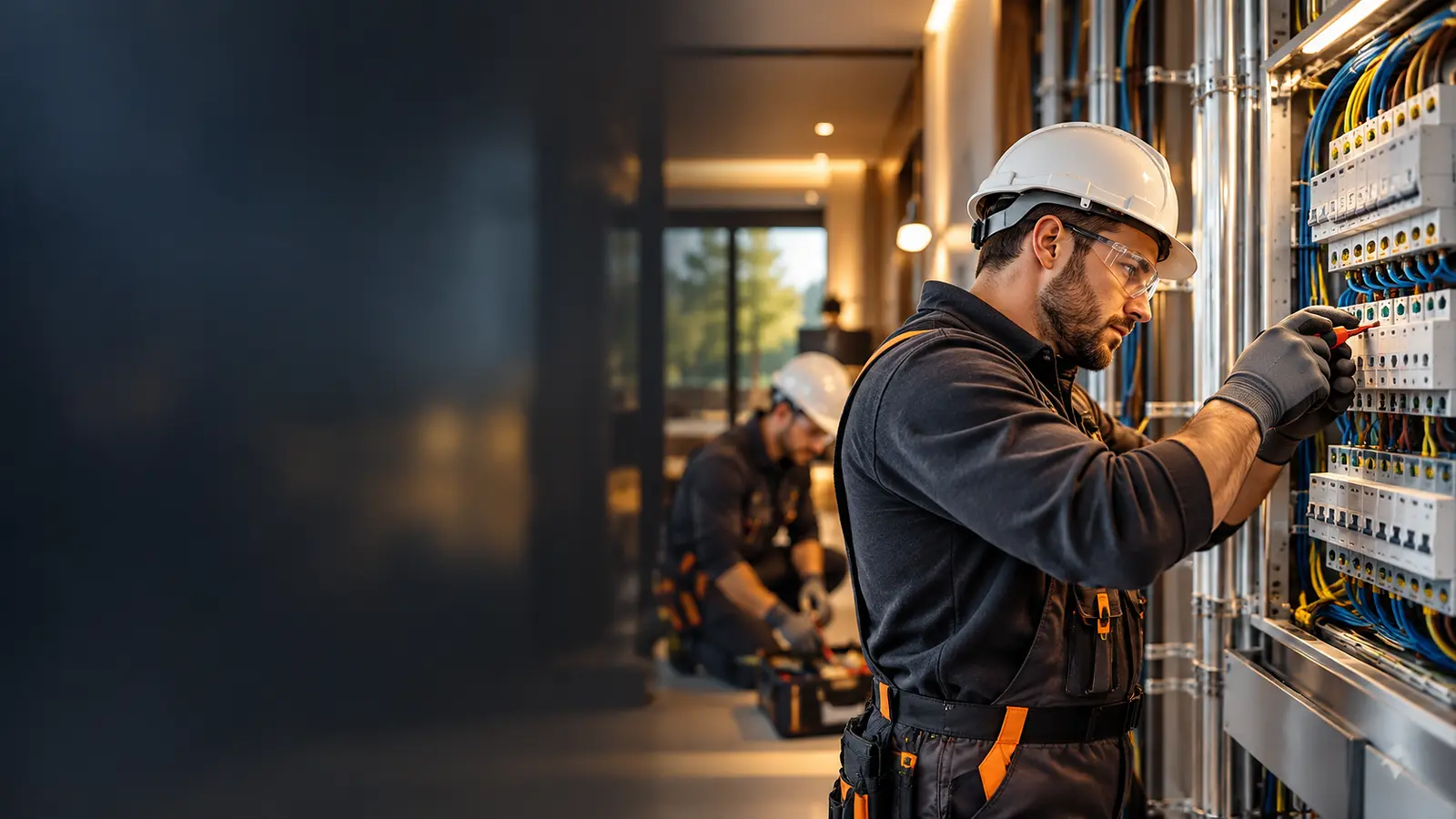
How to fund an office, warehouse, shop or clinic fit-out: splitting the budget between lenders, lease issues, VAT and what lenders need to see.
Explore funding options Prefer a quick call back? Leave your number
“He is fair and always gives advice that is in the best interest of his clients.”
In short
What you need to know.
Most projects are funded in parts: asset finance or leasing for identifiable equipment and furniture, and a business loan for building works, fees and contingency. Lenders focus on whether the business can afford the repayments during disruption, and whether the lease outlasts the finance.
A transaction we arranged
£480,000
Growing firm. Lease expiring. Buy instead of renew.
A professional services firm bought an office for its growing team, with the finance planned alongside the fit-out and move.
Read the transactionAbout fit-out finance
Specialist knowledge. Better outcomes.
A fit-out is one of the few large costs a business pays for almost entirely in things it cannot resell: partitions, ceilings, wiring, flooring, joinery and design time. This page is for owners and finance directors taking new premises, expanding into extra space or bringing a tired office, warehouse, shop, clinic or restaurant up to standard, and deciding how to pay for it without draining working capital. Smart Funding Solutions is a broker, not a lender: we break the project into the parts different lenders will fund and approach lenders on our panel for each, from £10,000 to £20 million. Fit-out funding is one of the options in our wider business finance section.
Lenders fund hard, removable assets far more readily than building works, because an asset lender can recover a forklift or a server rack and cannot recover a plasterboard wall. Sorting the quotes into the categories below before you ask for finance usually lengthens the term on part of the spend and reduces the unsecured element.
| Part of the project | Examples | Usually funded by | Trade-off |
|---|---|---|---|
| Hard equipment | Racking, kitchen equipment, servers, forklifts, air handling units | Hire purchase or leasing | The asset is the security, but a deposit or VAT may be due at the start |
| Soft assets | Furniture, EPOS, signage, AV, shopfittings | Soft asset leasing, where a lender will take it | Shorter terms and fewer lenders, as resale value is low |
| Building works | Partitions, ceilings, electrics, flooring, mezzanines | Unsecured or secured business loan | Personal guarantees are usual; property security can lengthen the term |
| Fees and contingency | Design, project management, overruns | Headroom in the loan, or cash | Borrowing too little here is the most common reason a project stalls |
Asset finance suits anything with a serial number and a second-hand market. On hire purchase, the VAT on the full price is normally payable at the start, while on a lease it is added to each rental, which can make leasing easier on cash flow for a VAT-registered business mid-project. Our comparison of hire purchase and leasing sets out the ownership and tax differences. Items such as furniture and signage fall into a narrower market, explained in our guide to soft asset finance.
The non-removable element is usually funded with an unsecured business loan, which suits tenants and projects where the business has no property to offer. Directors are normally asked for a personal guarantee. Where the business or its directors own property, a secured business loan can support a larger sum or a longer term, with the property at risk if repayments are missed.
If the fit-out follows a purchase, the building itself is normally financed separately; see loans to buy business premises. Some lenders will include a modest works element in the purchase facility, but a heavy refurbishment of a building that cannot be occupied until finished is a property project, closer to refurbishment bridging finance than to fit-out funding.
Commercial property uses a shorthand that matters to lenders. A Category A fit-out is the landlord's base finish: raised floors, suspended ceilings, basic lighting, heating, cooling and toilets. A Category B fit-out is everything the occupier adds to make the space work for its business: meeting rooms, kitchens, reception, cabling, furniture, branding and specialist rooms. Tenants usually pay for Category B; some also pay to upgrade or strip out Category A.
What goes into the budget depends on the premises:
Every budget also carries design and project management fees, contractor preliminaries, building control and, often, a VAT bill that arrives before it can be reclaimed.
Most fit-outs happen in rented space, and the lease shapes both the cost and the lender's view.
Illustration only, with round hypothetical numbers; not a quote or offer. A 20-person practice moves to a Category A floor on a ten-year lease with a break at year five. Its contractor quotes £180,000 net of VAT: £40,000 for furniture, AV and IT hardware, £110,000 for partitions, cabling, air conditioning upgrades and finishes, and £30,000 for design, project management and contingency. The landlord agrees a rent-free period worth part of the cost. The practice leases the £40,000 of equipment over the useful life of the kit, takes a business loan for the £140,000 balance on a term that ends before the year-five break, and keeps its own cash for the VAT, which it recovers on its next return. The monthly total is set against the extra fee income the larger office supports, not against last year's profit alone.
Fit-out spend is treated differently for tax depending on what it is. Equipment and many fixtures can qualify as plant and machinery; integral features such as electrical, lighting, heating and air conditioning systems sit in the special rate pool; and some construction work may qualify for the Structures and Buildings Allowance, claimed over a long period. HMRC's guidance on what you can claim capital allowances on and on allowances for structures and buildings is the starting point, and our note on asset finance and capital allowances explains how the finance structure affects the claim. Ask your accountant to allocate the costs before you commit.
VAT is charged on contractor invoices and has to be paid before it is recovered. A large project can put a sizeable VAT sum through your account for a month or two, so plan for it.
Affordability through the disruption: many businesses trade at reduced capacity while works are under way.
Trading history, profitability and recent bank statements.
A costed scope from a named contractor, not a single lump-sum estimate.
The lease, its remaining term and break dates, or proof of ownership.
What the new space enables: capacity for more staff, a new contract, compliance with a regulator or landlord requirement.
Existing borrowing and director credit history.
Longer terms can make a large fit-out affordable where a short facility would not. A real SFS example of this principle is the six-year loan for a communications company, where a 72-month term let the business treat £60,000 as long-term capital rather than something to replace within months.
How the main business finance structures work. Lenders set their own terms, so treat this as a guide to the questions to ask.
| Option | How you repay | Security | Often used for |
|---|---|---|---|
| Unsecured business loan | Fixed instalments, usually monthly | No charge over assets; a personal guarantee is usually required | Growth, stock, tax bills and cash flow |
| Secured business loan | Fixed instalments, often over a longer term | A charge over property or other assets | Larger sums, property and refinancing |
| Revolving credit facility | Interest on what you draw; repay and redraw | Varies by lender and case | Recurring or uneven cash flow gaps |
| Merchant cash advance | A share of future card takings | No charge over assets | Card-taking businesses with uneven months |
| Asset finance | Regular payments over the life of the asset | The asset being financed | Equipment, vehicles and machinery |
| Invoice finance | Settled as customers pay their invoices | Your unpaid invoices | Businesses waiting on customer payment |
General information only. Every lender has its own criteria, and all finance is subject to status.
Send us the contractor quotes and the lease. We sort the costs into the parts each type of lender funds, suggest which items suit leasing and which need a loan, and approach lenders on our panel that fit your sector and project size. If the plan is part of a wider expansion, our page on growth finance covers the other costs that tend to follow. The lender makes the final credit decision. It is free to enquire; any broker fee is disclosed separately before you proceed.
Yes. Most fit-outs are in leased premises. Lenders will want to see the lease and landlord consent, and will usually keep the finance term within the remaining lease or before the next break date.
It should be. Arranging funding once invoices are arriving leaves no room to negotiate. Some lenders release funds in stages against the works programme, and asset finance can be drawn when each item is delivered.
Usually. Category A space has ceilings, floors and basic services but no meeting rooms, kitchens, cabling to desks or furniture. Those Category B costs are what most occupiers need to fund.
Yes, from some lenders, usually for smaller projects. Borrowing of £25,000 or less by sole traders and small partnerships can be regulated consumer credit, which brings additional protections.
A personal guarantee is usual for fit-out finance, particularly for smaller and younger businesses. Most of a fit-out has little resale value, so lenders rely more on the strength of the business and the directors than on the assets themselves. Items with a real second-hand market, such as kitchen equipment or racking, may be funded separately with less reliance on guarantees. Our guide to personal guarantees explains what you are signing.
A commercial building needed major works before it could be let or occupied. Bridging funded the purchase and works, with a refinance to follow.
A pub company that uses finance as a business tool, not an emergency, including outdoor tables and a covered awning ahead of summer.
Islamic business finance is funding structured to avoid interest, with the provider earning a return through trade, rent or…
Structured finance combines two or more types or layers of debt, such as a senior term loan, asset-based lending and…
Growth finance is borrowing that funds expansion before the extra income arrives: new staff, a second site, a larger contract,…
A £1 million business loan is usually a negotiated facility package rather than a single loan, combining term debt, asset-based…
A £100,000 business loan is usually a term loan repaid monthly over about one to six years. Established businesses with two or…
A £250,000 business loan is usually a term loan, or a combination of facilities, repaid over several years. At this size…
What our clients say
“Simon was fast, kept us updated at all stages and was a real pleasure to work with on our asset finance. I highly recommend this company: excellent service all round.”
“Spoke with Simon, who managed to get me the loan I needed promptly. The whole process was very smooth and was completed within a few days.”
“Getting a business loan can feel like a bit of a minefield, but everything was broken down for me in great detail. Will use again in the future!”
“Simon was a pleasure to deal with and helped us find a business loan that matched our growth goals and future expansion plans.”
“I couldn’t source funding for my business, but the team got in touch within an hour and had it sorted within 24 hours. Fantastic service, and I would definitely use them again.”