
Horsebox finance for yards, transporters and equestrian businesses
Horsebox finance for a business is usually hire purchase or leasing secured on the horsebox, with used boxes from recognised coachbuilders funded as readily…
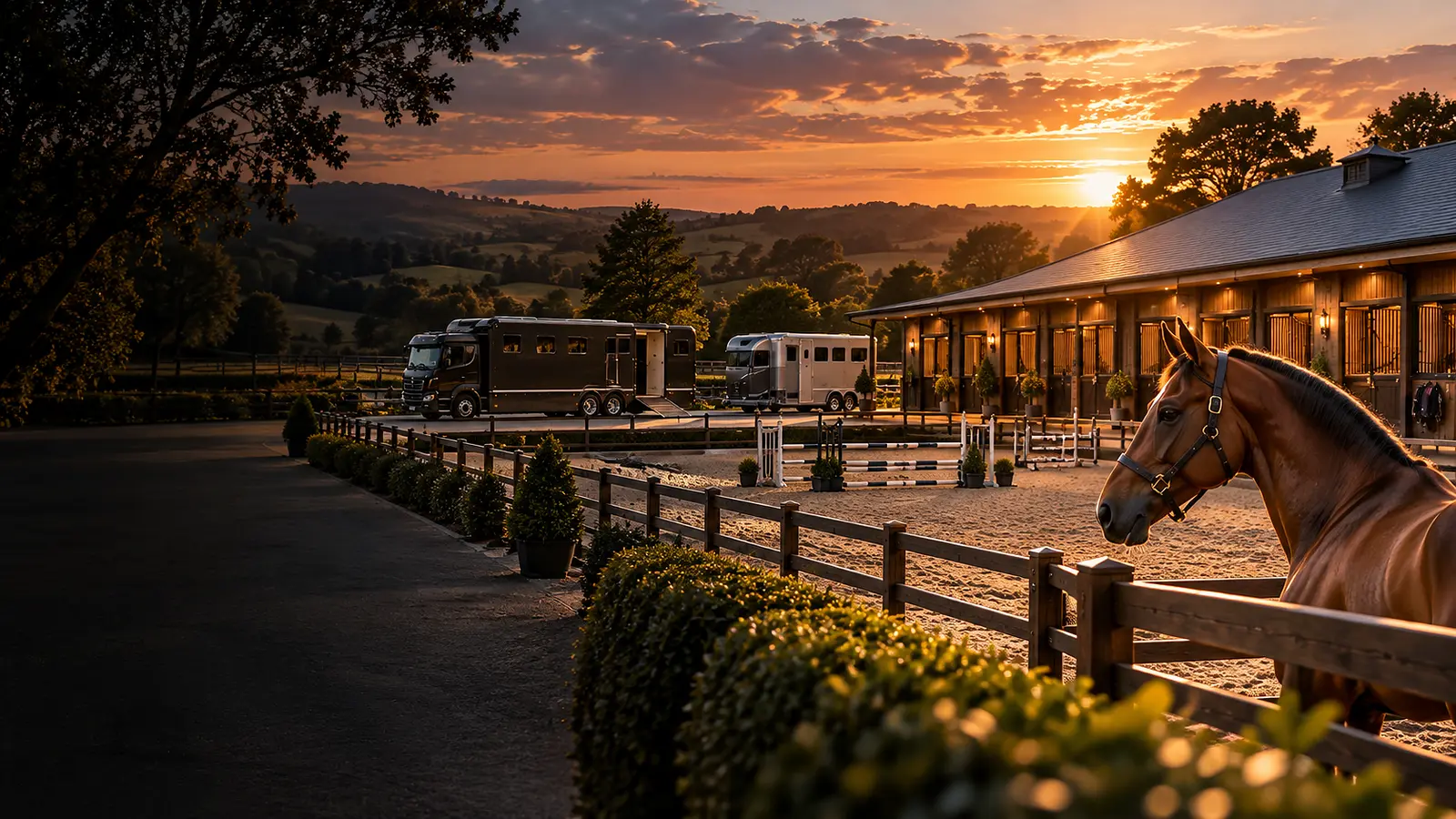
Funding for livery yards, riding schools, studs and horse transport firms: horseboxes, arenas, stables and working capital, and what lenders check.
Explore funding options Prefer a quick call back? Leave your number
“Thank you for all your support.”
In short
Supporting equestrian businesses at every stage.
Horseboxes, arena groomers and yard machinery usually go on asset finance; arenas, stables and commercial yards are funded with secured loans or commercial mortgages; feed, bedding and seasonal gaps with working capital. Lenders look at how income is split between livery, lessons and sales, planning consent for the commercial use, and the yard's value without any house.
The operating cycle
Cash leaves the business at every stage before it comes back. Each stage below is a point where the right facility can carry the gap.
“He is fair and always gives advice that is in the best interest of his clients.”
Orders, contracts or customers secured.
Stock, materials and equipment paid for up front.
Asset finance →Wages and suppliers paid on time.
Working capital →The work is done or the goods are sold.
Customers pay, sometimes weeks later.
Invoice finance →VAT and Corporation Tax fall due.
HMRC loans →Growth, a new site or new equipment.
Business loans →About equestrian finance
Specialist knowledge. Better outcomes.
A livery yard pays for hay, bedding, staff and insurance every month whether or not its stables are full; a riding school's busiest weeks are in the summer and its costliest in winter. This page covers livery yards, riding schools and equestrian centres, competition, training and dealing yards, studs, horse transport businesses, and trades such as farriers and saddlers. Smart Funding Solutions is a broker, not a lender: we search our panel of 300+ lenders and arrange facilities from £10,000 to £20 million. Many yards run alongside farms, so our agricultural finance and farm loans hub covers the wider land and machinery picture.
More detail on specific needs within this topic.
Horsebox finance for a business is usually hire purchase or leasing secured on the horsebox, with used boxes from recognised coachbuilders funded as readily…

Equestrian arena finance usually splits a project into parts: groundworks, drainage and surfaces are funded with a secured or term loan because they cannot…
Choose the need, and we’ll show you how lenders usually structure it.
Horseboxes, horse lorries, trailers, 4x4s, tractors, arena graders and horse walkers are commonly funded on hire purchase or leasing through asset finance, secured on the vehicle or equipment. Well-built horseboxes from recognised coachbuilders hold their value, which lenders like. Our page on horsebox finance covers new and used horseboxes, trailers and the licensing questions lenders ask. A lorry over 3.5 tonnes used in a business generally needs a goods vehicle operator's licence, and drivers transporting horses commercially need the right driving entitlement and animal transport competence, so lenders financing a transport business will ask about both. For tractors and land machinery, see our guide to tractor finance.
Building a new arena, rebuilding stables or adding an indoor school is usually funded by a secured business loan against the yard or land. Arena surfaces and drainage are expensive and have little value on their own, so the lender looks to the property as a whole. Larger build projects may be released in stages against a quantity surveyor's report. See equestrian arena finance for arenas, surfaces, indoor schools and stables.
Commercial equestrian premises, such as a livery yard, riding school or competition centre run as a business, can be bought or refinanced with a commercial mortgage. Lenders usually expect a larger deposit than for standard commercial property because fewer buyers want equestrian sites. Bridging loans can secure a yard quickly at auction or before other funding completes, provided there is a clear exit.
A working capital loan or revolving facility can carry the winter, when hay, bedding, rugs and lighting costs peak while lessons slow down. Buying a season's hay at harvest, when prices are often better, is a common reason to borrow. Unsecured loans suit smaller sums, normally with a personal guarantee.
Lenders read an equestrian business by its income streams, because each behaves differently:
Many equestrian properties are a house with land and stables. If borrowing would be secured on a house that you or a relative occupy, it is likely to be a regulated residential mortgage, which we do not arrange. Holiday lets on the yard are also outside our scope. We arrange finance for the business: equipment, vehicles, working capital, and loans or commercial mortgages secured on commercial yards, land and buildings that are separate from any dwelling. Where a property mixes a home and a business, we can discuss which parts of the need can be met through business borrowing and point you towards a regulated adviser for the rest.
Secured borrowing puts the yard or land at risk, and specialist property can mean larger deposits and higher costs. Repayments continue through quiet months and after the loss of key liveries. Business rates, which generally apply to commercial yards, and VAT, which treats grazing, stabling and different livery packages differently, should be checked with an accountant before borrowing, because they change what the yard can afford. Borrowing of £25,000 or less by sole traders and small partnerships can be regulated consumer credit, which brings additional protections. Alternatives include raising livery or lesson prices before investing, phasing arena or stable works, and hiring a horsebox for occasional use rather than buying. Farms adding horses as a new enterprise should also read our farm diversification finance page, and equine vets are covered under veterinary practice loans.
Keeping horses for a commercial livery or riding school usually needs planning permission for that use, separate from agricultural use. Lenders check that stables, arenas and floodlights are authorised.
Riding schools and businesses hiring out horses need a local authority licence; the statutory guidance on hiring out horses sets the standards and star ratings that inspectors apply.
How many stables are let, on what agreements and notice periods, and how long liveries typically stay.
A yard with livery, lessons and facility hire is more resilient than one relying on a single stream.
Qualifications, professional body approvals, insurance and how long the operator has run the yard.
Specialist equestrian sites have a narrower market, and valuers reflect location, access for lorries, grazing and the quality of facilities.
Lenders do not normally take horses as security; their value is too uncertain and too easily lost.
Equestrian lending raises tax and biosecurity questions that general business lenders rarely meet.
Arenas, stables and indoor schools are covered in detail on our equestrian arena finance page.
Supplying stabling and grazing alone can be treated as an exempt supply of land, while full livery with care services is usually standard-rated. Lenders reading margins want the treatment confirmed; see VAT Notice 742.
A commercial livery yard or riding school is generally not agricultural for rates purposes, so it pays business rates. Lenders include them in costs.
An outbreak of strangles or equine herpes virus can close a yard to movements for weeks. Lenders ask about biosecurity and how income is protected.
Equestrian finance for a business funds what the business uses to earn: yards, buildings, horseboxes, machinery and working capital. Horses themselves are a special case, and borrowing for personal riding falls outside business finance altogether.
Because lenders do not normally take horses as security, a riding school adding school horses, a dealing yard buying stock to produce and sell, or a stud buying breeding stock usually funds the purchase from an unsecured loan, a working capital loan or a revolving facility, supported by the business's trading record. Lenders will want to see how the horses earn: lesson income, livery uplift, or a realistic timeline from purchase to sale for dealing stock.
| Purchase | Usual business finance | Security |
|---|---|---|
| School, dealing or breeding horses | Unsecured or working capital loan | Usually a personal guarantee |
| Horsebox, lorry, trailer or 4x4 | Hire purchase or leasing | The vehicle |
| Arena grader, horse walker, tractor | Asset finance | The equipment |
| Arena, stables or indoor school | Secured business loan | The yard or land |
| Commercial yard or equestrian centre | Commercial mortgage | The property |
Finance for a horse or horsebox used for your own riding or competing as a hobby is consumer borrowing, not business finance, and is outside what we arrange. Where a horsebox is used in a business, our horsebox finance page explains how lenders assess business and mixed use. Borrowing of £25,000 or less by sole traders and small partnerships can be regulated consumer credit even when it is for the business.
Yes. Hire purchase is commonly available to sole traders and partnerships using a horsebox in their business. The lender will want to see that the vehicle is used commercially, and personal use only is outside business finance.
Most will not lend against an unauthorised use. A lender may fund the purchase on its current lawful use, with the business plan tested on that basis, while you apply for planning. Short-term bridging finance can sometimes help where a clear planning route exists.
It is harder without trading history. Lenders look for relevant experience, a realistic plan for filling stables, a personal contribution and, for riding schools, a route to the required licence. Asset finance for equipment is often the easiest place to start.
Yes, equestrian finance can fund arenas, stable blocks and indoor schools, usually through a secured business loan or a commercial mortgage where the yard is owned. Lenders look at planning consent, building costs, the income the facility will add and the value of the land and buildings. A house on the yard can complicate security. Our page on secured business loans explains how property-backed borrowing works.
Often, yes. If you own a horsebox, horse lorry or yard machinery outright, asset refinancing can release cash against it while you keep using it. Lenders base the amount on the vehicle's age, condition, builder and resale value, so well-built boxes from recognised makers are easier to fund. The money can go towards working capital or yard improvements. See asset refinancing for how it works.
Yes, but usually as an unsecured or working capital loan rather than asset finance, because lenders do not normally accept horses as security. The lender will assess the yard's accounts, bank statements and how the horses will add income, for example through more lessons or sales. A personal guarantee is common, and a riding school will also need its local authority licence in place.
There is no single minimum score, because each lender sets its own criteria. Lenders look at the credit history of the business and its owners alongside trading figures, occupancy and the security offered. Missed payments or defaults narrow the choice and can raise the cost, but asset finance secured on a horsebox or machinery can be more flexible than unsecured borrowing because the asset supports the agreement.
Yes. Buying an established livery yard or riding school is usually funded with acquisition finance: a loan sized on the business's recent profits, your own contribution and sometimes part of the price paid to the seller after completion. Lenders look most closely at the planning consent for commercial use, livery and lesson income, the condition of the stables and arena, and any licence needed for riding establishments. Where the land is included, a commercial mortgage usually funds it. You can see which lenders on our panel fund purchases like yours with Instant Quotes.

Fishing boat finance usually means a marine loan or hire purchase secured on a registered commercial fishing vessel, used to…
Farm diversification finance funds a new, non-farming income stream on the holding: barn conversions to workshops or homes,…
Buying stock ties up cash for months before it earns: heifers take time to come into milk, and store cattle or lambs need a…
Count the hours. A tractor that will work most of the year is usually best bought on hire purchase, so the farm owns it at the…

Crop finance covers the gap between autumn drilling and the sale of the harvest, which on a combinable crop farm can be the…
Agricultural equipment finance spreads the cost of farm machinery, from drills and sprayers to telehandlers, feed wagons and…
What our clients say
“Simon was fast, kept us updated at all stages and was a real pleasure to work with on our asset finance. I highly recommend this company: excellent service all round.”
“Spoke with Simon, who managed to get me the loan I needed promptly. The whole process was very smooth and was completed within a few days.”
“Getting a business loan can feel like a bit of a minefield, but everything was broken down for me in great detail. Will use again in the future!”
“Simon was a pleasure to deal with and helped us find a business loan that matched our growth goals and future expansion plans.”
“I couldn’t source funding for my business, but the team got in touch within an hour and had it sorted within 24 hours. Fantastic service, and I would definitely use them again.”