
£8,950 + VAT of equipment, leased over 36 months.
Matched to the asset rather than to short-term working capital. The asset inspection completed and the deal paid out.
Lease over 36 monthsRead the transaction

How UK businesses finance solar PV, batteries, heat pumps and efficiency upgrades, and how renewable installers fund stock, vans and project cash flow.
Explore funding options Prefer a quick call back? Leave your number
“I highly recommend this company: excellent service all round.”
In short
What you need to know.
Lenders look for a savings case built on your own half-hourly energy data, a roof and lease that will outlast the agreement, and a certified installer. Renewable installers have a different need: funding for stock, vans and the gap between buying kit and being paid.
A transaction we arranged
£23,000
£23K for a renewable energy company.
A specialist sector the lender needed to understand before it could lend.
Read the transactionAbout green business finance
Specialist knowledge. Better outcomes.
This page covers two groups: businesses that want to cut energy costs by generating or saving power at their own premises, and the installers and contractors who fit that equipment. Smart Funding Solutions is a broker, not a lender: we approach lenders on our panel of 300+ that fund energy equipment and the firms that install it, and arrange facilities from £10,000 to £20 million. It forms part of our asset finance range. For a general introduction to funding sustainability projects, see our guide to green business loans.
The strongest cases are those where the saving is large, predictable and starts on day one. That depends more on how your business uses energy than on the technology.
A shop or office that closes at weekends and uses little power at midday will export more of its solar output, so its savings case is weaker, even though the panels cost the same.
Three things can reduce the net cost, and lenders will want to know which you are relying on.
Waste operators adding generation to a permitted site can also look for government grants for recycling businesses and see how grants sit alongside asset finance for processing plant.
Most failed green projects fail on practical points rather than credit. Before a lender will commit, and before you should, check the following.
Installers and energy contractors borrow for different reasons. Panels, inverters, batteries and heat pumps are bought upfront, often on short supplier terms, while commercial customers pay in stages with retentions held back. Vans, access equipment and test gear are needed before the work starts.
Lenders look at certification with MCS and the relevant consumer code, how deposits from domestic customers are protected, warranty liabilities, and how dependent the order book is on grant schemes that can change with policy. Our electrical contractor finance and energy services finance pages cover these businesses in more depth.
Renewable energy finance is usually available to established UK limited companies, LLPs, partnerships and sole traders with at least one or two years of filed accounts, a site they own or lease for longer than the agreement, and trading that covers the repayments without relying on projected savings. Farms, manufacturers, cold stores and other high daytime users tend to present the strongest cases. Tenants can qualify with landlord consent and enough lease left to run. Younger businesses and those with adverse credit can still be considered, but lenders often ask for a larger deposit, a shorter term or a stronger guarantee. Installers qualify on a different basis: certification, trading record, order book and how well their debtor book is spread.
A straightforward hire purchase or lease for a rooftop solar, battery or LED project typically takes one to three weeks from a complete application to a signed agreement, provided the quote, accounts and energy data are ready. The practical checks usually take longer than the credit decision: a roof or structural survey, landlord consent and any landlord's waiver, and approval from the distribution network operator for larger systems can each add several weeks. Bigger whole-site schemes, and cases where the lender wants an independent review of the savings projection, often take longer. Payment to the installer is normally made in agreed stages or on completion, so build that into the installation programme.
On hire purchase and leasing, the security is normally the equipment itself: the lender owns or has title to the panels, inverters, batteries or heat pumps until the agreement ends. Because installed kit has limited resale value once removed, smaller companies are often also asked for a personal guarantee from the directors. Where a large share of the cost is labour, cabling or roof work, lenders may ask for a bigger deposit or fund that part with an unsecured loan, again usually guaranteed. Tenants may need a landlord's waiver so the lender can recover fixed equipment. Larger programmes can be secured on property you own through a charge or a mortgage top-up, which puts the building at risk. Our guide to personal guarantees explains what you are signing.
Savings projections are estimates. Energy prices, tariffs and your own usage can change, and a project that looks self-funding on paper can leave a net monthly cost. Inverters and batteries usually need replacing before the panels wear out, so budget for it. Tie-in matters too: a finance term longer than your lease, or a power purchase agreement that outlives your plans for the building, can complicate a future sale or move. Paying from reserves avoids finance costs if the business has comfortable cash, and a grant-funded project may need less borrowing than first quoted.
a projection built from your actual half-hourly or monthly consumption, not a generic yield figure.
certification, trading history and whether warranties will be honoured if the installer later ceases trading.
ownership or lease length, roof survey and landlord consent where relevant.
recognised manufacturers, and how much of the quote is removable hardware against labour.
payments covered by current trading, not only by projected savings.
business and director history; smaller companies are often asked for a personal guarantee.
How the main business finance structures work. Lenders set their own terms, so treat this as a guide to the questions to ask.
| Option | How you repay | Security | Often used for |
|---|---|---|---|
| Unsecured business loan | Fixed instalments, usually monthly | No charge over assets; a personal guarantee is usually required | Growth, stock, tax bills and cash flow |
| Secured business loan | Fixed instalments, often over a longer term | A charge over property or other assets | Larger sums, property and refinancing |
| Revolving credit facility | Interest on what you draw; repay and redraw | Varies by lender and case | Recurring or uneven cash flow gaps |
| Merchant cash advance | A share of future card takings | No charge over assets | Card-taking businesses with uneven months |
| Asset finance | Regular payments over the life of the asset | The asset being financed | Equipment, vehicles and machinery |
| Invoice finance | Settled as customers pay their invoices | Your unpaid invoices | Businesses waiting on customer payment |
General information only. Every lender has its own criteria, and all finance is subject to status.
The main ways to fund an energy project are hire purchase, a finance lease, an unsecured or secured loan, or letting a third party own the system and sell you the power; paying from reserves is the other alternative where cash allows.
| Option | How it works | Suits | Trade-off |
|---|---|---|---|
| Hire purchase | Fixed payments; you own the system at the end | Owner-occupiers installing solar, batteries or heat pumps | Full responsibility for maintenance and inverter replacement |
| Finance lease | You rent the equipment for most of its life | Businesses that prefer a rental cost and lower upfront outlay | No ownership; end-of-term arrangements vary |
| Unsecured term loan | Lump sum repaid monthly, no charge over the kit | Mixed projects with a lot of labour, cabling and building work | Usually a shorter term and a personal guarantee |
| Secured loan or commercial mortgage top-up | Borrowing secured on property you own | Larger whole-site programmes | Puts the property at risk |
| Third-party ownership (roof lease or power purchase agreement) | A provider owns the system and sells you the power | Businesses that want no capital outlay or debt | Most of the saving goes to the provider; long contracts tie up the roof |
Equipment finance lenders are more comfortable where the kit is identifiable and removable. Panels, inverters and batteries have some recovery value; pipework, cabling, scaffolding and electrical upgrades do not. Where labour is a large share of the quote, a loan can sit alongside asset finance. Our guide to hire purchase vs leasing explains the ownership and VAT differences.
Lenders make the final decision. It is free to enquire; any broker fee is disclosed separately before you proceed.
Illustrative figures from the numbers you enter, before you speak to a lender.
Yes, but it is harder than for an owner. You need the landlord's consent, a lease that runs at least as long as the agreement, and some lenders ask the landlord to sign a waiver confirming they will not claim the equipment. A shorter term or an unsecured loan can be easier where the lease is short.
Ideally, but do not rely on it. Lenders assess whether current trading covers the payments, because savings can fall short. A cautious case uses today's usage and treats export income as a bonus.
It avoids debt and upfront cost, but the provider owns the system and keeps most of the benefit, and the contract usually runs for many years. Owning through asset finance gives you more of the saving and the capital allowances, in return for taking on borrowing and maintenance.
Yes, usually on a larger scale and with more planning and grid work. It is often part of a wider diversification plan; see our page on farm diversification finance.
Green business finance can often cover the full installed cost of a project, including fitting and associated works, when they are supplied as one package by the installer. Lenders are more comfortable with the hardware itself, so a project where most of the cost is labour or building work may need a stronger business case. A secured business loan is sometimes used where a larger share of the cost has little resale value.
Matched to the asset rather than to short-term working capital. The asset inspection completed and the deal paid out.
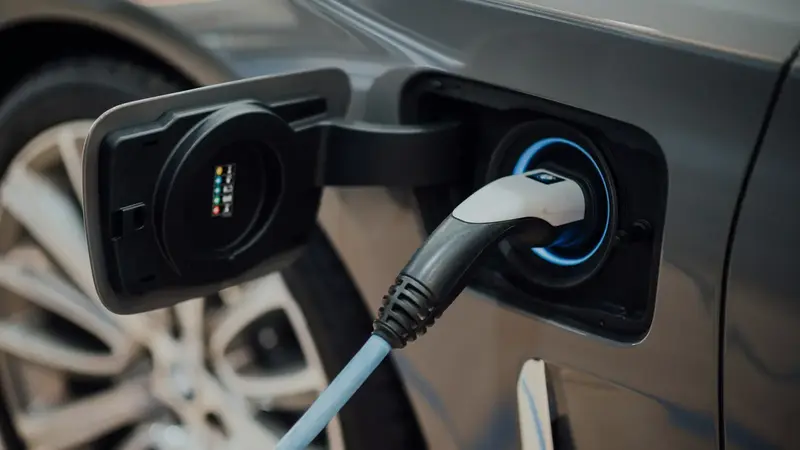
EV charger finance is asset finance that spreads the cost of buying and installing electric vehicle charge points, including…
With hire purchase, your business is treated as the owner, so it can usually claim capital allowances on the full cost when the…

Hire purchase is buying an asset in instalments: you claim capital allowances and own it after the last payment, but VAT on the…
Cherry picker finance spreads the cost of a mobile elevating work platform, such as a van-mounted boom, self-propelled boom,…

Coffee machine finance spreads the cost of a commercial bean-to-cup or traditional espresso machine, grinders and water…

Crane finance spreads the cost of a mobile, crawler, tower or lorry-loader crane over monthly payments, usually through hire…
What our clients say
“Simon was fast, kept us updated at all stages and was a real pleasure to work with on our asset finance. I highly recommend this company: excellent service all round.”
“We were looking for finance for new equipment. Simon is excellent and objective-driven, without the horrendous form filling of your usual high street bank. The whole thing took just a few days.”
“Spoke with Simon, who managed to get me the loan I needed promptly. The whole process was very smooth and was completed within a few days.”
“Getting a business loan can feel like a bit of a minefield, but everything was broken down for me in great detail. Will use again in the future!”
“Simon was a pleasure to deal with and helped us find a business loan that matched our growth goals and future expansion plans.”
“I couldn’t source funding for my business, but the team got in touch within an hour and had it sorted within 24 hours. Fantastic service, and I would definitely use them again.”