
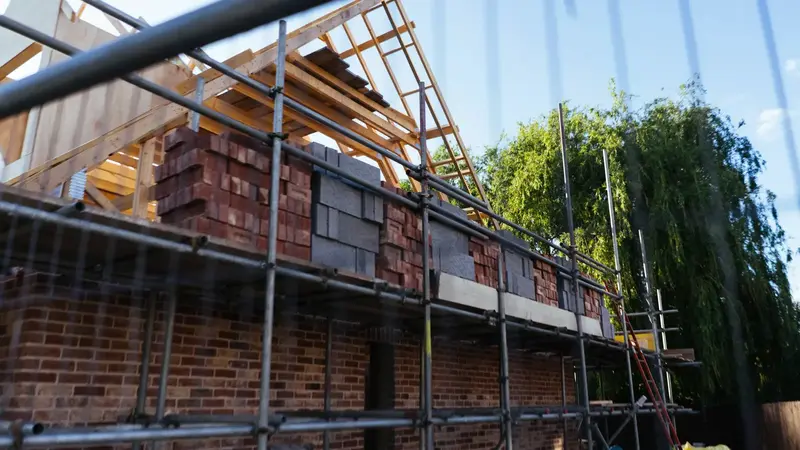
Development continuation and rescue finance for stalled schemes
Development continuation finance replaces or tops up a development loan that can no longer take a scheme to completion, usually because costs have overrun,…

Staged drawdowns, rolled-up interest, loan to cost and loan to GDV explained with a worked example, plus what development lenders check and how to prepare.
Explore funding options Prefer a quick call back? Leave your number
“I highly recommend this company: excellent service all round.”
In short
What you need to know.
The first release usually goes towards the site, with build money paid in stages after a monitoring surveyor signs off each phase. Interest is normally rolled up and paid on exit, when the units are sold or refinanced.
About property development finance
Specialist knowledge. Better outcomes.
It typically covers part of the site purchase and the construction costs, and is repaid at the end of the project by selling the completed property or refinancing onto a longer-term mortgage. It is for developers of all sizes, from a first single-plot scheme to multi-unit sites. Smart Funding Solutions is a broker: we search our panel of 300+ lenders, including specialist development lenders, and approach those suited to your scheme and experience. For funding for building contractors and trades, see our construction finance hub.
Use our development finance calculator for a quick check of loan, equity and profit on cost.
More detail on specific needs within this topic.
Development continuation finance replaces or tops up a development loan that can no longer take a scheme to completion, usually because costs have overrun,…

Permitted development finance funds buying and converting a building whose new use needs no full planning application: offices or shops turned into flats…

Development exit finance is a short-term loan taken at or near practical completion to repay the development lender, giving the developer time to sell or let…
A standard business loan is rarely the main funding for a build. Development lenders take a first charge over the site and release money in stages as the work is valued, which an ordinary term loan is not set up to do. A business loan for property development is more often used alongside development finance:
planning applications, architects, surveys and other pre-development costs, often funded from your own money or an unsecured business loan.
a secured business loan against other property you own can raise part of your contribution, where the development lender accepts it.
a bridging loan can complete the purchase before development finance is in place.
a construction firm building for clients borrows for plant and cash flow, covered on our construction finance hub.
Lenders backed by the British Business Bank's Growth Guarantee Scheme offer term loans to eligible trading businesses, but a principal private residence cannot be taken as security under the scheme (British Business Bank, Growth Guarantee Scheme). Whatever the mix, development lenders look at the total borrowing on the scheme, so tell them about every loan from the start.
The lender instructs an independent valuation, which assesses the site's current value, the build costs and the gross development value (GDV): what the finished scheme is expected to be worth. A monitoring surveyor usually reviews your costings and programme.
Lenders measure the loan against two figures: loan to cost (the loan as a share of total project costs, including land) and loan to GDV (the loan as a share of the finished value). Each lender sets its own limits, and your experience, deposit and the strength of the scheme affect what is offered. You fund the balance from your own money or from other sources, such as mezzanine finance or a joint venture partner.
Funds are released in stages. The first release usually goes towards buying the site or repaying existing debt on it. Build funds are then released in arrears as each stage of work is completed and signed off by the monitoring surveyor. Keeping to your programme and telling the lender early about changes avoids delays.
Interest is usually rolled up and paid when the loan is repaid, rather than monthly, because cash flow is tight during the build. You pay interest only on the funds drawn. Some lenders allow monthly payments where you have other income to support them.
Development loans are short-term and set to match the build programme, with some allowance for sale or refinance. Lenders need a clear exit: selling the units, or refinancing onto a commercial or buy-to-let mortgage. If sales take longer than planned, development exit finance can repay the development loan while you sell.
Yes, on the right scheme. Lenders that back first time developers want a modest project, full planning permission, a realistic appraisal with a contingency, and a professional team that has built something similar before. They usually lend a smaller share of the costs than they would to an experienced developer, so expect to put in more of your own money. As a whole-of-market commercial finance broker, Smart Funding Solutions puts first schemes to the development lenders on our panel that accept a limited track record.
Lenders also check that building control is lined up, and GOV.UK explains how building regulations approval works in England and Wales, while Scotland uses building warrants.
It can make a real difference. Partnering with an experienced developer, or appointing a project manager with a record of completed schemes, gives the lender the track record it is looking for, and a partner who brings land or cash can lower the amount you need to borrow. Lenders will want the joint venture agreement, each party's role and who gives the personal guarantees. Some first time developers start with a heavy refurbishment instead, using refurbishment finance, before moving to ground up building. Test the figures with our development finance calculator, read about mezzanine finance for the gap above senior debt, and see which lenders may quote for your scheme through Instant Quotes, with no credit search.
It adds a cost and a condition that lenders now look for in the appraisal. In England, a new planning permission must deliver at least a 10% increase in biodiversity value unless an exemption applies, either on the site, on land elsewhere or, as a last resort, by buying statutory credits. Lenders want that cost priced into the scheme and the plan approved before they release build funds, because an unmet condition can hold up the start. Smart Funding Solutions, a whole-of-market commercial finance broker, checks how the biodiversity plan is costed before a scheme goes to development lenders.
The full list is on GOV.UK's page of developments exempt from biodiversity net gain.
In practice, yes, if the plan is to sell homes to buyers who need a mortgage. The UK Finance Mortgage Lenders’ Handbook says lenders will generally only lend on a newly built, converted or renovated home covered by a warranty scheme or a professional consultant’s certificate, so development lenders ask for the warranty to be in place before work starts. Without it the exit is at risk. If the units are slow to sell when the loan ends, development exit finance can repay the build loan while sales complete, and land finance covers buying a site before planning. Check what may be on offer for your scheme with Instant Quotes, which runs no credit search.
The main alternatives to a senior development loan are bridging finance for lighter projects, mezzanine finance or a joint venture to reduce the equity needed, and borrowing against property you already own; for change-of-use schemes, conversion finance may be a better fit.
Development finance is available to experienced developers and, on smaller schemes, first-time developers who can show planning, a viable appraisal, a deposit, a capable professional team and a credible exit. Lenders look at:
The same scheme can be viewed quite differently from one lender to the next. Some development lenders prefer small residential schemes and first-time developers; others only consider larger or commercial projects, want a named main contractor on a fixed-price contract, or will not lend until planning conditions are discharged. Matching the scheme to lender appetite early saves time on valuations that go nowhere.
Development finance usually involves interest plus fees, such as arrangement and exit fees, valuation, monitoring surveyor and legal costs. Pricing depends on your experience, the loan to cost and loan to GDV, the scheme's risk and market conditions. Always look at the total cost of the facility across the project, not just the headline rate.
Development finance is secured by a first legal charge over the site, so the land and the building as it is constructed are the lender's main security. Most lenders lend to a special purpose company set up for the scheme and take a debenture over it as well. Personal guarantees are often required. Many lenders limit them to a share of the loan, but they may also ask for cost overrun or completion guarantees, so check exactly what you are signing. Where a mezzanine lender is involved it takes a second charge, and the two lenders sign an agreement setting out who ranks first. If your deposit is short, some lenders will accept a charge over other property you own instead. Our guide to debentures and fixed and floating charges explains what is registered.
How the main business finance structures work. Lenders set their own terms, so treat this as a guide to the questions to ask.
| Option | How you repay | Security | Often used for |
|---|---|---|---|
| Unsecured business loan | Fixed instalments, usually monthly | No charge over assets; a personal guarantee is usually required | Growth, stock, tax bills and cash flow |
| Secured business loan | Fixed instalments, often over a longer term | A charge over property or other assets | Larger sums, property and refinancing |
| Revolving credit facility | Interest on what you draw; repay and redraw | Varies by lender and case | Recurring or uneven cash flow gaps |
| Merchant cash advance | A share of future card takings | No charge over assets | Card-taking businesses with uneven months |
| Asset finance | Regular payments over the life of the asset | The asset being financed | Equipment, vehicles and machinery |
| Invoice finance | Settled as customers pay their invoices | Your unpaid invoices | Businesses waiting on customer payment |
General information only. Every lender has its own criteria, and all finance is subject to status.
Illustrative example only: not a quote or offer of finance.
The figures and percentage caps below are hypothetical, chosen to show the arithmetic rather than any lender's limits.
The same arithmetic shows why build cost overruns matter: if costs rise and the GDV does not, the gap you must fund grows.
Start early, as valuations and legal work take time; you can begin preparing while planning is being decided. It is free to enquire; any broker fee is disclosed separately before you proceed. You can apply online with your scheme details.
Illustrative figures from the numbers you enter, before you speak to a lender.
Sometimes. Because the loan is secured on the site, some specialist lenders will consider adverse credit if the scheme is strong, the numbers work and you have a solid exit. Expect closer scrutiny and higher costs. Being upfront about any credit issues and explaining the circumstances helps us approach the right lenders.
Development finance takes longer to arrange than most business borrowing, because it involves a valuation, a review of costs by a monitoring surveyor and legal work on the site. Having planning, costings, drawings and professional team details ready avoids unnecessary delays. For an urgent purchase, a bridging loan can sometimes be used first and refinanced onto development finance later.
Most development lenders prefer to lend to a limited company, often a special purpose company set up for the scheme, and take a debenture over it alongside a first legal charge on the site. Some will consider individuals or partnerships, but the choice of lenders is narrower. A separate company keeps the project apart from other trading and makes the security simpler. Our guide to sole trader vs limited company covers the wider trade-offs.
Usually not on its own. Most lenders want planning permission in place before build funds are released, so a site without consent is normally bought with your own money or a bridging loan, then refinanced onto development finance once planning is granted. Some lenders will include professional fees such as architects and planning costs within the facility, depending on their criteria. Our page on land finance covers buying sites at an earlier stage.
If build costs rise and the finished value does not, the gap you must fund grows, because the lender's loan to cost and loan to GDV limits stay the same. Lenders expect you to cover overruns from your own resources, which is why they check your contingency and ability to fund extra costs. Telling the lender early helps. Where the facility can no longer finish the scheme, development continuation finance can refinance the debt and fund the remaining build.
Usually yes, as long as the lenders know about each other. Development finance is secured on the site, so a business loan alongside it is often unsecured or secured elsewhere, and the development lender may need to consent to any further charge. See bridging loans for site purchases and Instant Quotes for your matches.
Yes, on a suitable scheme. Lenders that back first time developers look for a modest project with full planning, a realistic appraisal with contingency, a fixed price build contract and an experienced professional team. They usually lend a smaller share of costs than to experienced developers, so more of your own money goes in. Smart Funding Solutions, a whole-of-market commercial finance broker, searches development lenders that accept a limited track record.
It can. A joint venture with an experienced developer, or an experienced project manager on the team, gives lenders the track record they look for, and a partner bringing land or cash reduces the borrowing. Lenders ask for the joint venture agreement, each party's role and who will give personal guarantees.
In England, new planning permissions must deliver at least a 10% gain in biodiversity value unless exempt, on site, off site or through statutory credits. Lenders want the cost in the appraisal and the plan approved before releasing build funds. For applications made from 6 August 2026, sites of 0.2 hectares or less are exempt unless priority habitat is harmed, and self build and custom build schemes are no longer exempt.
Usually, yes, where the finished homes will be sold to buyers with mortgages. UK Finance's Mortgage Lenders' Handbook says lenders generally only lend on new, converted or renovated homes covered by a warranty scheme or a professional consultant's certificate, so development lenders ask for one before work starts. Smart Funding Solutions, a whole-of-market commercial finance broker, checks the exit before approaching lenders.

Commercial property finance is borrowing secured on business property: offices, industrial units, shops, trading premises and…

A commercial mortgage is a long-term loan secured on business property, used to buy, hold or refinance offices, industrial…

Mezzanine finance is a second-ranking loan that sits between the senior lender's debt and the owner's own equity, reducing the…
A commercial investment mortgage is long-term borrowing secured on a building let to business tenants and repaid from the rent…
Commercial property refinance replaces the loan on a building you already own, either to get better terms when a fixed period…
A semi-commercial mortgage is a long-term loan secured on a mixed-use property, such as a shop with a flat above, where the…
What our clients say
“Simon was fast, kept us updated at all stages and was a real pleasure to work with on our asset finance. I highly recommend this company: excellent service all round.”
“Spoke with Simon, who managed to get me the loan I needed promptly. The whole process was very smooth and was completed within a few days.”
“Getting a business loan can feel like a bit of a minefield, but everything was broken down for me in great detail. Will use again in the future!”
“Simon was a pleasure to deal with and helped us find a business loan that matched our growth goals and future expansion plans.”
“I couldn’t source funding for my business, but the team got in touch within an hour and had it sorted within 24 hours. Fantastic service, and I would definitely use them again.”

Chat with Smart Funding
We usually reply in seconds
Please don't share bank details or passwords here. Calls on 01244 267694.