
The funding the business needed was already sitting on the factory floor.
Rather than another expensive short-term unsecured loan, a manufacturer released capital from machinery it already owned.
Asset refinanceRead the transaction
When refinancing a business loan makes sense, how a lender switch actually completes, and what to check on legacy CBILS, RLS and bounce back loans.
Explore funding options Prefer a quick call back? Leave your number
“He knows his stuff and is easy to deal with.”
In short
What you need to know.
The new lender repays the old one on completion. Lenders look at current affordability and security, while the borrower must weigh early repayment charges, new fees and any guarantees the new facility needs.
A new, larger loan clears the old one and releases the difference for investment. Our guide on refinancing to raise capital covers when the extra money earns its keep. This is often simpler than asking a second lender to sit alongside the first, because many lenders dislike being one of several unsecured creditors.
Many bank loans and older government-backed loans were written on variable rates linked to base rate. A fixed-rate replacement trades possible future savings for certainty, which suits businesses with thin margins or fixed-price contracts.
Spreading the balance over more years lowers the monthly payment and can take pressure off cash flow. It usually increases the total interest paid, so it is most sensible when the business needs the breathing space to fund something productive, not simply to delay a problem.
Facilities repaid daily or weekly, such as a merchant cash advance, can be refinanced into a monthly term loan once trading has settled, which makes cash flow easier to predict.
Some loans end with a balloon payment or an interest-only balance to clear. Refinancing before the final date, rather than on it, keeps the business in control of the timing.
A transaction we arranged
£212,300
Approved, then nearly lost at completion. £212K consolidated.
A property-title requirement threatened a consolidation deal at the last hurdle. We worked it through and kept the structure intact.
Read the transactionAbout refinance business loan
Specialist knowledge. Better outcomes.
Refinancing is for businesses that already borrow and want the borrowing to fit better: a loan arranged in a crisis that now looks expensive, a facility coming to an end with a large balance outstanding, or a business that has grown and needs more than its current lender will add. This page covers the practical side of moving a single facility: why businesses do it, how the switch completes and where it goes wrong. Smart Funding Solutions is a broker, not a lender. We search our panel of 300+ lenders for replacement facilities from £10,000 to £20 million. The page sits within our business finance section; if you have several debts to combine rather than one to replace, start with business debt consolidation loans.
A large number of UK businesses still carry facilities from the pandemic-era schemes, and each behaves differently when you refinance.
New lenders count the repayments on these legacy loans in their affordability assessment even where they are not being refinanced, so a business with a bounce back loan it keeps still needs to show room for both.
Delays usually happen at stages three and five. The SFS business debt consolidation case shows how a single property title requirement nearly stopped an approved £212,300 deal at completion, and why persistence between lender, borrower and solicitor matters.
The main alternatives to replacing a loan with another term loan are refinancing against equipment, refinancing against property, or renegotiating with the lender you already have.
If you have an iwoca facility alongside other short-term debts, our guide on how to consolidate an iwoca loan into one business debt consolidation loan sets out the settlement figures to collect and how to compare the total cost.
Larger refinancings can use private debt funds.
A business can usually refinance if it can show affordability on today's trading, a clean record of repayments on the existing loan and a sound reason for the switch. Lenders look at:
Refinancing a single business loan typically takes two to six weeks, longer where property security is involved. An unsecured like-for-like switch can move quickly once the new lender has accounts, bank statements and a redemption statement. Secured refinances take longer because the new lender needs a valuation, its own legal work and the release of the old lender's debenture or charge. The usual causes of delay are an existing lender slow to issue settlement figures, a deed of priority between lenders, title problems on the property and personal guarantees that need formal release. Asking for the redemption statement early, and having a solicitor ready, takes weeks off the process. If the deadline is fixed, a short-term bridging loan can sometimes clear the old lender while the longer-term refinance completes.
Refinancing can turn one expensive problem into a longer one. If the business cannot afford its current repayments because trading has fallen, a new loan on a longer term may only postpone the difficulty, and it can add a guarantee or security that did not exist before. Talk to your existing lender, and consider professional advice, before refinancing under pressure; our guide to funding a business through a downturn sets out what to do first when trading falls. Where the pressure comes from tax arrears, HMRC Time to Pay may be cheaper than new borrowing. If refinancing makes sense as part of expansion, our page on growth finance covers the wider picture.
How the main business finance structures work. Lenders set their own terms, so treat this as a guide to the questions to ask.
| Option | How you repay | Security | Often used for |
|---|---|---|---|
| Unsecured business loan | Fixed instalments, usually monthly | No charge over assets; a personal guarantee is usually required | Growth, stock, tax bills and cash flow |
| Secured business loan | Fixed instalments, often over a longer term | A charge over property or other assets | Larger sums, property and refinancing |
| Revolving credit facility | Interest on what you draw; repay and redraw | Varies by lender and case | Recurring or uneven cash flow gaps |
| Merchant cash advance | A share of future card takings | No charge over assets | Card-taking businesses with uneven months |
| Asset finance | Regular payments over the life of the asset | The asset being financed | Equipment, vehicles and machinery |
| Invoice finance | Settled as customers pay their invoices | Your unpaid invoices | Businesses waiting on customer payment |
General information only. Every lender has its own criteria, and all finance is subject to status.
| Cost or factor | Where to find it | Why it matters |
|---|---|---|
| Early repayment charge | Existing agreement or redemption statement | Can wipe out the saving on a short remaining term |
| New arrangement fee | New lender's offer | Often added to the loan, so interest is paid on it |
| Legal and valuation costs | Secured refinances | Fixed costs weigh heavily on smaller loans |
| Total repayable over the new term | Offer schedule | A lower monthly payment can still mean paying more overall |
| Guarantees and security | Offer conditions | A cheaper loan with a new personal guarantee may not be better |
Our guide to paying off a business loan early explains how settlement charges are typically calculated.
We review your existing agreements and redemption figures, tell you plainly whether a switch looks worthwhile after all costs, and approach lenders on our panel suited to the size, security and purpose. We then stay involved through security releases and completion, which is where refinances most often slip. The new lender decides whether to approve. It is free to enquire; any broker fee is disclosed separately before you proceed.
Illustrative figures from the numbers you enter, before you speak to a lender.
Yes. Many lenders will extend a term or top up a well-run loan, sometimes with less paperwork than a new lender. It is still worth comparing the offer with the wider market.
Each full application normally involves a credit search. Approaching only lenders likely to accept the case limits the number of searches. Clearing the old loan on time is recorded as settled.
It is harder. Most lenders want to see the existing loan up to date. Some specialist lenders consider recent arrears where the cause has been fixed, but the cost will be higher. Our page on bad credit business loans covers the options.
Only once the old lender formally releases it. Ask for written confirmation, particularly if the guarantee was an all-monies guarantee covering other facilities with that lender. Our personal guarantee guide explains the types.
The cost of refinancing a business loan is the new lender's fees and interest plus any early repayment charge on the loan being cleared. Some existing loans carry no settlement penalty, while others charge a fee or a share of future interest, so ask your current lender for a settlement figure first. Compare the total cost of both options over the same period. Our guide to paying off a business loan early explains settlement charges.
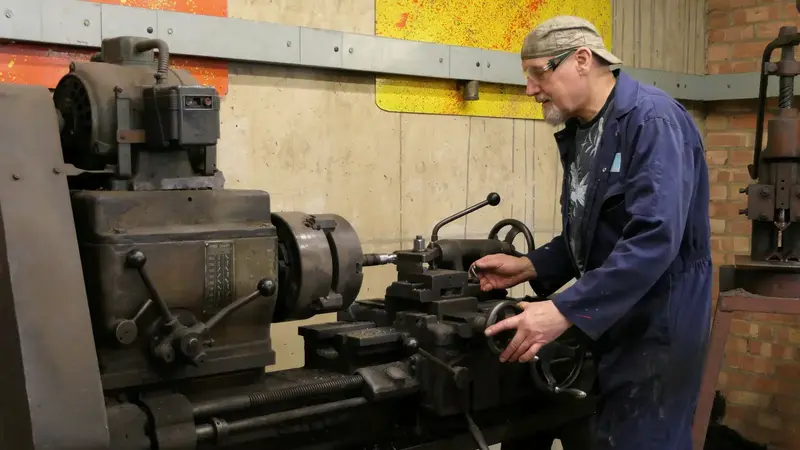
Rather than another expensive short-term unsecured loan, a manufacturer released capital from machinery it already owned.
A £500,000 business loan is usually a secured term loan, often combined with invoice finance, asset finance or a revolving…
Asset based lending is a revolving business facility secured on a company's working assets, usually trade debtors plus stock,…
Consolidating business debt makes sense when one new repayment is affordable in quieter months and the total you will repay,…
Settling a business loan early saves money only when the written settlement figure is clearly lower than the repayments left to…

The debt service coverage ratio (DSCR) measures whether a business or property generates enough cash to meet its loan…
A £1 million business loan is usually a negotiated facility package rather than a single loan, combining term debt, asset-based…
What our clients say
“We had already approached other finance companies who weren’t able to help. From our first conversation to everything being completed took around 7 days, and they kept us informed throughout. If you’ve struggled to get help elsewhere, I would absolutely recommend giving them a call.”
“Simon was fast, kept us updated at all stages and was a real pleasure to work with on our asset finance. I highly recommend this company: excellent service all round.”
“Spoke with Simon, who managed to get me the loan I needed promptly. The whole process was very smooth and was completed within a few days.”
“Getting a business loan can feel like a bit of a minefield, but everything was broken down for me in great detail. Will use again in the future!”
“Simon was a pleasure to deal with and helped us find a business loan that matched our growth goals and future expansion plans.”
“I couldn’t source funding for my business, but the team got in touch within an hour and had it sorted within 24 hours. Fantastic service, and I would definitely use them again.”