
Packaging machinery finance for converters, co-packers and packaging manufacturers
Packaging machinery finance usually means hire purchase or leasing for converting equipment such as die-cutters, folder-gluers…
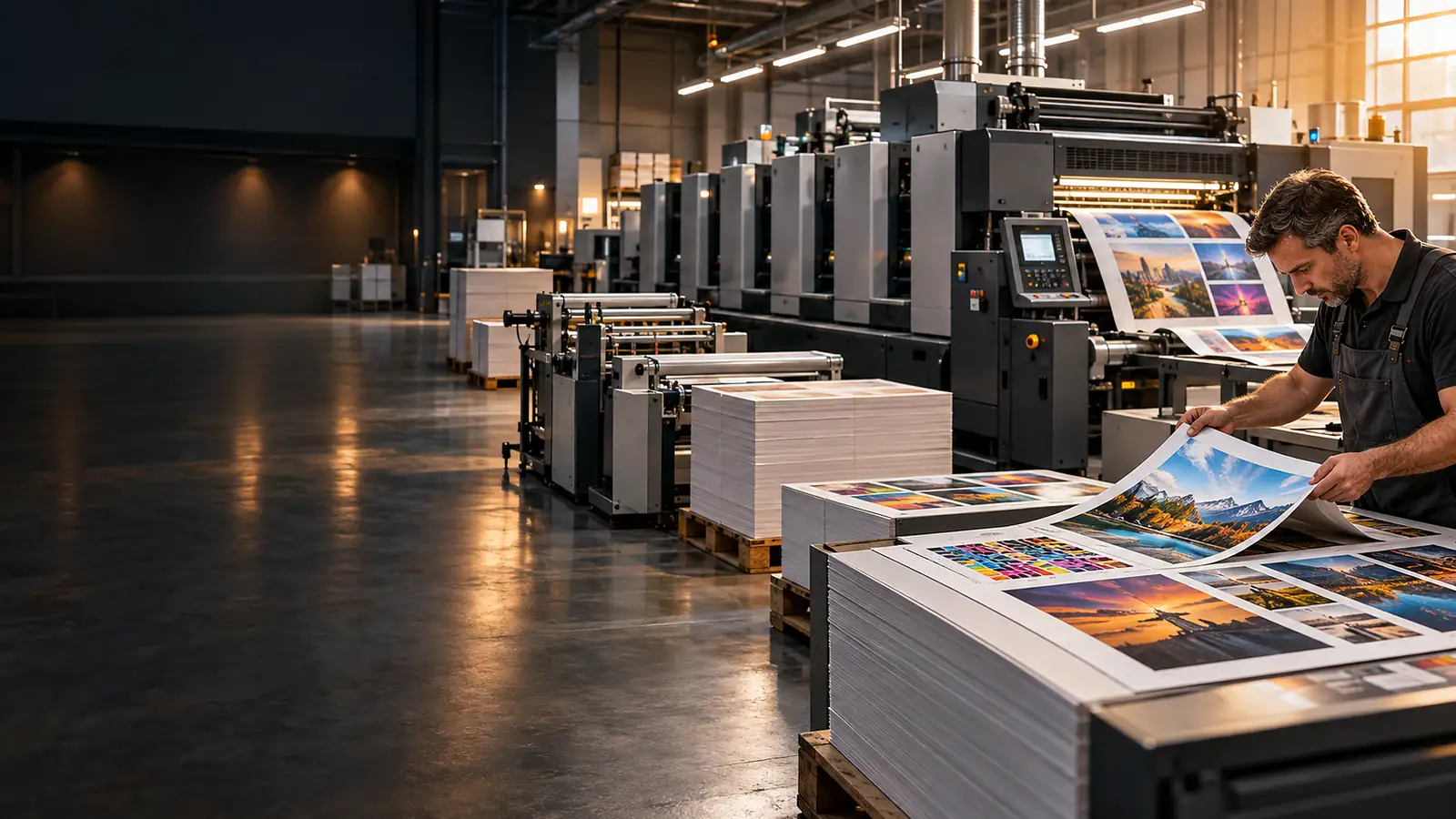
How UK printers fund digital and litho presses, finishing kit and paper, with what lenders check, how click-charge contracts affect deals and how to apply.
Explore funding options Prefer a quick call back? Leave your number
“He is fair and always gives advice that is in the best interest of his clients.”
In short
Supporting printing businesses at every stage.
Digital presses are often supplied with click-charge service contracts, so the finance and the service agreement need reading together. Lenders focus on the age and resale value of the press, margins after paper costs, and dependence on a few large print buyers.
The operating cycle
Cash leaves the business at every stage before it comes back. Each stage below is a point where the right facility can carry the gap.
“I highly recommend this company: excellent service all round.”
Orders, contracts or customers secured.
Stock, materials and equipment paid for up front.
Asset finance →Wages and suppliers paid on time.
Working capital →The work is done or the goods are sold.
Customers pay, sometimes weeks later.
Invoice finance →VAT and Corporation Tax fall due.
HMRC loans →Growth, a new site or new equipment.
Business loans →About printing business finance
Specialist knowledge. Better outcomes.
This page is for owners of UK commercial and trade printers, digital print shops, wide-format and sign makers, label printers and print management companies, whether you are replacing a litho press, adding digital capacity or buying another printer. Smart Funding Solutions is a broker, not a lender: we search our panel of 300+ lenders, including asset and invoice finance specialists who know print equipment, and arrange facilities from £10,000 to £20 million. It is part of our manufacturing finance section; carton, corrugated and flexible packaging converters have their own page on packaging finance.
Choose the need, and we’ll show you how lenders usually structure it.
Hire purchase or leasing spreads the cost of new or used equipment over its working life, with the machine as security. It is the natural fit for major kit because the lender can rely on resale value. Leasing often suits digital presses you expect to upgrade within a few years; hire purchase suits a litho press or guillotine you will keep. Our machinery finance page explains the agreement types, and asset finance covers the wider product range.
Many digital presses are sold with finance arranged by the manufacturer, bundling the equipment, service and a minimum monthly click volume into one agreement. That can be convenient, but it makes the true cost hard to compare and can tie you to minimum volumes and an end date that does not suit you. Ask for the equipment price and the service contract separately, and compare independent finance on the equipment alone. Check what happens if you want to upgrade before the term ends.
If you own presses or finishing equipment outright, asset refinancing can release cash from them while they keep running, for example to fund a deposit on new digital kit.
Printers invoice trade and corporate customers on credit terms, so invoice finance fits well, provided reprint claims and credit notes are under control. Print management firms that outsource production and hold few assets often rely on it entirely. A revolving credit facility suits fluctuating paper buying and seasonal peaks.
Secured or unsecured term loans suit one-off spending such as a move to larger premises, a software platform or buying another printer. Where you need to buy large volumes of paper or board ahead of a contract, our guide to stock finance explains what lenders will and will not advance against.
Print is capital heavy and margins are thin, so lenders look harder at affordability than in many trades. Much litho and short-run work has moved to digital, which changes the equipment calculation: a digital press costs less upfront but dates faster, and the running cost sits in a click charge per impression under a service contract with the manufacturer. Used litho presses from leading makers still have an export market, which supports their value as security, while older digital engines have very little resale. Paper prices can rise sharply and customers do not always accept increases quickly. Demand is seasonal for many printers, with peaks around Christmas, the academic year and, for some, elections, and quieter summers. The British Printing Industries Federation publishes research on trading conditions that lenders and printers both use.
Alternatives to borrowing include grants for efficiency investment, which appear from time to time and can be searched through the GOV.UK finance and support finder, equity from an investor for a fast-growing business, and outsourcing specialist finishing until volumes justify buying. Companies buying new equipment may qualify for full expensing; ask your accountant how that compares across hire purchase and leasing.
Make, model, age, impression count and resale value; for used presses, an inspection or engineer's report.
Gross margin trend and how quickly price rises are passed to customers.
Concentration with large print buyers or agencies, contract terms and debtor days.
Whether existing presses are running full shifts and whether the new kit brings work in-house that is currently outsourced.
Other leases and service contracts, including minimum click volumes, which lenders treat as fixed costs.
Business and director records, and whether guarantees or additional security are needed.
Print lenders look at what a new press will earn and what commitments come with it.
Printers working mainly in packaging can also see packaging finance.
Digital presses usually come with service contracts charged per impression, often with minimum volumes. Lenders treat those minimums as fixed costs alongside the finance repayments.
Packaging and label printers serve brands now paying for their packaging under extended producer responsibility, which can shift demand towards lighter or recyclable formats. Lenders ask how the order book is adapting; see GOV.UK on packaging EPR.
Companies buying new presses may claim full expensing, which reduces the tax cost and is reflected in a lender's cash flow test.
Before applying, it pays to define exactly what you are funding and what it will deliver, then compare offers on total repayable, fees, term, security and early settlement terms rather than the monthly figure alone.
It is free to enquire; any broker fee is disclosed separately before you proceed.
Yes. Many lenders fund used presses and finishing equipment, depending on make, age, condition and resale value. You will normally need a supplier quote or invoice, and some lenders ask for an inspection or independent valuation. Well-known brands with an established second-hand market are easier to fund. See used equipment finance.
Compare it first. Manufacturer packages can be competitive, but bundling service and minimum click volumes into one agreement makes the cost harder to judge. Ask for the equipment and service elements separately and get an independent quote for the equipment.
Possibly, if the reasons are clear and current trading supports the borrowing. Lenders will want recent management accounts and a credible plan, and asset-backed finance is often easier than unsecured lending. Our page on finance after declines or credit issues covers the options.
Yes, but it is usually funded differently from presses. Workflow software, print MIS and web-to-print platforms can cost as much as a small press but have no resale value, so asset lenders treat them as soft assets. Some lenders will include software within a wider equipment package, while others prefer an unsecured loan for it, judged on affordability and margins rather than security. Our guide to soft asset finance explains how these deals work.
Yes, invoice finance suits printers that invoice other businesses on credit terms, advancing part of each invoice when it is raised and releasing the balance, less fees, when the customer pays. Providers check the spread of customers, the history of disputes and credit notes, and whether work is invoiced once delivered. Where invoices are small and frequent, a revolving credit facility can be simpler. Our invoice finance guide compares factoring and discounting.
Instant Quotes shows which lenders on our panel are likely to fit your printing business, with no credit search. Press finance is then confirmed once the lender has the machine details and price.
Packaging machinery finance usually means hire purchase or leasing for converting equipment such as die-cutters, folder-gluers…

Design agencies generally fund growth with an unsecured loan, workstations and studio kit with equipment finance, and the wait…

SME loans are business finance for companies with fewer than 250 employees. The right product depends on what the money is for…

Distillery finance usually splits into three parts: asset finance for stills, mash tuns and bottling lines; working capital for…
Electrical equipment manufacturers typically fund surface-mount lines, test rigs and wiring equipment through asset finance,…
Oil and gas service companies usually fund rental tools, inspection kit, lifting equipment and offshore containers through…
What our clients say
“Simon was fast, kept us updated at all stages and was a real pleasure to work with on our asset finance. I highly recommend this company: excellent service all round.”
“Spoke with Simon, who managed to get me the loan I needed promptly. The whole process was very smooth and was completed within a few days.”
“Getting a business loan can feel like a bit of a minefield, but everything was broken down for me in great detail. Will use again in the future!”
“Simon was a pleasure to deal with and helped us find a business loan that matched our growth goals and future expansion plans.”
“I couldn’t source funding for my business, but the team got in touch within an hour and had it sorted within 24 hours. Fantastic service, and I would definitely use them again.”