

Gym equipment finance: leasing and hire purchase for UK gyms
Lease the gym kit that dates and buy the kit that lasts. Cardio machines with screens and software usually suit an operating…

How launderettes, hotels and care providers fund washer-extractors, dryers, ironers and boilers through hire purchase, leasing and loans, with a worked example.
“He is fair and always gives advice that is in the best interest of his clients.”
In short
What you need to know.
Launderettes, hotels, care homes and contract laundries all use it, and the installation works that go with a new laundry are usually funded separately on a loan. We arrange it as a broker, searching the whole market for lenders that understand the trade.
About commercial laundry equipment finance
Specialist knowledge. Better outcomes.
A bank of washer-extractors and dryers for a launderette, a flatwork ironer and folder for a hotel, or a barrier washer for a care home can each cost more than a year's profit, and the kit tends to need replacing all at once rather than one item at a time. Commercial laundry equipment finance lets the business pay for the machines from the income they generate rather than from cash reserves. Smart Funding Solutions is a broker, not a lender. We arrange finance from £10,000 to £20 million by searching the whole market, and this page sits within our laundry and dry cleaner finance section.
Asset finance lenders judge equipment by what it would fetch if they had to repossess and sell it. Commercial laundry machines from recognised manufacturers do well on that test because there is an active second-hand market and the kit lasts for years. The items we are most often asked to fund are
Pipework, gas supply, ducting, drainage, electrical upgrades and building alterations are not part of the machine, so most asset lenders leave them out. They are funded on a loan instead, which we cover below. For a dry cleaning machine or a solvent system, see the main dry cleaning business finance page.
Laundry services are standard-rated, so a VAT-registered launderette, contract laundry or hotel reclaims the VAT on its machines. On hire purchase the VAT is normally paid at the start and recovered on the next return, so the real cost is a short cash flow gap, and some lenders will fund the VAT over a few months to close it. On a lease the VAT is charged on each rental instead, which spreads it without any upfront outlay. A care home is in a different position. Welfare services are largely VAT exempt, so a care provider often cannot recover the VAT on a barrier washer, and the partial exemption rules decide how much, if any, comes back. That makes the total cost of the machines higher and tilts some care providers towards leasing, where the VAT is spread across the term. Where the VAT on a large order is a strain, a short VAT loan can bridge the gap until the return is paid.
On tax, a business that buys on hire purchase normally claims capital allowances on the machines, and the Annual Investment Allowance lets most laundries deduct the full cost in the year of purchase. Lease rentals are usually deducted as a trading expense instead. Your accountant will confirm which treatment suits the business.
Illustration only, with round hypothetical figures. A launderette on a busy high street has eight washers and eight dryers that are twelve years old and breaking down weekly. The owner is quoted £90,000 plus VAT for a new bank of machines, including card readers, and £15,000 for the gas, ducting, drainage and electrical works. The purchase is arranged like this.
Hire purchase over five years matches the expected life of the washers and dryers. A shorter term on the works keeps the business from paying for ducting long after it has been written off. What the monthly figures would be depends on the lender, the deposit and the credit position, which is why it is worth seeing offers from more than one.
New machines from the main manufacturers are the simplest to fund and usually carry the longest terms. Refurbished machines from a recognised dealer are also widely financed, often over three years rather than five, provided the dealer gives a warranty and the serial numbers can be checked. Private sales of used kit are the hardest, because the lender has to be satisfied that the seller owns the machines and that nothing is still owed on them. If you already own a laundry and want to release cash from it, sale and leaseback turns the machines into working capital. The Textile Services Association, the trade body for commercial laundries, publishes guidance on standards and energy use that lenders sometimes ask about on larger plant.
Match the term to the life of the kit, and do not stretch a loan for building works over five years just because the machines are financed that way. Check whether a lease has a secondary rental period that keeps running until you give notice, and whether a service contract has been bundled into the finance so that payments continue after support ends. If the business is partly VAT exempt, make sure the VAT cost has been included in the comparison between buying and leasing. Finally, be realistic about throughput. A hotel bringing laundry in-house saves money only if the rooms keep the machines busy, and a lender will test that assumption before it lends. If you are unsure about guarantees, our guide to personal guarantees and personal guarantee insurance explain what you are signing.
Lenders fund limited companies, sole traders, partnerships and, case by case, charities and community interest companies that run care services. Most prefer at least a year of trading, although a new launderette or a hotel bringing laundry in-house can usually be funded on a larger deposit and the owners' track record. What lenders look at is
Recent accounts and bank statements, and whether existing finance, rent and utility costs leave room for the new repayment.
Make, model, age and supplier. New and recent machines from established manufacturers are the easiest to fund. Used and refurbished kit is fundable, often over a shorter term; see used equipment finance.
A hotel contract, a care provider's occupancy or a launderette's takings history all help, particularly when the machines add capacity rather than replace like for like.
Directors are normally asked for a personal guarantee. A past default or CCJ does not rule you out, but it narrows the field; see asset finance with bad credit.
Gas appliances must be installed by a Gas Safe registered engineer, steam boilers and pressure vessels need a written scheme of examination under HSE pressure systems rules, and care providers are inspected by the Care Quality Commission in England, the Care Inspectorate in Scotland and Care Inspectorate Wales. Lenders rarely ask for these documents on a straightforward deal, but they expect the business to have them.
How the main business finance structures work. Lenders set their own terms, so treat this as a guide to the questions to ask.
| Option | How you repay | Security | Often used for |
|---|---|---|---|
| Unsecured business loan | Fixed instalments, usually monthly | No charge over assets; a personal guarantee is usually required | Growth, stock, tax bills and cash flow |
| Secured business loan | Fixed instalments, often over a longer term | A charge over property or other assets | Larger sums, property and refinancing |
| Revolving credit facility | Interest on what you draw; repay and redraw | Varies by lender and case | Recurring or uneven cash flow gaps |
| Merchant cash advance | A share of future card takings | No charge over assets | Card-taking businesses with uneven months |
| Asset finance | Regular payments over the life of the asset | The asset being financed | Equipment, vehicles and machinery |
| Invoice finance | Settled as customers pay their invoices | Your unpaid invoices | Businesses waiting on customer payment |
General information only. Every lender has its own criteria, and all finance is subject to status.
Four structures cover almost every laundry equipment purchase, and many projects use two of them together.
| Option | How it works | Best suited to | Watch for |
|---|---|---|---|
| Hire purchase | Deposit, fixed monthly payments, the machines are yours after the final payment | Washers, dryers and ironers you will keep for their full life | VAT on the full price is normally due at the start, then reclaimed if you are VAT registered |
| Finance lease | The lender owns the kit and you rent it, with VAT spread across the rentals | Businesses that want lower upfront cost and to treat rentals as an expense | Secondary rental periods and what happens at the end of the term |
| Operating lease | Shorter rental with the lender taking the residual value | Hotels and care groups that want to upgrade every few years | Return conditions and wear charges |
| Unsecured loan | Cash to the business, no charge over the machines | Plumbing, gas, ducting, electrics and shop works | Usually needs a personal guarantee and stronger trading figures |
| Asset refinance | Borrow against machines you already own outright | Releasing cash from a paid-off laundry to fund expansion | Adds a monthly commitment to kit that was costing nothing |
Our guides to hire purchase versus leasing and finance lease versus operating lease set out the mechanics, and asset finance and capital allowances explains the tax side. Rates, deposits and terms depend on the lender, the age of the machines and the strength of the business, and a broker's job is to find the lender whose appetite fits your deal rather than the one the supplier happens to work with.
Send us the quotes and tell us what the laundry does. We separate the machines from the works, check how VAT affects the comparison for your business, and approach lenders across the market that fund laundry equipment for businesses at your stage. We compare their terms with any finance the supplier has offered, and the lender you choose pays the supplier directly on delivery. Any broker fee is disclosed before you proceed. For wider borrowing see asset finance, business equipment financing and cleaning equipment finance, and for a quick sense of lender appetite, start with Instant Quotes and tell us the price of the machines.
Instant laundry equipment finance quotes
Tell us how much you need. Instant Quotes shows which lenders on our panel fit your business, then a broker helps you choose between hire purchase, leasing and a loan.
Prefer to talk it through? Call 01244 267694
Usually, with a larger deposit and evidence that you know the trade. Lenders funding a new launderette rely on the resale value of the machines, the owner's personal credit and a simple forecast of takings. Hard assets such as washers and dryers are easier to fund before opening than shop works or payment systems. Our start-up business loans page covers the wider options.
Terms depend on the lender and the age of the machines. New washer-extractors, dryers and ironers are commonly funded over three to five years, and refurbished machines over a shorter period. Building and installation works are usually funded separately on a loan with its own term.
Yes. Barrier washers and thermal disinfection dryers are standard purchases for care homes, hospices and nursing homes, and lenders are used to them. Because welfare services are largely VAT exempt, the VAT on the machine is often a real cost, so compare hire purchase and leasing on the total you pay including VAT.
Sometimes, but not always. Supplier finance is convenient and occasionally subsidised, but it comes from one funder. A broker compares that offer with lenders across the market on deposit, term, rate and end-of-term conditions, so you can take the supplier's deal knowing it was the best one or move to a better one.
Yes, provided the machines come from a recognised dealer or the seller can prove ownership. Lenders usually offer a shorter term on older kit and may ask for a larger deposit. See our page on used equipment finance.
Asset lenders generally fund the machines only, because works fixed to the building have no resale value. The installation is usually funded on an unsecured business loan alongside, or paid from cash. Some lenders will include a modest installation charge from the supplier within the equipment agreement.
Yes. Instant Quotes asks how much you need and what it is for, then shows which lenders fit your business with no credit search. A broker then takes the quotes, the equipment and the works and turns them into a full application.
Lease the gym kit that dates and buy the kit that lasts. Cardio machines with screens and software usually suit an operating…
Electrical equipment manufacturers typically fund surface-mount lines, test rigs and wiring equipment through asset finance,…
Oil and gas service companies usually fund rental tools, inspection kit, lifting equipment and offshore containers through…

Bakery equipment finance spreads the cost of ovens, provers, mixers, slicers and shop counters over fixed monthly payments,…
Meat processing equipment finance funds saws, mincers, packing lines, chillers, blast freezers and refrigerated vehicles…
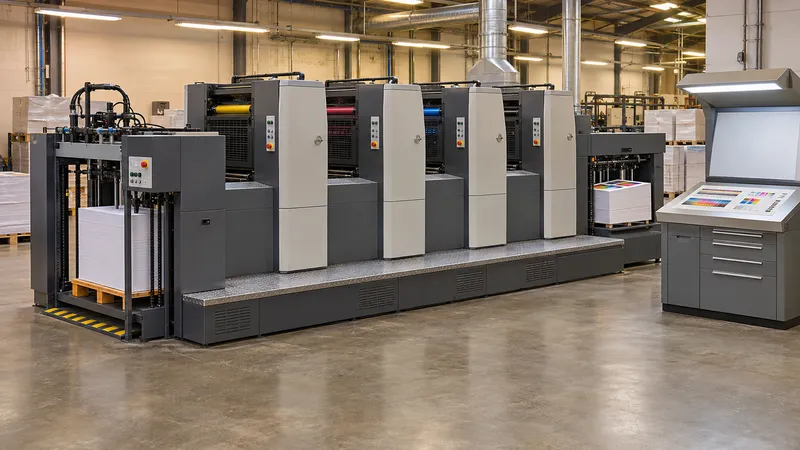
Printing business finance usually combines asset finance for presses, finishing equipment and print software with invoice…
What our clients say
“Simon was fast, kept us updated at all stages and was a real pleasure to work with on our asset finance. I highly recommend this company: excellent service all round.”
“Spoke with Simon, who managed to get me the loan I needed promptly. The whole process was very smooth and was completed within a few days.”
“Getting a business loan can feel like a bit of a minefield, but everything was broken down for me in great detail. Will use again in the future!”
“Simon was a pleasure to deal with and helped us find a business loan that matched our growth goals and future expansion plans.”
“I couldn’t source funding for my business, but the team got in touch within an hour and had it sorted within 24 hours. Fantastic service, and I would definitely use them again.”

Chat with Smart Funding
We usually reply in seconds
Please don't share bank details or passwords here. Calls on 01244 267694.