

Climbing wall finance for bouldering and climbing centres
Climbing wall finance usually combines asset finance for holds, matting, auto-belays and training boards with a term loan or…
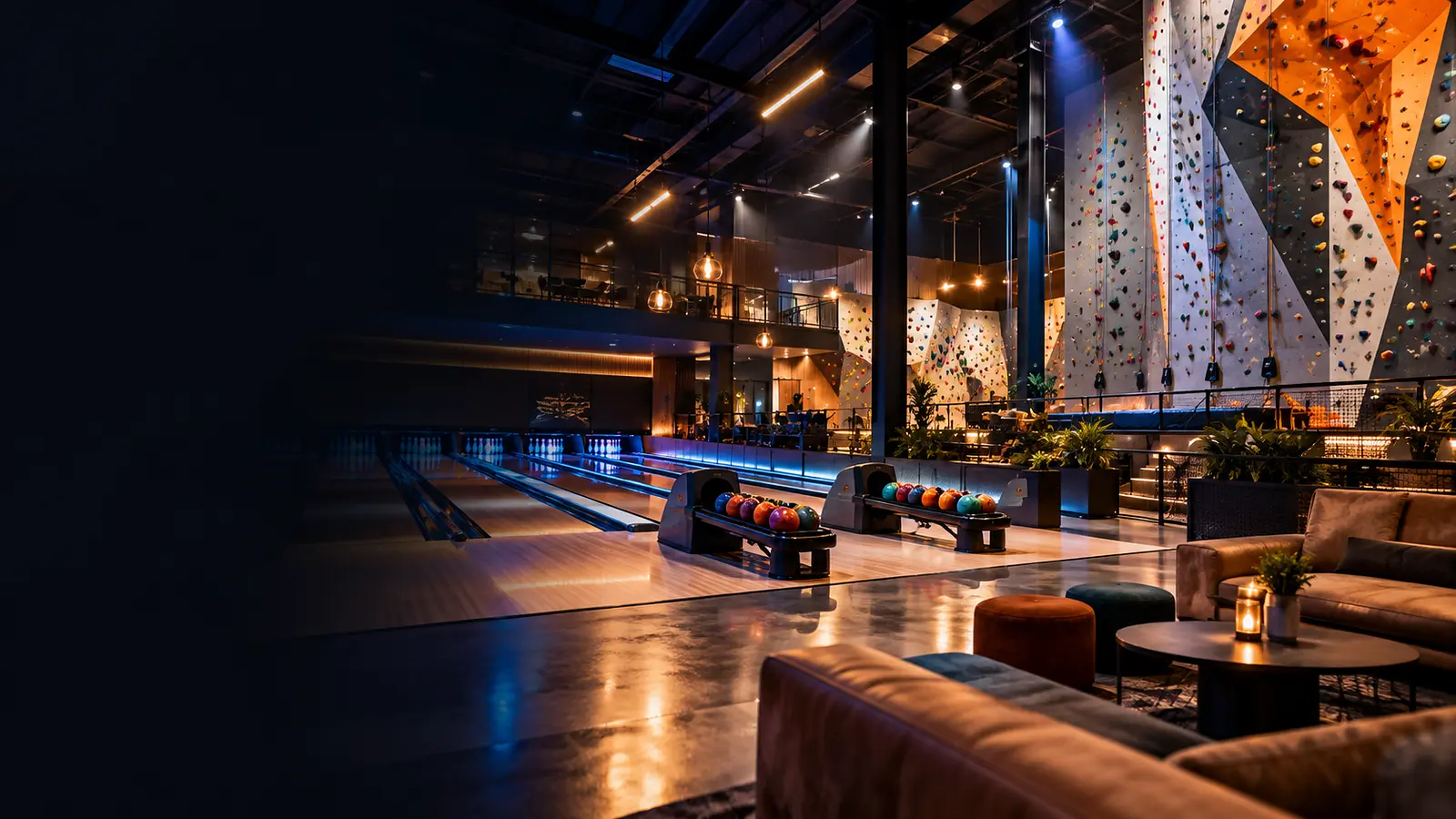
How bowling centres and bars fund lanes, pinsetters, scoring, refits and centre purchases, which finance fits each cost, and what lenders check before lending.
Explore funding options Prefer a quick call back? Leave your number
“Amazing, easy to talk to and extremely helpful.”
In short
What you need to know.
Lenders look most closely at games played, food and drink income per site, the lease or freehold, the age and condition of the equipment, and the operator's experience.
About bowling alley finance
Specialist knowledge. Better outcomes.
This page is for people running or planning bowling venues: traditional tenpin centres, family entertainment centres with bowling at their core, bars and restaurants adding a few boutique lanes, and operators buying or refurbishing an existing centre. It covers lanes, pinsetters, scoring, refits and purchases. Smart Funding Solutions is a broker, not a lender: we search a panel of 300+ lenders and arrange facilities from £10,000 to £20 million. It goes deeper than our indoor leisure finance page, which covers bowling alongside trampoline parks, climbing and other attractions.
Pinsetters, scoring systems, lane machines, ball returns, balls, shoes and furniture can usually be funded with asset finance. Bowling equipment from established manufacturers can be removed and reinstalled elsewhere, and there is a market for used kit, which makes it easier for lenders to fund than fixed attractions. Hire purchase suits equipment you will keep for its working life.
Refurbished pinsetters and lanes can cut the cost of a fit-out, and some lenders will fund them if they come through a recognised supplier with a known history. Our page on used equipment finance explains how lenders approach second-hand assets.
Building works, the bar and dining areas, approach areas, ceilings, lighting and decoration cannot be repossessed in any useful way, so they are usually funded with a term loan, an unsecured business loan or fit-out and refurbishment finance. Kitchen and bar equipment can sit on asset finance alongside; see commercial kitchen equipment finance.
If you own your pinsetters and lanes outright, asset refinancing may release cash against them to fund a refit or new attraction, depending on their age and condition.
Buying an existing centre as a going concern is usually funded with acquisition finance, often combined with asset finance on the equipment. Where the freehold is included, a commercial mortgage may fund the property. Our guide on how to buy a business covers the process.
Income comes from games or timed lane hire, shoe hire, food and drink, amusements, parties and corporate bookings, with leagues filling quieter weekday evenings. In many modern venues food and drink matters as much as the bowling itself, and add-ons such as mini golf, pool, karaoke or an arcade lift spend per visit. Weekends, school holidays and the Christmas party season bring the peaks.
The cost base is rent or property costs, staff, energy and the upkeep of a lot of machinery. Pinsetters need regular servicing and parts, lanes need oiling and resurfacing, and scoring and masking units date quickly. Larger centres often employ a mechanic; smaller venues rely on a service contract. Equipment that is not maintained affects both the customer experience and its value as security.
Most bowling venues sell alcohol, which in England and Wales needs a premises licence from the local council, along with a designated premises supervisor. Prize machines such as crane grabs and coin pushers are gaming machines, and whether you can site them depends on your premises and permits; the Gambling Commission's guidance on category D gaming machines is the place to start. Lenders funding a bar-led venue will want to see that licences are in place and transfer with any purchase.
Pinsetters and lanes hold value better than most leisure kit, but only if they are maintained, so build servicing and parts into your budget. Never take finance for longer than the lease has left to run. A refit should lift income enough to cover the payments in a cautious year, not just a strong one. Expect lenders to ask for personal guarantees; see our guide to personal guarantees. Borrowing of £25,000 or less by sole traders and small partnerships can be regulated consumer credit, which brings additional protections.
Alternatives include a landlord contribution, refurbishing rather than replacing equipment, or adding lanes in phases. Bars adding a few lanes may find it simpler to fund the project within bar and pub loans or hospitality business loans.
lines or lane hours, spend per head and the split between bowling, food and drink and amusements
years left on the lease, break clauses and rent reviews, or the freehold value
make, age, condition and service records for pinsetters and scoring
the operator's track record in leisure or hospitality
premises licence, any gaming permits and public liability cover
credit records, contribution and personal guarantees
How the main business finance structures work. Lenders set their own terms, so treat this as a guide to the questions to ask.
| Option | How you repay | Security | Often used for |
|---|---|---|---|
| Unsecured business loan | Fixed instalments, usually monthly | No charge over assets; a personal guarantee is usually required | Growth, stock, tax bills and cash flow |
| Secured business loan | Fixed instalments, often over a longer term | A charge over property or other assets | Larger sums, property and refinancing |
| Revolving credit facility | Interest on what you draw; repay and redraw | Varies by lender and case | Recurring or uneven cash flow gaps |
| Merchant cash advance | A share of future card takings | No charge over assets | Card-taking businesses with uneven months |
| Asset finance | Regular payments over the life of the asset | The asset being financed | Equipment, vehicles and machinery |
| Invoice finance | Settled as customers pay their invoices | Your unpaid invoices | Businesses waiting on customer payment |
General information only. Every lender has its own criteria, and all finance is subject to status.
| Cost | Finance that often fits | Why |
|---|---|---|
| Pinsetters and scoring | Asset finance | Removable equipment with a used market |
| Lanes and ball returns | Asset finance or a term loan | Depends on the supplier and how they are installed |
| Bar, kitchen and furniture | Asset finance | Identifiable equipment |
| Building works and decoration | Fit-out finance or an unsecured loan | Works with little security value |
| Buying a centre | Acquisition finance | Repaid from the centre's profits |
| Buying the freehold | Commercial mortgage | Long term, secured on the property |
Our guide to hire purchase vs leasing explains the main asset finance options. The Annual Investment Allowance may let a business deduct the cost of qualifying equipment it buys; ask your accountant how it applies.
We separate equipment that suits asset finance from works and purchases that need a loan, then approach lenders on our panel that fund leisure and hospitality businesses. If your equipment supplier has offered finance, we compare it against the wider market and set the options out side by side, including guarantees and repayment profiles. We manage the application through to completion; the lender makes the decision. Our asset finance calculator gives a feel for payments before you speak to us. It is free to enquire; any broker fee is disclosed separately before you proceed.
Yes. Pinsetters, scoring systems, lanes, ball returns and furniture from established manufacturers can usually be funded on hire purchase or leasing, because the equipment can be removed and has a used market. Lenders will check the supplier, the equipment's age and your trading record.
Often, yes, if they come through a recognised supplier with a known history and service records. Some lenders limit the term on older equipment. See used equipment finance.
Usually with acquisition finance repaid from the centre's profits, often combined with asset finance on the equipment and a commercial mortgage if the freehold is included. Lenders will want the centre's accounts, the lease or title, and a meaningful contribution from the buyer. See acquisition finance.
Yes. A trading bar or restaurant adding a few lanes is assessed on its existing accounts, which often makes funding easier than for a new centre. The lanes and pinsetters can usually go on asset finance, with the building works on a term loan.
It is possible but harder than for a trading business, because lenders cannot test visitor numbers. Leisure or hospitality experience, a secure lease, a detailed forecast and a substantial contribution of your own all help. See start-up business loans.
Usually, yes, especially for unsecured loans and fit-out finance on a leased site. Asset finance on equipment with a strong used market may need less support. Check exactly what you are guaranteeing before you sign.
Instant Quotes shows which lenders on our panel are likely to fit your centre, with no credit search. Lane and pinsetter finance is then confirmed once the lender has the equipment details and price.
Climbing wall finance usually combines asset finance for holds, matting, auto-belays and training boards with a term loan or…

Most gyms split the funding: equipment finance or leasing for the gym floor, secured on the kit, plus an unsecured loan for…
Outdoor activity businesses usually fund boats, bikes, vehicles and climbing kit through asset finance, and use an unsecured…

To open a day nursery in England you need premises with enough indoor and outdoor space for the EYFS requirements, a qualified…
To open a padel club, test local demand, choose between an indoor unit and an outdoor site, secure planning consent and a lease…
To open an indoor golf centre, test local demand, find a unit with enough ceiling height and space for your bays, check…
What our clients say
“Simon was fast, kept us updated at all stages and was a real pleasure to work with on our asset finance. I highly recommend this company: excellent service all round.”
“Spoke with Simon, who managed to get me the loan I needed promptly. The whole process was very smooth and was completed within a few days.”
“Getting a business loan can feel like a bit of a minefield, but everything was broken down for me in great detail. Will use again in the future!”
“Simon was a pleasure to deal with and helped us find a business loan that matched our growth goals and future expansion plans.”
“I couldn’t source funding for my business, but the team got in touch within an hour and had it sorted within 24 hours. Fantastic service, and I would definitely use them again.”

Chat with Smart Funding
We usually reply in seconds
Please don't share bank details or passwords here. Calls on 01244 267694.