
Dental equipment finance for chairs, imaging and scanners
Dental equipment finance spreads the cost of chairs, OPG and CBCT imaging, intraoral scanners and decontamination equipment…
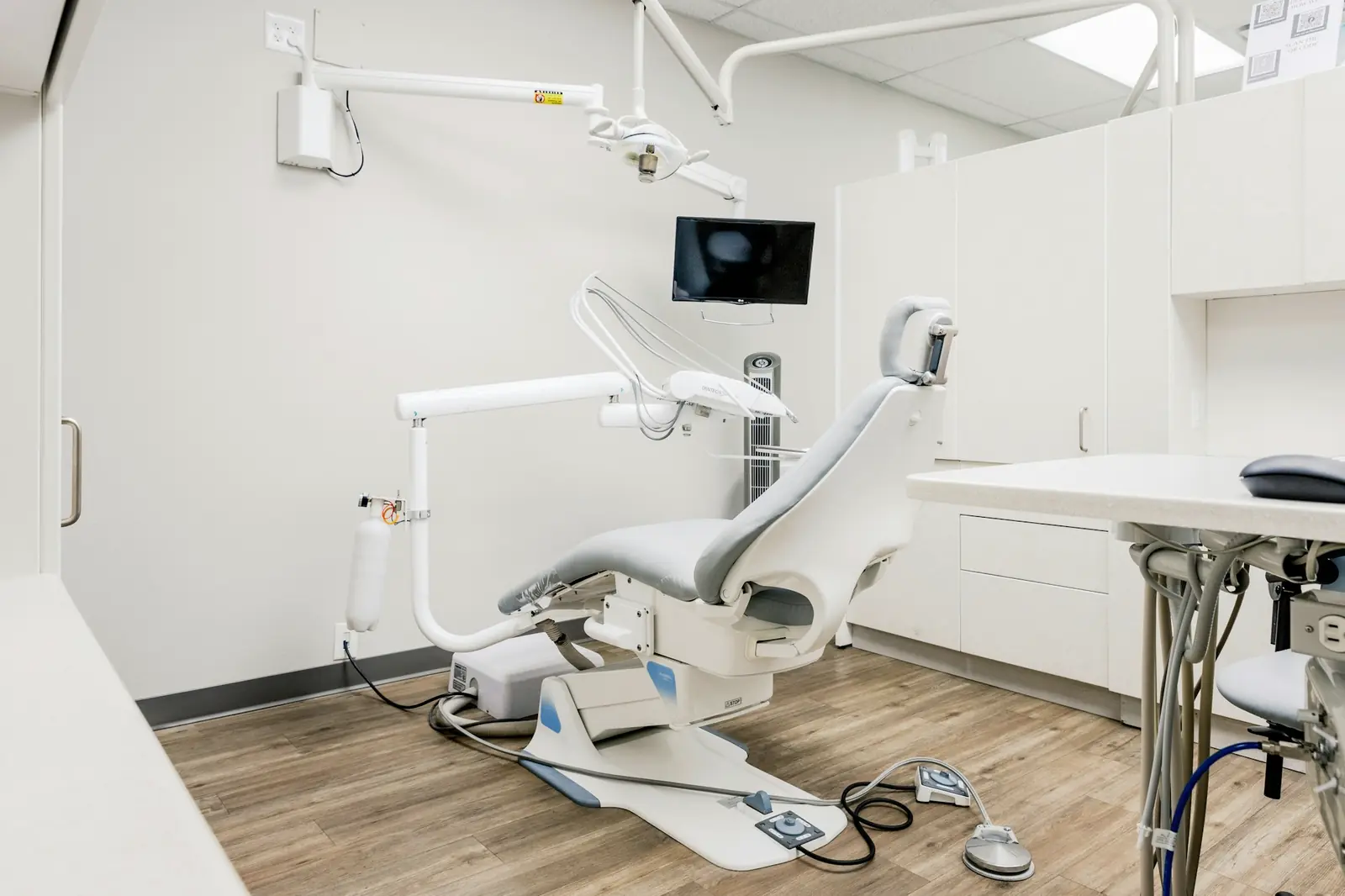
How dentists fund a cone beam CT scanner through hire purchase, leasing or a loan, what the room, training and radiation rules add, and a worked example.
“The whole process was very smooth and was completed within a few days.”
In short
What you need to know.
Because dental treatment is largely VAT exempt, the VAT on the scanner is normally a real cost that should be built into the comparison. The room shielding, commissioning and training that go with a CBCT are funded separately, usually on a loan. We arrange it as a broker, searching the whole market.
Asset finance lenders look at a CBCT in two parts. The scanner itself, whether a dedicated CBCT or a combined OPG and CBCT unit, has a resale market and is readily financed from an established supplier. Everything around it has little or no resale value and is treated differently.
About CBCT scanner finance
Specialist knowledge. Better outcomes.
A cone beam CT scanner is the single most expensive piece of imaging a general dental practice buys, and the one most likely to change what the practice can do. Implant planning, complex endodontics, orthodontic assessment and oral surgery referrals all move in-house once a practice has three-dimensional imaging. CBCT scanner finance lets the practice pay for the unit from the private income it supports rather than from cash reserves. Smart Funding Solutions is a broker, not a lender. We arrange finance from £10,000 to £20 million by searching the whole market, and this page is part of our dental practice loans section, alongside the broader dental equipment finance page.
Most dental treatment is exempt from VAT, so most practices are either not VAT registered or are partly exempt, and cannot reclaim all of the VAT charged on equipment. On hire purchase that VAT is payable with the deposit and stays a cost of the purchase. On a lease it is spread across the rentals, which is one reason leasing is more common for dental imaging than for veterinary imaging, where the VAT comes back. A practice with meaningful taxable income, for example from cosmetic treatments or sales of products, should ask its accountant how the partial exemption rules apply before choosing between the two. Either way, compare the options on the total you will pay including VAT, not on the headline monthly figure.
On tax, a practice that buys on hire purchase can usually claim capital allowances on the scanner, and the Annual Investment Allowance often covers the whole cost in the year of purchase. Lease rentals are generally deducted as an expense instead. Our guide to asset finance and capital allowances goes into the detail.
Illustration only, with round hypothetical figures. A three-surgery mixed practice places a growing number of implants and refers every case out for CBCT. It is quoted £70,000 plus VAT for a combined OPG and CBCT unit with planning software, £12,000 for the radiation protection adviser's room design, shielding, electrics and commissioning, and £3,000 for CBCT training. The purchase is arranged like this.
Had the practice preferred a lease, the £14,000 of VAT would have been spread across sixty rentals instead of added to the loan, at the cost of never owning the scanner. Monthly figures depend on the lender, which is why it pays to see more than one offer before signing the supplier's paperwork.
Our dental practice loans page covers what lenders look for in a practice as a whole, and how to finance a dental practice sets out the wider picture.
New units carry the longest terms and the fullest warranties. Ex-demonstration and refurbished scanners from the manufacturer or an approved dealer are widely financed, usually over a shorter term, and can be a sensible route for a practice adding CBCT for the first time. Lenders are cautious about private sales of older units because detector technology and software support move quickly, and a scanner that the manufacturer no longer supports has little resale value. If you already own imaging and chairs outright, sale and leaseback or asset refinancing can release cash towards a new scanner. For a wider view of medical imaging as an asset class, see medical equipment finance.
A CBCT pays for itself only if the cases come through, so be honest about implant and endodontic numbers before committing to a five-year agreement. Check the service contract and software licence fees, which continue whether or not the finance does, and whether a lease has a secondary rental period that runs on until you give notice. Make sure the room works have been designed by the radiation protection adviser before you order, because a scanner that cannot be installed still has to be paid for. A practice carrying several small equipment agreements can find that lenders offer less when it later wants to buy premises or a second site; see dental practice premises finance. If the practice is new, squat practice finance explains how a scanner fits into a start-up budget.
Lenders fund dental practices trading as limited companies, partnerships, expense-sharing arrangements and sole principals, and they are comfortable with practices that are a mix of NHS and private. The questions they ask are
The last two years of accounts, recent management figures and bank statements, set against existing commitments such as a practice loan, chair finance and premises costs.
A note of the implant, aligner and endodontic cases currently referred out, the fees the practice expects to keep, and any referral income from neighbouring practices that lack CBCT.
Dental X-ray equipment falls under the Ionising Radiations Regulations 2017, which require the practice to be registered with the Health and Safety Executive and to have a radiation protection adviser, and under the Ionising Radiation (Medical Exposure) Regulations 2017, which govern how each scan is justified, carried out and reported. Both apply in England, Scotland and Wales, and Northern Ireland has its own equivalent rules. The General Dental Council expects the team to be trained for the imaging it uses, and in England the practice's registration with the Care Quality Commission covers diagnostic procedures. Lenders do not audit this, but a practice that has already appointed its radiation protection adviser and planned the training looks ready.
Principals are normally asked for a personal guarantee. A new owner who has just bought the practice can usually fund a CBCT within the first year if the purchase borrowing is being serviced comfortably; see dental practice acquisition finance.
How the main business finance structures work. Lenders set their own terms, so treat this as a guide to the questions to ask.
| Option | How you repay | Security | Often used for |
|---|---|---|---|
| Unsecured business loan | Fixed instalments, usually monthly | No charge over assets; a personal guarantee is usually required | Growth, stock, tax bills and cash flow |
| Secured business loan | Fixed instalments, often over a longer term | A charge over property or other assets | Larger sums, property and refinancing |
| Revolving credit facility | Interest on what you draw; repay and redraw | Varies by lender and case | Recurring or uneven cash flow gaps |
| Merchant cash advance | A share of future card takings | No charge over assets | Card-taking businesses with uneven months |
| Asset finance | Regular payments over the life of the asset | The asset being financed | Equipment, vehicles and machinery |
| Invoice finance | Settled as customers pay their invoices | Your unpaid invoices | Businesses waiting on customer payment |
General information only. Every lender has its own criteria, and all finance is subject to status.
| Option | Ownership | Suits | Watch for |
|---|---|---|---|
| Hire purchase | Yours after the final payment | A scanner you will keep for its full life, where you want capital allowances | VAT on the full price at the outset, and for most dental practices it is not recoverable |
| Finance lease | The lender's, you rent it | Spreading VAT across the rentals and keeping upfront cost low | Secondary rental periods and end-of-term arrangements |
| Operating lease | The lender's, which takes the residual value risk | Practices that expect to upgrade detectors or software within a few years | Return conditions, and the scanner is never yours |
| Unsecured loan | Yours from the start | Shielding, room works, software and training | Needs a personal guarantee and a healthy trading record |
| Asset refinance | Yours, with a charge to the lender | Raising cash against a scanner or chairs you already own | Adds a monthly cost to kit already paid for |
Our guides to hire purchase versus leasing and hire purchase versus a bank loan explain the mechanics. Rates, deposits and terms depend on the lender and on the practice, and the supplier's own finance is one offer among several rather than the benchmark.
Send us the quotes and a note of why you want the scanner. We separate the unit from the works and training, check how VAT affects the comparison for your practice, and approach lenders across the market that fund dental imaging. We compare their terms with the supplier's finance and present the strongest case to the lender you choose, which pays the supplier on installation. Any broker fee is disclosed before you proceed. A practice we worked with recently financed scanners, chairs and technology as part of a wider refurbishment so that its cash could go on the building works; see the dental practice equipment finance case study. To see which lenders fit your practice, start with Instant Quotes and tell us the price of the scanner.
Instant CBCT scanner finance quotes
Tell us how much you need. Instant Quotes shows which lenders on our panel fit your business, then a broker helps you choose between hire purchase, leasing and a loan.
Prefer to talk it through? Call 01244 267694
Yes. Lenders look at the practice's overall profit and the income the scanner is expected to add. A mainly NHS practice adding CBCT to offer implants or to take referrals from other practices can make a strong case, provided the current contract is being delivered and the repayments fit.
Usually, yes. A practice buying on hire purchase is treated as the owner for capital allowances and can normally claim the Annual Investment Allowance on the scanner in the year of purchase. On a lease the rentals are deducted as an expense instead. Your accountant will confirm the position for your practice.
Most dental practices cannot, because dental treatment is largely VAT exempt. A practice with taxable income may recover part of it under the partial exemption rules. Where the VAT is a cost, compare hire purchase and leasing on the total you pay including VAT.
Sometimes the supplier's offer is subsidised, and when it is we will tell you to take it. More often it is one funder's terms. A broker compares it with lenders across the market on deposit, term, rate and end-of-term conditions, so you decide with the full picture.
It is possible, but harder than for an established practice. Lenders rely on the principal's experience, personal credit and deposit, and on a business plan showing where the imaging income will come from. Many new practices fund the chairs and digital X-ray first and add CBCT once the private book is established.
Asset lenders fund the scanner and sometimes the software, but shielding and building works have no resale value and are funded on a loan or from cash. Training is normally paid from cash or included in the loan. We arrange the two parts together so the scanner is not sitting in a room that is not ready.
Yes, from the manufacturer or an approved dealer, usually over a shorter term than new. Lenders want to know the unit's age, detector, software support position and that the seller owns it outright.
Dental equipment finance spreads the cost of chairs, OPG and CBCT imaging, intraoral scanners and decontamination equipment…
OCT scanner finance spreads the cost of an optical coherence tomography unit over its working life, usually on a lease or hire…

Veterinary CT scanner finance spreads the cost of a CT unit over its working life, most often on hire purchase because…

Most dental practices are financed in layers rather than with one loan: a long-term loan for goodwill when buying, a commercial…
Selling a dental practice means agreeing a price for goodwill, which buyers and their lenders base on profit after replacing…
Dental practice refinance replaces an existing acquisition loan, commercial mortgage or collection of short-term facilities…
What our clients say
“Simon was fast, kept us updated at all stages and was a real pleasure to work with on our asset finance. I highly recommend this company: excellent service all round.”
“Spoke with Simon, who managed to get me the loan I needed promptly. The whole process was very smooth and was completed within a few days.”
“Getting a business loan can feel like a bit of a minefield, but everything was broken down for me in great detail. Will use again in the future!”
“Simon was a pleasure to deal with and helped us find a business loan that matched our growth goals and future expansion plans.”
“I couldn’t source funding for my business, but the team got in touch within an hour and had it sorted within 24 hours. Fantastic service, and I would definitely use them again.”

Chat with Smart Funding
We usually reply in seconds
Please don't share bank details or passwords here. Calls on 01244 267694.