
New clinical equipment without emptying the practice’s cash reserves.
An established practice financed scanners, chairs and technology so its cash could go on the wider refurbishment.
Equipment financeRead the transaction
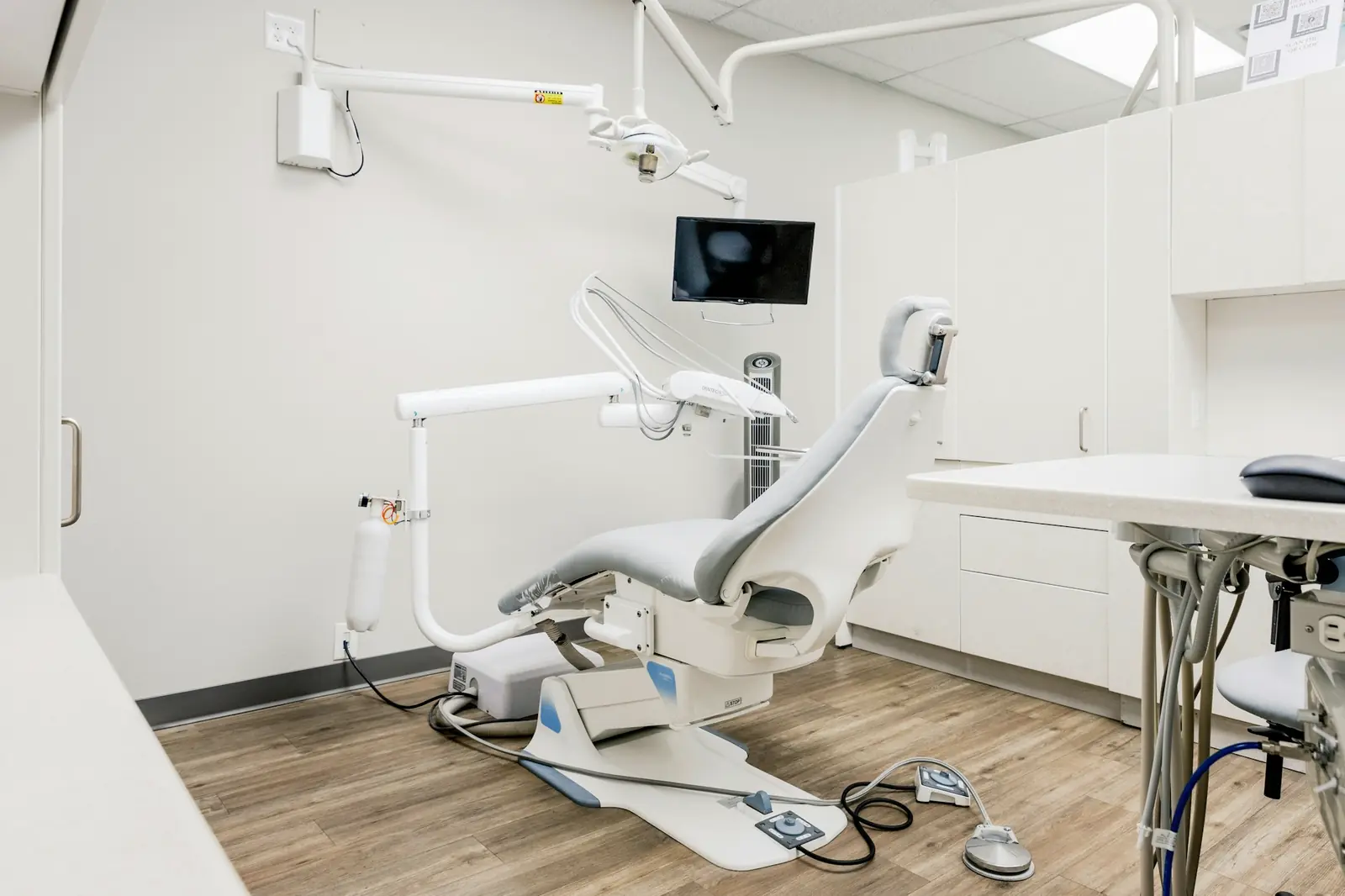
How dental practices fund chairs, CBCT, scanners and decontamination kit, including the VAT and tax points that change which finance type suits.
Explore funding options Prefer a quick call back? Leave your number
“The deal we received was exactly what we needed.”
In short
What you need to know.
Because dental treatment is generally VAT exempt, how VAT falls under each option matters. Lenders look at the equipment's resale value, the practice's recent profit and existing finance commitments.
Lenders do not treat every item in a surgery the same way, because they value it by what it would fetch if they had to recover it.
A transaction we arranged
£50,000
Historic loss. Improving numbers. £50K secured for dental growth.
Several lenders focused on the previous year's numbers. We focused on what had changed.
Read the transactionAbout dental equipment finance
Specialist knowledge. Better outcomes.
Dental equipment finance spreads the cost of chairs, imaging, scanners, decontamination kit and surgery fit-outs over the years the equipment earns its keep, instead of paying for it out of practice reserves. It is used by principals replacing a tired surgery, practices adding CBCT or digital workflows to win private implant and aligner work, new owners upgrading after a purchase, and dental laboratories buying milling and printing capacity. Smart Funding Solutions is a broker, not a lender: we approach asset finance lenders on our panel of 300+ and arrange facilities from £10,000 to £20 million. This page sits within our dental practice loans section.
Dental treatment provided by a registered dentist is generally exempt from VAT, so most practices cannot reclaim the VAT they pay on equipment. That changes the comparison between finance types. On hire purchase, VAT on the whole cash price is normally payable at the outset, which can be a substantial sum on a CBCT or a two-surgery refit, and some lenders will fund it separately over a short term. On a lease, VAT is added to each rental instead, so it is spread but never recovered. Neither is automatically cheaper: compare the total cost including VAT, not the headline payment. Practices with significant VAT-able income, such as some cosmetic work or a dental laboratory selling to practices, should ask their accountant how partial exemption applies.
Under hire purchase, the practice is generally treated as the owner for tax purposes and can claim capital allowances, including the Annual Investment Allowance, on qualifying equipment; GOV.UK guidance on the Annual Investment Allowance sets out how it works. Under most leases the rentals are deducted as a business expense instead. Which is better depends on your profits, your structure (company, partnership or sole trader) and other capital spending in the year, so agree it with your accountant before choosing. Our guide to asset finance and capital allowances goes further.
An imaging project is rarely just the unit. New X-ray equipment has to be registered with the Health and Safety Executive under the Ionising Radiations Regulations, needs a radiation protection adviser's critical examination, and may need lead-lined walls, a new electrical supply or a dedicated room. A chair replacement can mean new plumbing, suction lines and cabinetry. Lenders funding hard assets will not always cover these works, so plan the package in two parts: the equipment on hire purchase or lease, and the building and installation costs on a separate loan or a fit-out and refurbishment facility.
Illustration only, with round hypothetical figures. A mixed practice plans a £150,000 upgrade: two chairs and delivery units at £60,000, a CBCT unit at £60,000, and £30,000 of shielding, electrics and cabinetry. The chairs and CBCT go on hire purchase so the practice can claim allowances and keep them for their full life. The VAT due at the start is funded over a short separate term. The £30,000 of works goes on an unsecured term loan. The lender's question is whether the extra implant and private treatment income the CBCT supports, plus existing profit, comfortably covers all three repayments.
Match the term to the useful life. A scanner still under finance after it has been replaced by a newer model is a cost with no return. Watch for balloon payments that leave a lump sum at the end, secondary rental periods on leases that continue until you give notice, and service contracts bundled into the finance so that you keep paying after the warranty lapses. Several small agreements taken on over a few years can also reduce what lenders will offer when you later buy a practice or refinance, because each appears as a fixed commitment. Sometimes the better answer is to keep an older chair running for another year, or to fund a smaller first phase.
If you already own your equipment outright, asset refinancing can release cash from it. For a whole practice purchase, see our page on dental practice acquisition finance, and for equipping a new surgery from scratch, squat practice finance.
For a well-established practice buying new chairs from a recognised supplier, the assessment is usually light: recent accounts, bank statements and a supplier quote. Lenders look harder when:
the practice is new, has just changed hands or has a single year of trading under its current owner;
the equipment is used, imported or bought privately rather than from a dealer;
a large share of the request is software and works rather than equipment;
the practice already carries several finance agreements, so another monthly commitment strains affordability;
the latest accounts show a dip in profit.
A dip is not the end of the conversation. We arranged £50,000 of growth finance for a dental laboratory that had traded since 2007 and whose previous year showed a loss, by showing lenders the improvement in its latest margins and banking. Where credit history is the problem, our guide to bad credit asset finance explains why security in the equipment can widen the options.
How the main business finance structures work. Lenders set their own terms, so treat this as a guide to the questions to ask.
| Option | How you repay | Security | Often used for |
|---|---|---|---|
| Unsecured business loan | Fixed instalments, usually monthly | No charge over assets; a personal guarantee is usually required | Growth, stock, tax bills and cash flow |
| Secured business loan | Fixed instalments, often over a longer term | A charge over property or other assets | Larger sums, property and refinancing |
| Revolving credit facility | Interest on what you draw; repay and redraw | Varies by lender and case | Recurring or uneven cash flow gaps |
| Merchant cash advance | A share of future card takings | No charge over assets | Card-taking businesses with uneven months |
| Asset finance | Regular payments over the life of the asset | The asset being financed | Equipment, vehicles and machinery |
| Invoice finance | Settled as customers pay their invoices | Your unpaid invoices | Businesses waiting on customer payment |
General information only. Every lender has its own criteria, and all finance is subject to status.
| Option | Who owns it | Suits | Watch for |
|---|---|---|---|
| Hire purchase | You, after the final payment | Chairs and imaging you will keep for their whole life | VAT on the full price is usually due at the start |
| Finance lease | The lender; you rent it | Kit you may upgrade or where a smaller upfront outlay matters | VAT on every rental; end-of-term options vary |
| Operating lease | The lender, who takes the residual risk | Scanners and digital kit likely to be replaced within a few years | Return conditions and charges for excess wear |
| Soft asset finance or a term loan | You, from day one | Software, installation, building works and cabinetry | Usually needs stronger trading or a personal guarantee |
| Supplier or manufacturer finance | Depends on the scheme | A single brand package bought from one dealer | Promotional terms can be tied to list prices; compare the total cost |
Our pages on asset finance and hire purchase versus leasing explain the mechanics in general. The rest of this page covers what is specific to dentistry.
Send us the supplier quote and a note of what the equipment is for. We separate the hard assets from works and software, check how VAT will fall, and approach lenders on our panel that fund dental equipment at your practice's stage, comparing their offers with any dealer finance you have been quoted. The lender underwrites and makes the decision, then pays the supplier directly on delivery or installation. It is free to enquire; any broker fee is disclosed separately before you proceed. For equipment finance across other sectors, see our business equipment financing page.
Yes, many lenders will fund used equipment, particularly chairs and imaging bought from a dealer who can confirm age, condition and ownership. Terms are often shorter than for new kit. Private sales are harder to fund because the lender needs proof of title. Our page on used equipment finance covers this.
Sometimes. Manufacturers occasionally subsidise finance to move stock, and a low-cost offer can be good value. Check whether the equipment price was discounted for cash buyers, what the total repayable is, and whether you are tied to that supplier's servicing. Independent finance lets you negotiate the price separately.
It is possible, though with no trading record lenders rely on your clinical track record, personal credit, deposit and a business plan. Hard assets such as chairs are easier to fund pre-opening than software and fit-out.
Yes. Labs finance milling units, 3D printers, scanners and furnaces in the same way. Because many labs charge VAT on work supplied to practices, the VAT position may be different, so check with your accountant.
Yes, any equipment finance repayments are counted as existing commitments when a lender assesses a later loan, so they reduce what you can afford to borrow. That does not mean avoiding equipment finance, but it is worth planning both together if you expect to buy a practice or a second site. Lenders on a purchase also check the equipment agreements that come with the practice. See our page on dental practice acquisition finance.
An established practice financed scanners, chairs and technology so its cash could go on the wider refurbishment.
Most dental practices are financed in layers rather than with one loan: a long-term loan for goodwill when buying, a commercial…
Dental practice acquisition finance funds the purchase of an existing practice, mostly its goodwill. Buyers typically combine…
Dental surgery refurbishment finance funds the building works, services and equipment needed to refit surgeries, add a…
A squat dental practice is usually funded in layers: hire purchase or leasing for chairs, imaging and decontamination…
Dental practice working capital is short or medium term finance that covers timing gaps in a practice's cash, such as NHS…
Optical equipment finance spreads the cost of OCT scanners, retinal cameras, visual field analysers, refraction units and…
What our clients say
“Simon was fast, kept us updated at all stages and was a real pleasure to work with on our asset finance. I highly recommend this company: excellent service all round.”
“Spoke with Simon, who managed to get me the loan I needed promptly. The whole process was very smooth and was completed within a few days.”
“Getting a business loan can feel like a bit of a minefield, but everything was broken down for me in great detail. Will use again in the future!”
“Simon was a pleasure to deal with and helped us find a business loan that matched our growth goals and future expansion plans.”
“I couldn’t source funding for my business, but the team got in touch within an hour and had it sorted within 24 hours. Fantastic service, and I would definitely use them again.”