
Squat dental practice finance: funding a new practice from scratch
A squat dental practice is usually funded in layers: hire purchase or leasing for chairs, imaging and decontamination…
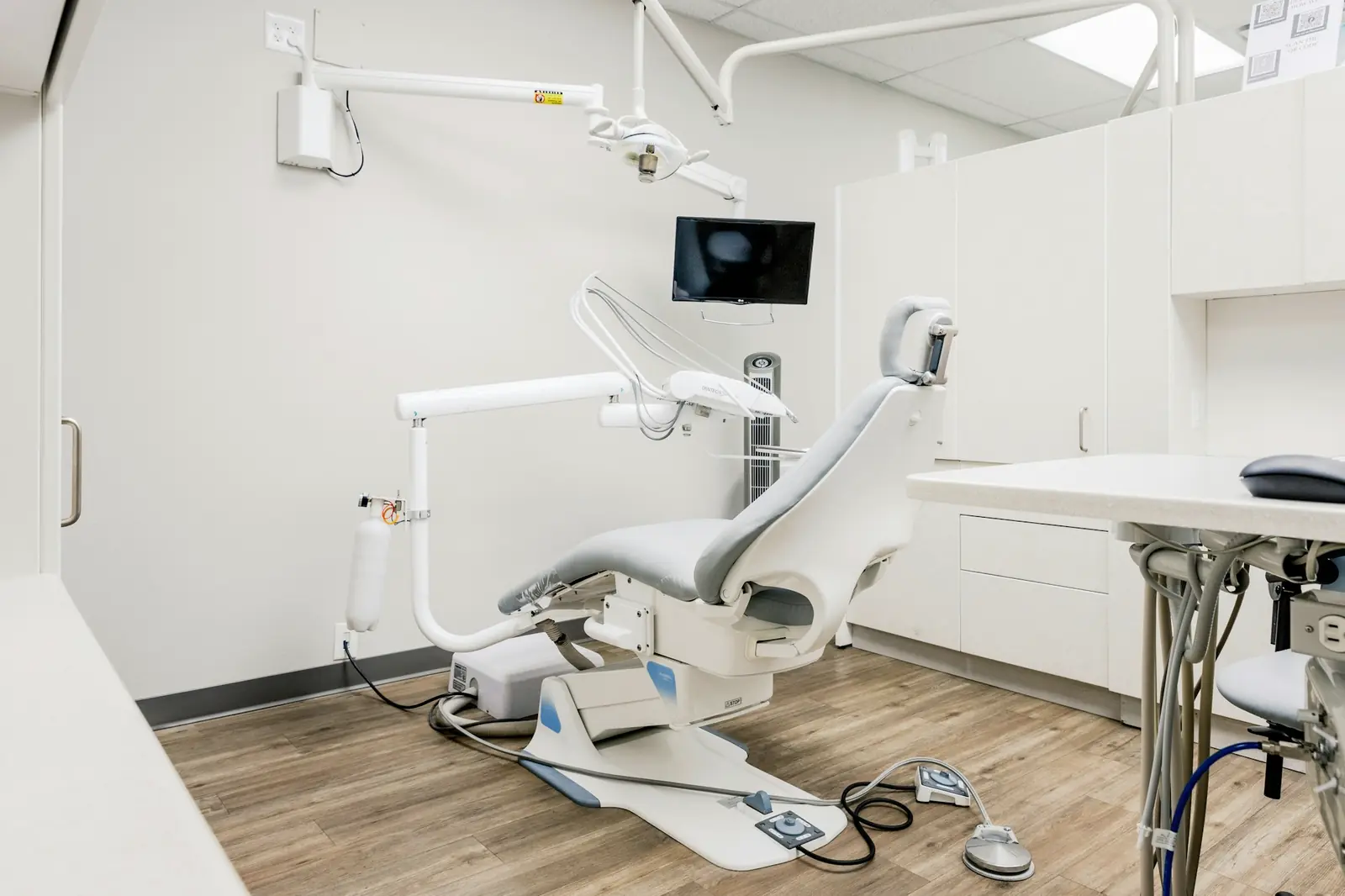
How dental practices fund surgery refits, decontamination rooms and CQC-driven upgrades, combining equipment finance and loans for building works.
Explore funding options Prefer a quick call back? Leave your number
“Fantastic customer service, highly recommend!”
In short
What you need to know.
It is usually a blend: equipment finance for chairs, imaging and autoclaves, a business loan for building works, and sometimes property-backed borrowing. Lenders look at affordability, itemised quotes, lease terms and the income the works will protect or create.
Dental surgery refurbishment finance covers the cost of turning rooms into compliant, efficient clinical space, from the services in the walls to the chair in the middle of the floor. A typical project includes some or all of the following:
Lenders treat these items differently. Chairs, scanners and autoclaves are identifiable assets with resale value. Plastering, plumbing and flooring are not. That distinction drives how the project is best funded.
A transaction we arranged
£92,000
New clinical equipment without emptying the practice’s cash reserves.
An established practice financed scanners, chairs and technology so its cash could go on the wider refurbishment.
Read the transactionAbout dental surgery refurbishment finance
Specialist knowledge. Better outcomes.
This page is for dental practice owners planning a surgery refit, a new decontamination room, an extra surgery or a wider upgrade of their premises, and who want to fund it without emptying the practice's reserves. Dental surgery refurbishment finance pays for the building works, services and fitted equipment that a modern surgery needs, usually through a combination of facilities matched to what is being bought. Smart Funding Solutions is a broker, not a lender. We approach lenders on our panel of 300+ that fund dental practices, arranging facilities from £10,000 to £20 million. For refurbishment across other healthcare settings, such as GP surgeries or physiotherapy clinics, see our page on healthcare practice refurbishment.
Most dental refurbishments are funded with a blend of facilities rather than a single loan, because the equipment and the building works suit different products. A common structure looks like this:
Specialist dental equipment suppliers and fit-out contractors sometimes offer their own finance packages. These can be convenient, but they cover only that supplier's scope and are worth comparing with independent options before you sign.
Much dental refurbishment is not optional. In England, practices are registered with and inspected by the Care Quality Commission, and decontamination is guided by the Department of Health's HTM 01-05 guidance, which encourages separate decontamination facilities away from the treatment area. Ageing surgeries can also fall behind on infection control finishes, ventilation and accessibility. Lenders do not assess your compliance, but those familiar with dentistry understand that works driven by inspection or guidance protect the practice's ability to trade, and they will want to see that the project addresses any points raised.
Refurbishment finance suits an established practice that can show the works will maintain or increase its income. Typical cases include:
It suits less well where the lease is close to expiry, where the landlord has not consented to the works, or where the practice is loss-making and the refurbishment is expected to fix that on its own. A practice that has not yet opened should look at squat practice finance instead, and a practice buying the building it occupies, or a property that needs works before it can trade, may need a different structure altogether.
Decisions on the equipment element can come within a few working days in straightforward cases, while the full package for a larger project often takes a few weeks to put in place. The timeline is usually set by the project rather than the finance: quotes need to be final, landlord consent obtained and equipment lead times known. Arrange the finance before you commit to a contractor's start date, so deposits and stage payments are covered. Where works are phased, some facilities can be drawn in stages to match the contractor's valuations, and equipment finance is normally paid to the supplier on delivery and installation.
Security depends on which part of the project is being funded. With hire purchase or leasing, the finance company owns the equipment until the agreement ends or the final payment is made, so the asset itself is the main security. Building works have little resale value, so loans for them are usually supported by personal guarantees from the principals or directors, and larger facilities may be secured by a debenture or a charge over property. In leased premises, some equipment funders ask the landlord to confirm they can remove financed equipment if needed. Where an acquisition lender holds existing security, its consent may be needed. Our guide to personal guarantees explains what you are signing.
The cost of a refurbishment package is the combined cost of each facility in it, so it pays to understand how each one charges. Hire purchase and leases have fixed regular payments, sometimes with a deposit or advance rentals, and a documentation or option fee. Business loans charge interest, often with an arrangement fee. Property-backed borrowing usually adds valuation and legal costs but can spread repayments over a longer term.
VAT deserves particular attention in dentistry. Because most dental treatment is exempt, many practices cannot reclaim VAT on building works or equipment, so it is a real cost that needs funding. With hire purchase, VAT on the asset is usually payable at the start; with leasing, VAT is typically added to each rental, spreading it over the term. Tax relief on equipment and some fit-out costs may be available through capital allowances; our guide to asset finance and capital allowances explains the interaction, and your accountant can confirm what applies to your project.
Alternatives depend on the scale of the work and whether the practice owns its building. Practices commonly consider:
Lenders assess whether the practice can afford the repayments during and after the works, and whether the project is properly costed and deliverable. They usually look at:
profitability, income mix and existing borrowing, including any acquisition loan still running.
itemised quotations from a contractor or dental fit-out specialist, separating equipment from works, with VAT shown.
how many surgeries will be closed and for how long, and how the practice will protect income during the works.
what the works enable, such as an extra associate, more hygiene sessions or more private treatment, and a realistic forecast of when that income arrives.
for leasehold practices, the remaining lease term relative to the finance term and the landlord's consent to alterations; for owned premises, the value and any existing charge.
credit history and, where guarantees are requested, personal assets and liabilities.
Lenders usually ask for the practice's recent financial information and a clear picture of the project. A typical pack includes:
Funding a refurbishment preserves cash and lets the practice invest sooner, but it commits future income to repayments.
How the main business finance structures work. Lenders set their own terms, so treat this as a guide to the questions to ask.
| Option | How you repay | Security | Often used for |
|---|---|---|---|
| Unsecured business loan | Fixed instalments, usually monthly | No charge over assets; a personal guarantee is usually required | Growth, stock, tax bills and cash flow |
| Secured business loan | Fixed instalments, often over a longer term | A charge over property or other assets | Larger sums, property and refinancing |
| Revolving credit facility | Interest on what you draw; repay and redraw | Varies by lender and case | Recurring or uneven cash flow gaps |
| Merchant cash advance | A share of future card takings | No charge over assets | Card-taking businesses with uneven months |
| Asset finance | Regular payments over the life of the asset | The asset being financed | Equipment, vehicles and machinery |
| Invoice finance | Settled as customers pay their invoices | Your unpaid invoices | Businesses waiting on customer payment |
General information only. Every lender has its own criteria, and all finance is subject to status.
Each funding route suits a different part of the project. The table compares the main options.
| Feature | Equipment finance | Business loan for works | Property-backed borrowing | Paying from reserves |
|---|---|---|---|---|
| Best for | Chairs, imaging, scanners, decontamination equipment | Building, services and fitted works | Larger projects at owned premises | Small projects with ample cash |
| Typical term | Matched to asset life, often three to seven years | Often one to five years | Longer terms possible | Not applicable |
| Main security | The equipment itself | Personal guarantees, sometimes a debenture | Charge over the property | None |
| VAT treatment | Upfront on hire purchase, spread on leases | Funded as part of the loan amount | Funded as part of the loan amount | Paid in full at invoice |
| Main drawback | Covers equipment only | Shorter term, higher monthly cost | Valuation and legal costs, slower | Drains working capital during disruption |
We start with your quotes and split the project into the parts different lenders fund best, so that equipment, building works and any lost income during closures are each covered by an appropriate facility. We then approach lenders on our panel that fund dental practices, compare offers on total cost, term, security and guarantees, and line up drawdowns with your contractor's programme. Lenders make every credit decision. In one completed case, we arranged £92,000 of equipment finance for a dental practice covering scanners, chairs and technology during a refurbishment. It is free to enquire; any broker fee is disclosed separately before you proceed.
Often, yes, if the finance is agreed before the deposit is due. Some lenders release funds against a contractor's invoice or staged valuation, while equipment funders usually pay the supplier on delivery. If the contractor wants a large upfront payment, ask why, check their trading record, and make sure your facility can be drawn in time.
A modern, compliant practice is usually easier to sell and may attract more buyers and better funding for them. Outstanding finance is normally settled from the sale proceeds, and some equipment agreements can be transferred with consent. Discuss timing with a specialist practice valuer, because not every pound spent is reflected in the sale price.
Most lenders fund an agreed amount, so overruns fall to the practice unless a contingency is built into the facility. Ask your contractor for a fixed-price element where possible, build in a contingency, and keep a cash buffer or an undrawn facility available for surprises found behind walls or under floors.
Some funders will finance used chairs and units from established suppliers, usually over a shorter term than new equipment and subject to the age and condition of the items. A supplier invoice and serial numbers are normally needed. Our page on used equipment finance explains how lenders approach it.
A squat dental practice is usually funded in layers: hire purchase or leasing for chairs, imaging and decontamination…

Selling a dental practice means agreeing a price for goodwill, which buyers and their lenders base on profit after replacing…
Dental practice premises finance is usually an owner-occupier commercial mortgage used to buy the building a practice trades…
Dental practice working capital is short or medium term finance that covers timing gaps in a practice's cash, such as NHS…
Private clinic start-up finance usually comes from several sources at once, because few lenders will fund a clinic with no…
Most dental practices are financed in layers rather than with one loan: a long-term loan for goodwill when buying, a commercial…
What our clients say
“Simon was fast, kept us updated at all stages and was a real pleasure to work with on our asset finance. I highly recommend this company: excellent service all round.”
“Spoke with Simon, who managed to get me the loan I needed promptly. The whole process was very smooth and was completed within a few days.”
“Getting a business loan can feel like a bit of a minefield, but everything was broken down for me in great detail. Will use again in the future!”
“Simon was a pleasure to deal with and helped us find a business loan that matched our growth goals and future expansion plans.”
“I couldn’t source funding for my business, but the team got in touch within an hour and had it sorted within 24 hours. Fantastic service, and I would definitely use them again.”