

Plant finance for contractors, plant hire firms and quarry operators
Plant finance funds heavy machines such as excavators, dozers, cranes, crushers and screeners, usually on hire purchase or a…
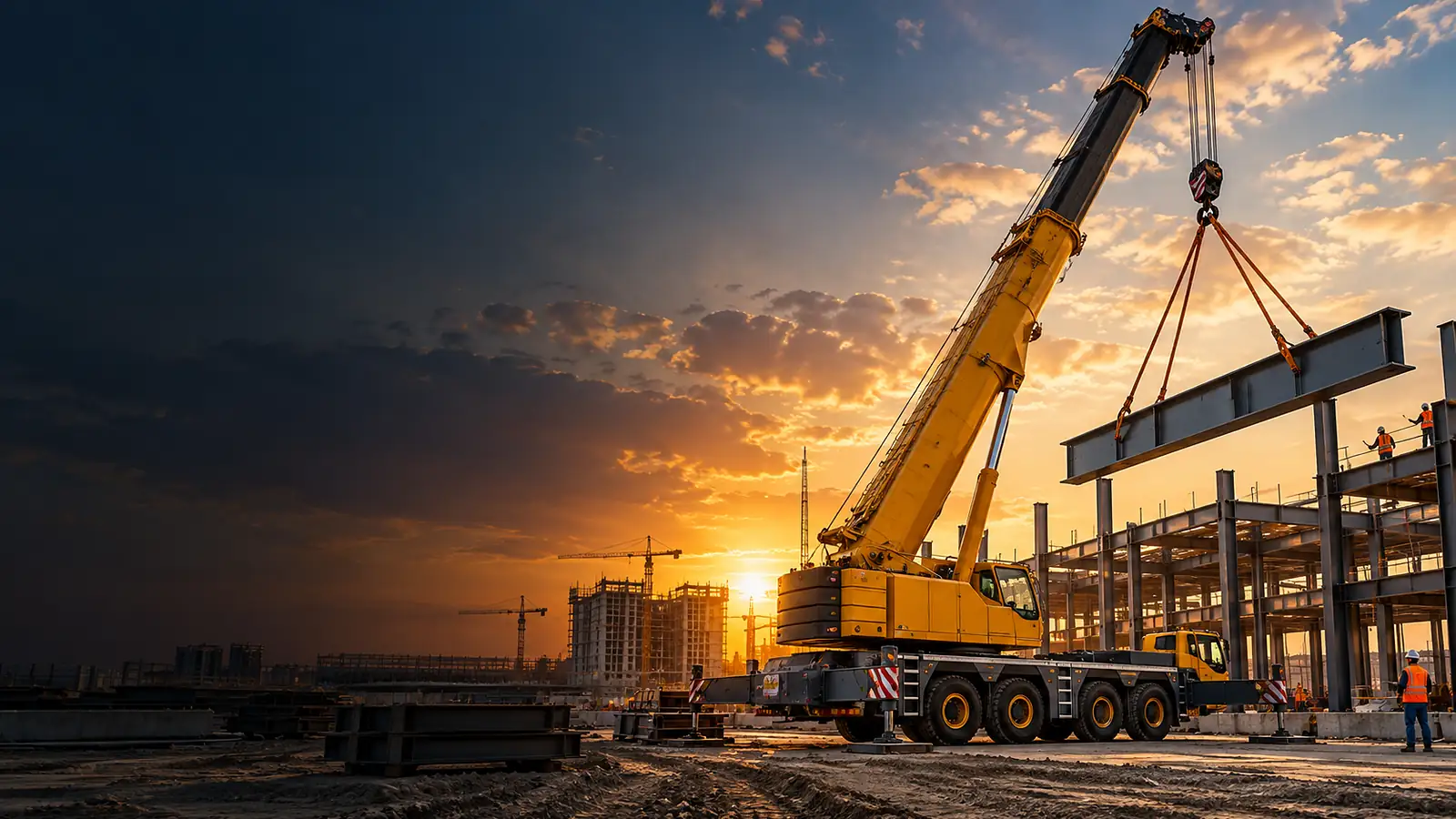
How UK firms fund mobile, crawler, tower and lorry-loader cranes, and how valuation, LOLER records and contract length shape the finance.
Explore funding options Prefer a quick call back? Leave your number
“I highly recommend this company: excellent service all round.”
In short
What you need to know.
Lenders value cranes on make, capacity, hours and examination history, often with a specialist valuation, and will often shape the term around the hire contracts or projects the crane will serve.
About crane finance
Specialist knowledge. Better outcomes.
This page is for crane hire companies, lifting contractors, steel erectors, precast installers, builders merchants and construction firms that need to buy or replace a crane without draining working capital. Smart Funding Solutions is a broker, not a lender: we approach lenders on our panel of 300+ that understand lifting equipment, and arrange facilities from £10,000 to £20 million. Crane finance sits within our wider asset finance options, alongside plant finance for the rest of your fleet.
Lenders ask a simple question: where does the money to pay for this crane come from? The answer depends on who is buying it.
For a hire company the crane is the product. Lenders look at utilisation across the existing fleet, the spread of customers, how much work comes from repeat accounts, and whether the new crane fills a gap in the fleet or duplicates capacity that already sits idle. A firm moving into a larger capacity class for the first time should expect questions about where that work will come from and whether it has appointed persons and operators qualified to run it.
A steel erector, precast installer or civil engineering contractor buying a crane is usually replacing hire costs. Lenders want to see how much the business has been spending on crane hire, how often it has a crane on site, and what contracts the machine will serve. The test is whether owning is cheaper than hiring at your level of use, a question our plant finance page works through in more detail.
Where a crane is bought for a specific project, such as a tower crane for a multi-year residential scheme, the finance term is often shaped around that contract. Lenders may ask for the contract, the hire rate and the expected duration, and some will set a payment profile with lower payments during erection and higher payments while the crane is earning. If the crane will be off contract for a period before the next job, say so at the start: it is far easier to build a gap into the structure than to ask for one later.
Almost any crane with a serial number, a known manufacturer and a traceable history can be funded. What changes from one type to the next is how confident a lender feels about its value in five years' time.
For telescopic handlers with a hook or winch attachment, see our telehandler finance guide; our construction equipment finance guide covers the wider site fleet.
Cranes are expensive, long-lived and specialist, so most lenders want more than a dealer invoice before committing. Expect some or all of the following.
Older cranes can still be funded, as our used equipment finance page explains, but the term usually shortens as age increases.
Under the Lifting Operations and Lifting Equipment Regulations 1998, a crane must be thoroughly examined by a competent person at least every 12 months, or in line with a written examination scheme, and after installation or assembly at a new location before it is put into use. Lifting accessories such as slings and shackles are examined at least every six months. HSE guidance on thorough examination of lifting equipment sets out the duties. For tower cranes, that means a fresh examination every time a crane is erected on a new site, which is a cost to build into each contract.
Lenders care about this because a crane with gaps in its examination record is harder to sell and may need expensive work before it can operate. Beyond examinations, budget for insurance (including hired-in plant and contract lift cover), operator and appointed person training, servicing, wire ropes, tyres and transport between sites.
Limited companies, partnerships and sole traders can all apply. Lenders are usually most comfortable with businesses that have filed accounts and a history of operating or hiring lifting equipment, but newer firms are considered where the directors have relevant industry experience and a credible pipeline of work. Borrowing of £25,000 or less by sole traders and small partnerships can be regulated consumer credit with additional protections. A weaker credit record does not rule finance out, but expect a larger deposit or a shorter term.
The crane itself is the main security: the lender owns it, or has title to it, until the agreement ends. Directors of smaller companies are often asked for personal guarantees, and on larger or more specialist cranes a lender may ask for a deposit, a cross-guarantee from a group company or additional security over other equipment. Cranes already owned outright can sometimes be offered as extra security to reduce the deposit on a new one.
A straightforward application for a mainstream crane from an established business can move from enquiry to offer in a matter of days. Timescales stretch when a specialist valuation is needed, when the crane is being imported or built to order, or when the facility is large enough to need full credit committee review. Lead times on new cranes mean it is often sensible to agree finance in principle before placing the order.
How the main business finance structures work. Lenders set their own terms, so treat this as a guide to the questions to ask.
| Option | How you repay | Security | Often used for |
|---|---|---|---|
| Unsecured business loan | Fixed instalments, usually monthly | No charge over assets; a personal guarantee is usually required | Growth, stock, tax bills and cash flow |
| Secured business loan | Fixed instalments, often over a longer term | A charge over property or other assets | Larger sums, property and refinancing |
| Revolving credit facility | Interest on what you draw; repay and redraw | Varies by lender and case | Recurring or uneven cash flow gaps |
| Merchant cash advance | A share of future card takings | No charge over assets | Card-taking businesses with uneven months |
| Asset finance | Regular payments over the life of the asset | The asset being financed | Equipment, vehicles and machinery |
| Invoice finance | Settled as customers pay their invoices | Your unpaid invoices | Businesses waiting on customer payment |
General information only. Every lender has its own criteria, and all finance is subject to status.
| Route | Ownership at the end | Best fit | Watch for |
|---|---|---|---|
| Hire purchase | Yours after the final payment | Mobile and crawler cranes you will run for many years | VAT on the price is usually paid at the start and reclaimed |
| Hire purchase with a balloon | Yours after the balloon | Keeping monthly cost down on high-value cranes with strong residual values | The balloon must be paid, refinanced or met by a sale |
| Finance lease | Lender keeps title; secondary rental or sale at the end | Spreading VAT across rentals, ownership not essential | End-of-lease terms vary by lender |
| Operating lease | Returned at the end | Fleets that refresh on a fixed cycle | Hours and condition standards at return |
| Asset refinance | Yours again once repaid | Releasing cash from cranes you already own | Adds borrowing against existing kit |
The tax treatment differs between owning and leasing; our guide to hire purchase vs leasing explains the differences in general terms. Your accountant should confirm what applies to you.
Lenders make the final decision. It is free to enquire, and any broker fee is disclosed before you proceed. Firms that also run access platforms may find our page on cherry picker finance useful, and you can start an enquiry online.
Illustrative figures from the numbers you enter, before you speak to a lender.
Yes. Used cranes are funded regularly, provided the serial number, hours, ownership and examination history can be verified. Imported cranes need clear title and evidence that they meet UK requirements before use, and lenders may want an independent valuation before paying the seller.
Usually, yes, and they should be. Counterweights, jibs, fly jibs and boom sections add substantially to a crane's value and resale appeal, so lenders prefer the full package listed in the agreement rather than financed separately.
Yes. The chassis, body and crane are normally financed as one vehicle. A goods vehicle over 3.5 tonnes used for business needs an operator licence, and our HGV finance page covers how lenders look at the licence and the vehicle.
Sometimes. Lenders will want directors with lifting industry experience, evidence of customers or contracts lined up, and usually a larger deposit. Starting with mainstream, easily resold cranes improves the chances.
Where the crane is bought for one project, matching the term avoids paying for the crane after the work has ended. For general-purpose mobile cranes with a deep resale market, a longer term with a balloon is often more efficient.
Plant finance funds heavy machines such as excavators, dozers, cranes, crushers and screeners, usually on hire purchase or a…
Cherry picker finance spreads the cost of a mobile elevating work platform, such as a van-mounted boom, self-propelled boom,…

Business hire purchase is a way to buy a vehicle, machine or piece of equipment over time. A lender buys the asset, you pay a…
Skip lorry finance spreads the cost of skip loaders, hook loaders and the skips and containers they carry over monthly…
Hire purchase is buying an asset in instalments: you claim capital allowances and own it after the last payment, but VAT on the…

Grounds maintenance contractors usually fund mowers, compact tractors, chippers, vans and trailers through hire purchase or…
What our clients say
“Simon was fast, kept us updated at all stages and was a real pleasure to work with on our asset finance. I highly recommend this company: excellent service all round.”
“We were looking for finance for new equipment. Simon is excellent and objective-driven, without the horrendous form filling of your usual high street bank. The whole thing took just a few days.”
“Spoke with Simon, who managed to get me the loan I needed promptly. The whole process was very smooth and was completed within a few days.”
“Getting a business loan can feel like a bit of a minefield, but everything was broken down for me in great detail. Will use again in the future!”
“Simon was a pleasure to deal with and helped us find a business loan that matched our growth goals and future expansion plans.”
“I couldn’t source funding for my business, but the team got in touch within an hour and had it sorted within 24 hours. Fantastic service, and I would definitely use them again.”

Chat with Smart Funding
We usually reply in seconds
Please don't share bank details or passwords here. Calls on 01244 267694.