
Cherry picker finance for access hire firms and trades
Cherry picker finance spreads the cost of a mobile elevating work platform, such as a van-mounted boom, self-propelled boom,…
How skip hire and waste firms fund skip loaders, hook loaders, RoRo containers and skips, and what licences and checks lenders look for.
Explore funding options Prefer a quick call back? Leave your number
“I highly recommend this company: excellent service all round.”
In short
What you need to know.
Lenders value the vehicle and its body together, finance skips in numbered batches over shorter terms, and check that your goods vehicle operator licence and waste carrier registration are in place, because without them the fleet cannot earn.
About skip lorry finance
Specialist knowledge. Better outcomes.
This page is for skip hire firms, waste management companies, demolition and clearance contractors and recycling businesses that need skip loaders, hook loaders, or the skips and containers they carry. Smart Funding Solutions is a broker, not a lender: we approach lenders on our panel of 300+ that fund commercial vehicles and waste equipment, and arrange facilities from £10,000 to £20 million. Skip lorry finance sits within our wider asset finance service.
A skip business depends on several permissions. Lenders check them because without them the vehicles cannot earn.
Skip loaders and hook loaders are goods vehicles well over 3.5 tonnes, so you need a goods vehicle operator licence. A firm carrying customers' waste for payment normally needs a standard licence, with the financial standing and transport manager that come with it. The gov.uk guide to being a goods vehicle operator explains the categories. Check you have spare authorisation before ordering extra vehicles.
Businesses that carry other people's waste must be registered as waste carriers with the relevant environmental regulator: the Environment Agency in England, Natural Resources Wales, SEPA in Scotland or NIEA in Northern Ireland. In England you can register or renew as a waste carrier, broker or dealer on gov.uk. Firms that also run a transfer or treatment site need an environmental permit or exemption for it, which our recycling business finance page covers in more detail.
Placing a skip on a public road needs a permit from the local highway authority, and skips on the highway must be properly lit and marked. Skip loader arms and chains are lifting equipment: under LOLER they need regular thorough examination by a competent person, with chains and other lifting accessories examined at least every six months. Lenders and insurers will expect those records to be in order.
Skip businesses usually run two kinds of vehicle, and many run both.
Lenders fund all of these, but in different ways. The vehicle is valued like any HGV, with the body taken into account; the skips are lower-value, high-volume items financed in batches, often over shorter terms. Our HGV finance page explains how lenders look at heavy vehicles generally; this page focuses on what is different about skip and container work.
Older vehicles and second-hand containers can be funded through used equipment finance, with the term reflecting age and condition.
Lenders test the payment against what is left after the costs that make skip hire tight-margin work. Tipping and disposal fees and landfill tax usually take the largest share of each job. Add fuel, tyres, hydraulic repairs, chains, annual vehicle tests and the safety inspections your operator licence commits you to, plus insurance, skip repairs and repainting. A firm that can show it prices jobs with these costs built in, and passes rising gate fees on to customers, presents a much stronger case.
Established skip and waste firms with filed accounts, an operator licence and a waste carrier registration in place find finance easiest to arrange. Newer firms can be funded where the owners have industry experience, often starting with a used skip loader and a batch of skips, with a larger deposit. Lenders look at customer spread, the mix of domestic and trade work, tipping costs and how quickly customers pay. Borrowing of £25,000 or less by sole traders and small partnerships can be regulated consumer credit with additional protections.
The vehicles and skips are the main security, owned by the lender or subject to its title until the agreement ends. Directors of limited companies are commonly asked for personal guarantees. On larger fleet packages, a lender may take security across the whole schedule of vehicles, so that the strong resale value of the lorries supports the lower value of the skips.
A used skip loader from a dealer, for an established firm, can often be approved within a few working days. New vehicles with a body build, large skip orders from a fabricator, and fleet deals needing full accounts review take longer, and a new operating centre or licence variation can add weeks. Start the finance conversation alongside the licence work.
Illustration. A skip hire firm with four skip loaders wins regular work from two construction contractors who want large RoRo containers. It finances a used six-wheel hook loader and twelve containers as one package over four years, with the containers listed by number on the schedule. The new work is billed monthly, so the firm also looks at invoice finance to bridge the gap between collecting and being paid. The figures are hypothetical, and each lender sets its own terms.
How the main business finance structures work. Lenders set their own terms, so treat this as a guide to the questions to ask.
| Option | How you repay | Security | Often used for |
|---|---|---|---|
| Unsecured business loan | Fixed instalments, usually monthly | No charge over assets; a personal guarantee is usually required | Growth, stock, tax bills and cash flow |
| Secured business loan | Fixed instalments, often over a longer term | A charge over property or other assets | Larger sums, property and refinancing |
| Revolving credit facility | Interest on what you draw; repay and redraw | Varies by lender and case | Recurring or uneven cash flow gaps |
| Merchant cash advance | A share of future card takings | No charge over assets | Card-taking businesses with uneven months |
| Asset finance | Regular payments over the life of the asset | The asset being financed | Equipment, vehicles and machinery |
| Invoice finance | Settled as customers pay their invoices | Your unpaid invoices | Businesses waiting on customer payment |
General information only. Every lender has its own criteria, and all finance is subject to status.
| Asset | Common route | Typical approach | Watch for |
|---|---|---|---|
| New skip loader or hook loader | Hire purchase, often with a balloon | Chassis and body financed together | Body build lead times; staged payments |
| Used skip lorry | Hire purchase | Term shortened for age and mileage | Condition of subframe and hydraulics |
| Batch of skips or RoRo containers | Hire purchase or finance lease | Schedule of numbered items | Shorter terms than vehicles |
| Static compactors on customer sites | Finance lease or hire purchase | Often tied to a customer contract | Contract length versus finance term |
| Vehicles and skips you own | Asset refinance | Release cash against the fleet | Adds borrowing against working kit |
Our guide to hire purchase vs leasing explains how VAT and ownership differ between the routes.
Lenders make the final decision. It is free to enquire, and any broker fee is disclosed before you proceed. Start an enquiry online.
Illustrative figures from the numbers you enter, before you speak to a lender.
Yes. Many lenders will fund a batch of skips or RoRo containers without a vehicle, usually over a shorter term than a lorry. They will want a schedule of the items, ideally numbered, and the fabricator's invoice.
Sometimes, where the owners have experience in waste or haulage, can put down a deposit and have the operator licence and waste carrier registration in place or in progress. A used skip loader is usually an easier first purchase to fund than a new one.
Usually, yes, because you are carrying customers' waste for payment. A restricted licence only covers carrying your own goods in connection with your own business, which does not fit most skip hire work.
Yes. Lenders look at age, mileage, the condition of the hook arm, subframe and hydraulics, and service and inspection records. Older vehicles attract shorter terms and sometimes larger deposits.
Yes. Compactors placed at customer sites are funded as equipment. Lenders may ask about the customer contracts they serve, so it helps if the finance term does not run far beyond them.
Cherry picker finance spreads the cost of a mobile elevating work platform, such as a van-mounted boom, self-propelled boom,…

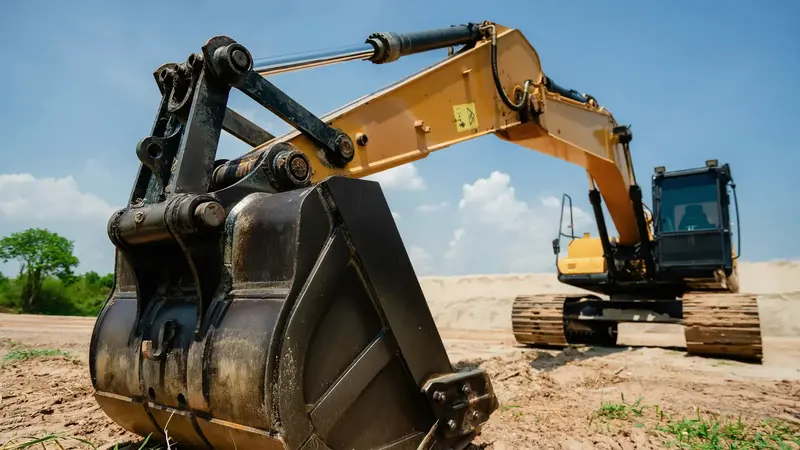
Plant finance funds heavy machines such as excavators, dozers, cranes, crushers and screeners, usually on hire purchase or a…

Crane finance spreads the cost of a mobile, crawler, tower or lorry-loader crane over monthly payments, usually through hire…

Business hire purchase is a way to buy a vehicle, machine or piece of equipment over time. A lender buys the asset, you pay a…
Hire purchase is buying an asset in instalments: you claim capital allowances and own it after the last payment, but VAT on the…
Recovery truck finance spreads the cost of a spec lift, slide bed, beavertail, under-lift or heavy recovery vehicle over…
What our clients say
“Simon was fast, kept us updated at all stages and was a real pleasure to work with on our asset finance. I highly recommend this company: excellent service all round.”
“We were looking for finance for new equipment. Simon is excellent and objective-driven, without the horrendous form filling of your usual high street bank. The whole thing took just a few days.”
“Spoke with Simon, who managed to get me the loan I needed promptly. The whole process was very smooth and was completed within a few days.”
“Getting a business loan can feel like a bit of a minefield, but everything was broken down for me in great detail. Will use again in the future!”
“Simon was a pleasure to deal with and helped us find a business loan that matched our growth goals and future expansion plans.”
“I couldn’t source funding for my business, but the team got in touch within an hour and had it sorted within 24 hours. Fantastic service, and I would definitely use them again.”

Chat with Smart Funding
We usually reply in seconds
Please don't share bank details or passwords here. Calls on 01244 267694.