
How to open a padel club: site, planning, costs and funding
To open a padel club, test local demand, choose between an indoor unit and an outdoor site, secure planning consent and a lease…
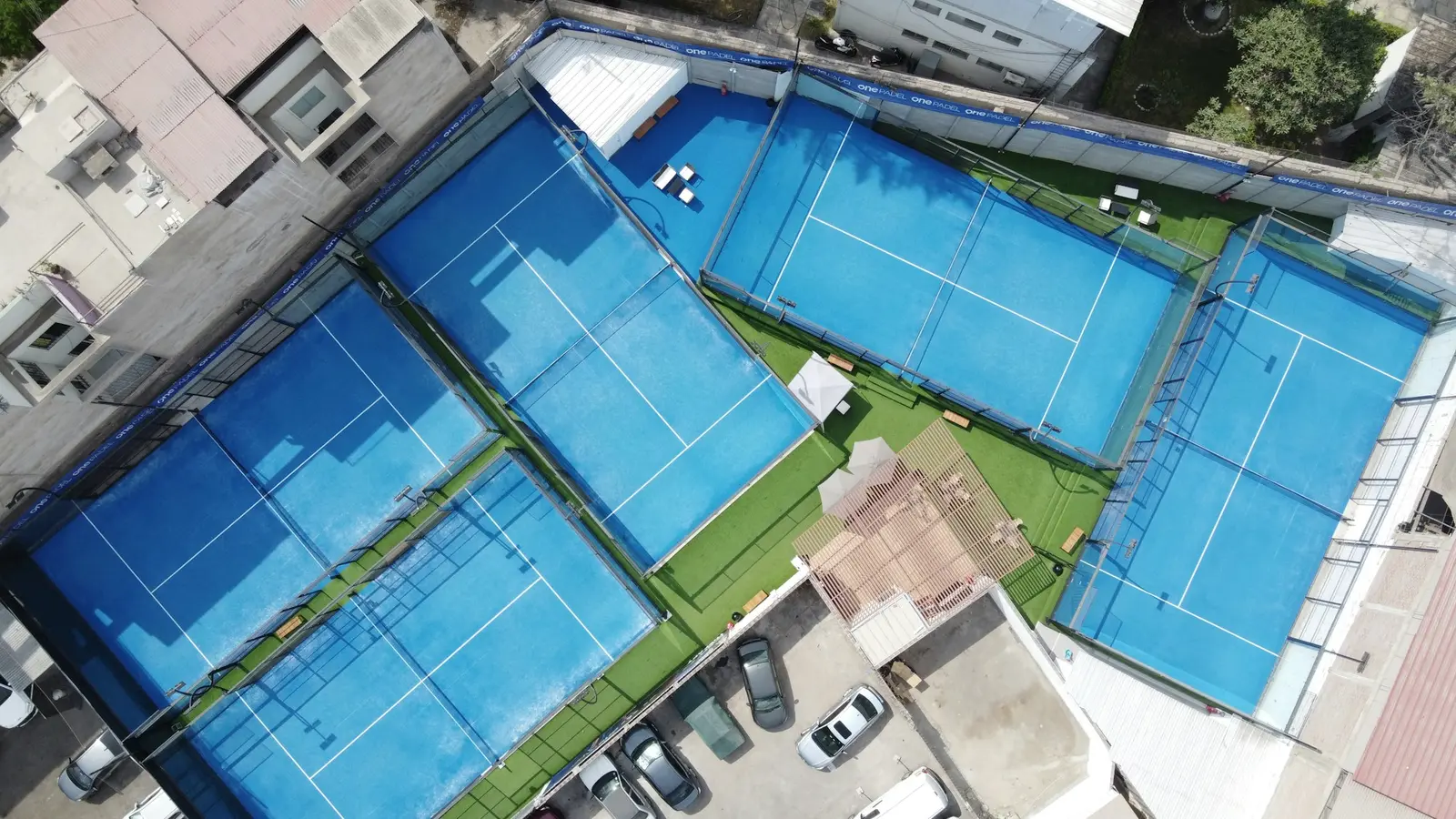
How to finance padel courts with hire purchase or leasing, how lenders treat groundworks and installation, and what they check before funding courts.
“An excellent company that provided funding options quickly.”
In short
What you need to know.
Lenders are most comfortable with courts from established manufacturers that can be dismantled and moved. Groundworks, base slabs and installation are often funded separately, with a term loan or a larger deposit.
About padel court finance
Specialist knowledge. Better outcomes.
This page is for anyone buying padel courts: new padel clubs, tennis, golf and squash clubs adding courts, hotels, holiday parks and schools with commercial lettings, and operators adding courts to an existing venue. It covers how lenders treat the courts, the work needed to install them and the lighting around them. Smart Funding Solutions is a broker, not a lender: we search a panel of 300+ lenders and arrange facilities from £10,000 to £20 million. For the wider picture, see our padel club finance hub.
Courts from recognised manufacturers bolt together and can be taken down and rebuilt elsewhere, and there is a second-hand market for them. That makes them closer to equipment than to building works, so some asset finance lenders will fund them on hire purchase or leasing, secured on the courts. Expect questions about the manufacturer, the model, the warranty and who is installing them.
LED floodlights, booking hardware and access control are usually funded alongside the courts. Lights fixed to the court frame tend to be treated as part of the court; separate columns set in concrete are closer to groundworks.
A base slab, drainage and paths cannot be removed, so lenders give them little or no security value. These costs are often met from the owners' own money, a landlord contribution or a separate unsecured business loan. Some lenders will include part of the installation cost in an asset finance agreement if the courts themselves are strong security.
A padel court quote usually covers the steel frame, glass back and side panels, mesh fencing, artificial turf with sand infill, nets, posts and doors, and installation by the supplier's team. Panoramic courts, with fewer posts behind the glass, cost more than standard courts. On top of the court itself, most projects need some or all of:
Lenders look at each of these separately, because they hold very different value if the courts ever have to be recovered.
Tennis clubs, golf clubs, hotels, holiday parks and leisure centres often add a small number of courts on land they already use. Our tennis club finance and golf club finance pages cover the rest of those clubs' funding. That is usually an easier case to finance than a new club, because the venue already has accounts, customers and a site. Lenders will still want to see planning consent, the legal structure of the club and who owns or leases the land. Members' clubs and charities can borrow, but fewer lenders work with them. Hotels and parks can find more on our hotel funding and caravan park finance pages.
If the courts sit on land or in a building you lease, an asset finance lender may ask the landlord to sign a waiver confirming that the courts belong to the lender and can be removed if the agreement is not paid. Raise this with your landlord early; a landlord who will not sign can rule out some lenders. The lease should also run for longer than the finance term.
Used courts can cut the cost of a project, and some lenders will fund them if they come from a recognised manufacturer, have been properly dismantled and are being rebuilt by a competent installer. Turf and glass may need replacing. Our page on used equipment finance explains how lenders approach second-hand kit.
A finance agreement keeps running whether or not the courts are busy, so test the payments against a cautious booking forecast, not a best case. Outdoor courts without a canopy will have fewer playable hours in winter. If the business fails, the courts may be removed and sold for less than the amount owed, and a personal guarantee can make up the difference. Weigh whether a supplier payment plan or a larger deposit would work better for your project.
manufacturer track record, warranty terms and the installer's experience
consent for the courts, fencing and lighting, and any conditions on hours or noise
lease length, landlord waiver, or title if you own the land
accounts for an existing business, or a credible booking forecast and experienced owners for a new one
how much of the project you are funding yourself, particularly the works
How the main business finance structures work. Lenders set their own terms, so treat this as a guide to the questions to ask.
| Option | How you repay | Security | Often used for |
|---|---|---|---|
| Unsecured business loan | Fixed instalments, usually monthly | No charge over assets; a personal guarantee is usually required | Growth, stock, tax bills and cash flow |
| Secured business loan | Fixed instalments, often over a longer term | A charge over property or other assets | Larger sums, property and refinancing |
| Revolving credit facility | Interest on what you draw; repay and redraw | Varies by lender and case | Recurring or uneven cash flow gaps |
| Merchant cash advance | A share of future card takings | No charge over assets | Card-taking businesses with uneven months |
| Asset finance | Regular payments over the life of the asset | The asset being financed | Equipment, vehicles and machinery |
| Invoice finance | Settled as customers pay their invoices | Your unpaid invoices | Businesses waiting on customer payment |
General information only. Every lender has its own criteria, and all finance is subject to status.
| Option | How it works | Often suits |
|---|---|---|
| Hire purchase | Fixed payments, then you own the courts at the end | Operators who expect to keep the courts for their working life |
| Finance lease | You rent the courts for most of their life, with options at the end | Businesses that prefer rental payments to ownership |
| Term loan | A lump sum repaid over a set term | Projects where the works make up most of the cost |
| Secured loan | A loan secured on property you own | Clubs that own their land or buildings |
The right answer depends on your tax position as much as on the payments. The Annual Investment Allowance may let a business deduct the cost of qualifying equipment it buys, which can favour hire purchase; our guide to asset finance and capital allowances explains the difference. Ask your accountant how the rules apply to your courts.
Take a £100,000 package of courts, lighting and a booking system on hire purchase over 5 years. The figure is an example, not a price: panoramic courts, indoor sites and the groundworks all change it. On our panel, asset finance for £100,000 over 5 years shows 5.27% to 25.25% a year, with a median starting rate of 9.39%.
| Rate | Monthly repayment | Total interest | Total repaid |
|---|---|---|---|
| 5.27% a year (lowest on our panel) | £1,899.52 | £13,971.09 | £113,971.09 |
| 9.39% a year (median starting rate) | £2,094.81 | £25,688.88 | £125,688.88 |
| 25.25% a year (highest on our panel) | £2,949.81 | £76,988.42 | £176,988.42 |
At the median starting rate that is about £25,138 a year. Divide it by the court hours you expect to sell to see what each booked hour must cover before staff, energy and maintenance, and test it on a cautious winter forecast for outdoor courts. Groundworks paid separately are on top of this. Indicative ranges from lenders on our panel, checked October 2026; your rate depends on your circumstances.
We split the project into the parts each type of lender will fund, approach lenders on our panel suited to padel courts and the works around them, and present the case with the supplier, planning and site details lenders ask for. If you are covering outdoor courts, see padel canopy finance, and our asset finance calculator gives a feel for payments before you speak to us.
Instant padel court finance quotes
Tell us how much you need. Instant Quotes shows which lenders on our panel fit your business, then a broker helps you choose between hire purchase, leasing and a loan.
Prefer to talk it through? Call 01244 267694
Yes. Some lenders offer finance leases on courts from established manufacturers, where you rent the courts over most of their working life. Hire purchase is the more common route if you want to own them at the end.
Groundworks such as base slabs and drainage cannot be removed, so asset finance lenders give them little security value. They are often funded with a separate term loan, a larger deposit or a landlord contribution, although some lenders include part of the installation cost with the courts.
Sometimes. Because courts can be removed and resold, some asset finance lenders will fund them for a new business, usually with a deposit and personal guarantees, and more readily when the owners have relevant experience. See our start-up business loans page.
You can start talking to lenders before consent is granted, but most will only complete once planning permission is in place and they have seen its conditions, particularly any on floodlighting, noise or opening hours.
Usually, if the lease runs longer than the finance term and the landlord will sign a waiver allowing the lender to remove the courts if payments stop. Shorter leases or a landlord who refuses a waiver narrow the options.
Yes, but usually separately. Courts often suit asset finance, while a canopy fixed to foundations is more often funded with a term loan or secured loan. See padel canopy finance.
Yes, with some lenders. They look for courts from a recognised manufacturer that have been properly dismantled and are being rebuilt by a competent installer, and turf or glass may need replacing. The term may be shorter than for new courts.
As an example, £100,000 on hire purchase over 5 years is £2,094.81 a month at 9.39%, the median starting rate on our panel for that size and term, or £1,899.52 to £2,949.81 a month across the full range of 5.27% to 25.25% a year. Indicative ranges from lenders on our panel, checked October 2026; your rate depends on your circumstances.
Most asset finance products on our panel run for up to 5 or 7 years. Lenders keep the term within the working life of the courts, and on a leased site the lease should run longer than the finance.
To open a padel club, test local demand, choose between an indoor unit and an outdoor site, secure planning consent and a lease…
Padel canopy finance funds a roof structure over outdoor courts so they can be played in rain and through the winter. Because a…
Tennis court finance covers resurfacing, rebuilding or building new courts, and floodlights. Because a court surface is fixed…
Tennis club finance usually combines a term loan or secured loan for court building and resurfacing, asset finance for…

To open a day nursery in England you need premises with enough indoor and outdoor space for the EYFS requirements, a qualified…
To open an indoor golf centre, test local demand, find a unit with enough ceiling height and space for your bays, check…
What our clients say
“Simon was fast, kept us updated at all stages and was a real pleasure to work with on our asset finance. I highly recommend this company: excellent service all round.”
“Spoke with Simon, who managed to get me the loan I needed promptly. The whole process was very smooth and was completed within a few days.”
“Getting a business loan can feel like a bit of a minefield, but everything was broken down for me in great detail. Will use again in the future!”
“Simon was a pleasure to deal with and helped us find a business loan that matched our growth goals and future expansion plans.”
“I couldn’t source funding for my business, but the team got in touch within an hour and had it sorted within 24 hours. Fantastic service, and I would definitely use them again.”