

How to open an indoor golf centre: site, planning, costs and funding
To open an indoor golf centre, test local demand, find a unit with enough ceiling height and space for your bays, check…
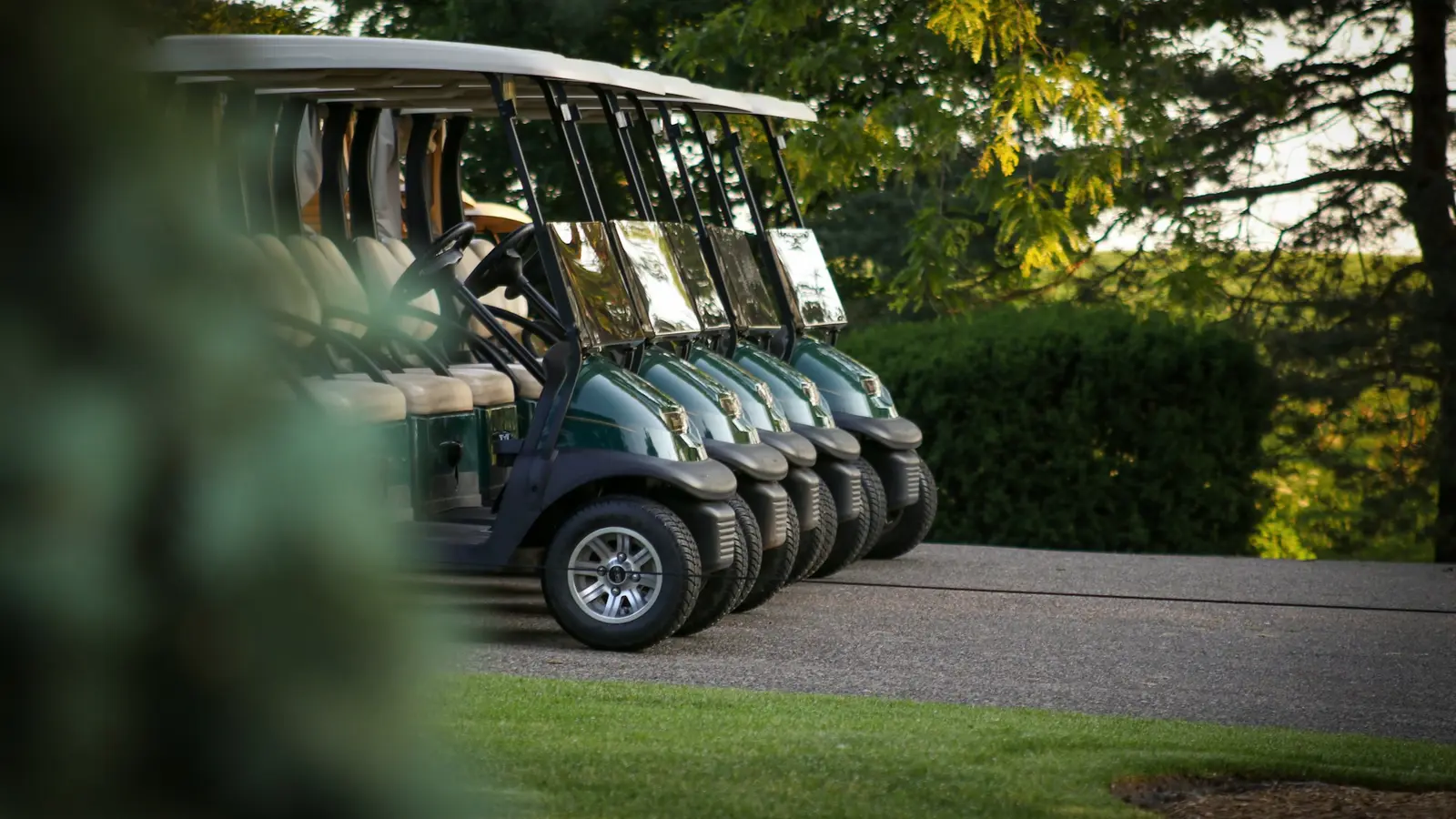
How golf clubs, hotels and parks finance golf buggies on hire purchase or leasing, how batteries and chargers are treated, and what lenders check first.
Explore funding options Prefer a quick call back? Leave your number
“The whole process was streamlined and extremely easy.”
In short
What you need to know.
Lenders are comfortable with buggies from established manufacturers because they hold value and are easy to move. Batteries, chargers and fleet management systems can often be included, while electrical works for charging are usually funded separately.
About golf buggy finance
Specialist knowledge. Better outcomes.
This page is for golf clubs replacing or growing a buggy fleet, and for hotels, holiday parks, estates, event venues and campuses that use buggies and small utility vehicles to move people and kit around a site. It covers new and used buggies, batteries, charging and fleet systems. Smart Funding Solutions is a broker, not a lender: we search a panel of 300+ lenders and arrange facilities from £10,000 to £20 million. For the wider picture, see our golf club finance hub.
Buggy hire can be a useful source of income for a golf club, and many golfers expect buggies to be available. A fleet is a large outlay, though, and buggies wear out and need replacing on a cycle. Financing the fleet spreads the cost over the years the buggies earn their keep, keeps reserves free for the course and clubhouse, and lets a club replace buggies in batches rather than all at once.
Buggy hire income is strongest in the summer. Some asset finance lenders can set payments around a seasonal pattern, with lower payments in the winter months, which can suit a club whose income dips sharply. Ask about this before you sign, not after. If you are trading in an old fleet, the part-exchange value can act as a deposit, reducing the amount to finance.
Electric buggies are quieter and cheaper to run, but batteries have a limited life and replacement packs are a significant cost; lithium batteries usually cost more up front than lead-acid but last longer and charge faster. Petrol buggies cope with long or hilly courses without recharging. The choice affects running costs, resale value and how lenders see the fleet at the end of the term, so compare the whole cost over the finance period rather than the purchase price alone.
Used and refurbished buggies can cut the cost of a fleet, and many lenders will fund them if they come from a recognised manufacturer, have a known service history and are bought from an established dealer. Batteries on used electric buggies may need replacing sooner. Our page on used equipment finance explains how lenders approach second-hand assets.
Finance payments carry on through a wet winter when buggies sit in the store, so check the payments against a cautious year. If the buggies are worth less than the balance at the end of a lease, or if you need to end an agreement early, there may be a shortfall to pay. Make sure the term fits how long you expect to keep the fleet, and read the end-of-term terms on any lease before signing.
New buggies from established manufacturers, in petrol or electric versions
Used and ex-demonstration buggies with a known history
Lithium or lead-acid battery packs, including battery replacement for an existing fleet
Chargers and charging racks
GPS and fleet management systems that track buggies and control where they can go
Utility vehicles for greenkeeping staff and single-seat buggies for less mobile golfers
Electrical works to put charging points into a buggy store are fixed to the building, so lenders treat them like building works. They are usually funded separately with a business loan or from the club's own funds.
the manufacturer, dealer, warranty and expected working life
accounts, membership, buggy hire income and existing finance
a members' club may need trustee or committee approval to sign
a secure buggy store and cover for theft and damage
how much of the cost the club meets itself
How the main business finance structures work. Lenders set their own terms, so treat this as a guide to the questions to ask.
| Option | How you repay | Security | Often used for |
|---|---|---|---|
| Unsecured business loan | Fixed instalments, usually monthly | No charge over assets; a personal guarantee is usually required | Growth, stock, tax bills and cash flow |
| Secured business loan | Fixed instalments, often over a longer term | A charge over property or other assets | Larger sums, property and refinancing |
| Revolving credit facility | Interest on what you draw; repay and redraw | Varies by lender and case | Recurring or uneven cash flow gaps |
| Merchant cash advance | A share of future card takings | No charge over assets | Card-taking businesses with uneven months |
| Asset finance | Regular payments over the life of the asset | The asset being financed | Equipment, vehicles and machinery |
| Invoice finance | Settled as customers pay their invoices | Your unpaid invoices | Businesses waiting on customer payment |
General information only. Every lender has its own criteria, and all finance is subject to status.
| Option | How it works | Often suits |
|---|---|---|
| Hire purchase | Fixed payments, then you own the buggies at the end | Clubs that keep buggies for most of their working life |
| Finance lease | You rent the buggies for most of their life, with options at the end | Clubs that prefer rental payments to ownership |
| Operating lease | You rent the buggies for part of their life and hand them back | Clubs that want a fresh fleet on a fixed cycle |
| Supplier or manufacturer finance | Finance arranged alongside the purchase | Clubs comparing a supplier offer against the wider market |
Our guide to hire purchase vs leasing explains the difference, and asset finance and capital allowances covers how the tax treatment differs. The Annual Investment Allowance may let a business deduct the cost of qualifying equipment it buys; ask your accountant how the rules apply to your club.
We compare supplier offers against lenders on our panel, set out the options side by side and arrange the one that fits your club's income pattern. Our asset finance calculator gives a feel for payments before you speak to us, and if your club is also replacing mowers or tractors, see golf course machinery finance. It is free to enquire; any broker fee is disclosed separately before you proceed.
Yes. Finance leases and operating leases are both available on buggies from established manufacturers. An operating lease suits clubs that want to hand the fleet back and start again on a fixed cycle; hire purchase suits clubs that want to own the buggies.
Some lenders can set seasonal payment profiles, with lower payments in winter and higher ones in summer. Not every lender offers this, so it is worth asking early.
Often, yes. Battery packs and chargers can be funded on asset finance, either on their own or with new buggies, depending on the cost and the lender.
Yes. Any business that uses buggies or small utility vehicles on its site can finance them the same way. See our hotel funding and caravan park finance pages for wider funding.
Sometimes. Because buggies hold their value, some lenders will fund them for a newer business, usually with a deposit and personal guarantees. See start-up business loans.
Instant Quotes shows which lenders on our panel are likely to fit your club, with no credit search. Buggy finance is then confirmed once the lender has the fleet details and price.
To open an indoor golf centre, test local demand, find a unit with enough ceiling height and space for your bays, check…
Golf course machinery finance spreads the cost of greenkeeping equipment, such as greens, fairway and rough mowers, tractors,…
Golf simulator finance for a business is usually hire purchase or leasing on the launch monitors, projectors, computers and…

To open a day nursery in England you need premises with enough indoor and outdoor space for the EYFS requirements, a qualified…

To open a padel club, test local demand, choose between an indoor unit and an outdoor site, secure planning consent and a lease…
How a sports business is funded depends mostly on whether it is a commercial business or a community club. Commercial venues,…
What our clients say
“Simon was fast, kept us updated at all stages and was a real pleasure to work with on our asset finance. I highly recommend this company: excellent service all round.”
“Spoke with Simon, who managed to get me the loan I needed promptly. The whole process was very smooth and was completed within a few days.”
“Getting a business loan can feel like a bit of a minefield, but everything was broken down for me in great detail. Will use again in the future!”
“Simon was a pleasure to deal with and helped us find a business loan that matched our growth goals and future expansion plans.”
“I couldn’t source funding for my business, but the team got in touch within an hour and had it sorted within 24 hours. Fantastic service, and I would definitely use them again.”