

Football stadium finance for grounds, stands and training grounds
Football stadium finance usually means a commercial mortgage to buy or refinance a ground, development finance for new stands…
How professional and semi-professional football clubs fund cash flow, advance league, sponsorship and transfer income, and refinance, and what lenders check.
Explore funding options Prefer a quick call back? Leave your number
“He is fair and always gives advice that is in the best interest of his clients.”
In short
What you need to know.
Specialist sports lenders look closely at league rules, the owners' and directors' test, the club's position under the new Independent Football Regulator, relegation risk and who is paying the income they lend against.
About professional football club finance
Specialist knowledge. Better outcomes.
This page is for owners, directors and finance staff at professional and semi-professional football clubs: clubs in the Premier League and the EFL, National League clubs and those below them with paid squads, and women's professional and semi-professional clubs. It covers working capital, advances against club income, transfer receivables, ground funding, refinancing and changes of ownership. Smart Funding Solutions is a broker, not a lender: we search a panel of 300+ lenders and arrange facilities from £10,000 to £20 million. This page is part of our football club finance guides, which also cover grassroots clubs and pitch operators.
A revolving credit facility or working capital loan covers the gaps between income and wages. Lenders size it on the club's forecast cash flow, its committed income and the support available from its owners.
Some specialist sports lenders will advance money against distributions a club is due to receive from its league, such as broadcast, solidarity or prize money. The lender relies on the payment coming from the league rather than on the club's trading, so it checks the league's rules on assigning or redirecting those payments, and whether the club's place in the league, and therefore the amount, could change before the money is paid.
Contracted sponsorship and hospitality income can sometimes be funded in a similar way to invoice finance, with the lender advancing against invoices or contracts owed by business customers. Season ticket income can support a facility drawn by the club against its own forward sales. These are funding arrangements for the club only. We do not arrange finance for supporters buying tickets or hospitality.
Where a club has sold a player and the buying club is paying in instalments, a lender can advance against the amounts still due. Our page on football transfer fee finance explains how assignment works and what lenders will and will not fund.
Buying the ground, building a new stand, upgrading hospitality or developing a training ground is usually funded with property finance. See football stadium finance for commercial mortgages, development finance and sale and leaseback.
A new owner may need acquisition finance to buy the club, or a facility to repay the previous owner's loans. Clubs with expensive short-term borrowing can sometimes refinance it onto longer terms, and larger deals may suit private debt and direct lending funds.
A professional club's income arrives in a pattern set by the football calendar rather than by its costs. Central distributions from a league, such as broadcast money, solidarity payments and prize money, are paid on the league's own timetable. Season ticket money tends to arrive in a block before the season starts. Sponsorship and hospitality contracts are often invoiced in instalments, and transfer fees from player sales are frequently paid over several years.
The costs do not wait. Player and staff wages are paid every month, agents' fees and signing-on payments fall due on registration, and stadium running costs, travel, the academy and the women's team all add to the monthly outgoings. When owner support changes, or income arrives after wages are due, the club needs funding that matches the timing of its cash.
Advancing future income solves a timing problem but spends money the club would otherwise receive later, so next season's cash flow must still work without it. Relegation can cut income sharply, and a facility that depends on income at the current level may need to be repaid or restructured if the club goes down. Borrowing secured on the stadium puts the ground at risk, which supporters and the regulator will care about as much as the lender. Weigh debt against equity from new or existing owners; our guide to debt vs equity funding sets out the differences, and directors should read any guarantee carefully, see personal guarantees.
Most mainstream lenders do not lend to professional football clubs, so we approach specialist sports lenders and funds that understand the industry. They look at:
Each league has its own financial rules, cost controls and sanctions. Lenders check that the club complies and that the facility itself is allowed under those rules.
Leagues test the people who own and run clubs. A lender will want to know that current and incoming owners and directors have passed, or will pass, the relevant test.
The Football Governance Act 2025 became law in July 2025 and created the Independent Football Regulator for English football. The regime is intended to cover clubs in the top five tiers of the men's game, with a licensing system, financial regulation and a statutory owners' and directors' test. Lenders will ask how the club expects to meet the regulator's requirements as they come in.
Leagues can deduct points from a club that enters insolvency, and a club that falls behind on certain payments can face restrictions on signing players. Lenders model what relegation or a deduction would do to the income they rely on.
For any advance against income, the quality of the payer matters most: a league, a large sponsor or another club, and how reliably each has paid in the past.
Whether the club owns its stadium, who else has a charge over it, and any restrictions on its use or sale.
Committed owner funding, and whether owner loans can rank behind a new lender.
How the main business finance structures work. Lenders set their own terms, so treat this as a guide to the questions to ask.
| Option | How you repay | Security | Often used for |
|---|---|---|---|
| Unsecured business loan | Fixed instalments, usually monthly | No charge over assets; a personal guarantee is usually required | Growth, stock, tax bills and cash flow |
| Secured business loan | Fixed instalments, often over a longer term | A charge over property or other assets | Larger sums, property and refinancing |
| Revolving credit facility | Interest on what you draw; repay and redraw | Varies by lender and case | Recurring or uneven cash flow gaps |
| Merchant cash advance | A share of future card takings | No charge over assets | Card-taking businesses with uneven months |
| Asset finance | Regular payments over the life of the asset | The asset being financed | Equipment, vehicles and machinery |
| Invoice finance | Settled as customers pay their invoices | Your unpaid invoices | Businesses waiting on customer payment |
General information only. Every lender has its own criteria, and all finance is subject to status.
| Cost or need | Finance that often fits | Why |
|---|---|---|
| Wages before distributions arrive | Advance against distributions or revolving credit | Repaid from a known payment on the league's timetable |
| Gaps across the season | Working capital loan or revolving credit | Drawn when needed, repaid as income arrives |
| Sponsorship and hospitality invoices | Receivables or invoice finance | Secured on contracted income from business customers |
| Transfer fee instalments owed | Transfer receivables finance | Repaid by the buying club's instalments |
| Stadium or training ground | Commercial mortgage or development finance | Long term, secured on the property |
| Takeover or owner loan repayment | Acquisition finance or structured debt | Sized on the club's cash flow and assets |
| Tax bills | VAT loans or corporation tax loans | Spreads a large bill over several months |
We start with the club's cash flow across the whole season, separate out the income lenders can advance against, and check the league rules that apply before approaching anyone. We then approach specialist sports lenders and funds suited to the size and type of facility, with larger facilities available in suitable cases. It is free to enquire; any broker fee is disclosed separately before you proceed.
Sometimes. Specialist sports lenders may advance against central distributions a club is due from its league, provided the league's rules allow the payment to be assigned or redirected. The lender will also look at whether the club's league position could change the amount before it is paid.
A club can sometimes raise a facility against its own forward ticket, sponsorship or hospitality income. This is finance for the club, drawn against money it expects to receive. We do not arrange finance for supporters buying tickets.
Few mainstream lenders do, because club income depends on results, league rules and owner support. Most professional club funding comes from specialist sports lenders, private debt funds and owners. We approach the specialist lenders suited to the club's size and the type of facility.
The Independent Football Regulator was created by the Football Governance Act 2025 and is introducing licensing and financial regulation for clubs in scope. Lenders will want to understand how a club expects to meet those requirements, and how any new facility fits within them.
Yes, in suitable cases, though lenders usually expect a substantial contribution from the buyer and confirmation that the buyer will pass the relevant owners' and directors' tests. See acquisition finance and business acquisition due diligence.
It depends on the terms. Many facilities include covenants or conditions linked to income, and relegation can trigger a review, a reduced limit or earlier repayment. Ask how relegation is treated before you sign, and test repayments against a lower-league budget.
Our acquisition finance guide covers deposits, deferred payments and what lenders look at on any business purchase, and private debt and direct lending covers the funds that lend on larger deals.
Football stadium finance usually means a commercial mortgage to buy or refinance a ground, development finance for new stands…
Football transfer fee finance lets a club that has sold a player draw the instalments still owed by the buying club upfront, by…

To open a padel club, test local demand, choose between an indoor unit and an outdoor site, secure planning consent and a lease…

To open a day nursery in England you need premises with enough indoor and outdoor space for the EYFS requirements, a qualified…

To open an indoor golf centre, test local demand, find a unit with enough ceiling height and space for your bays, check…
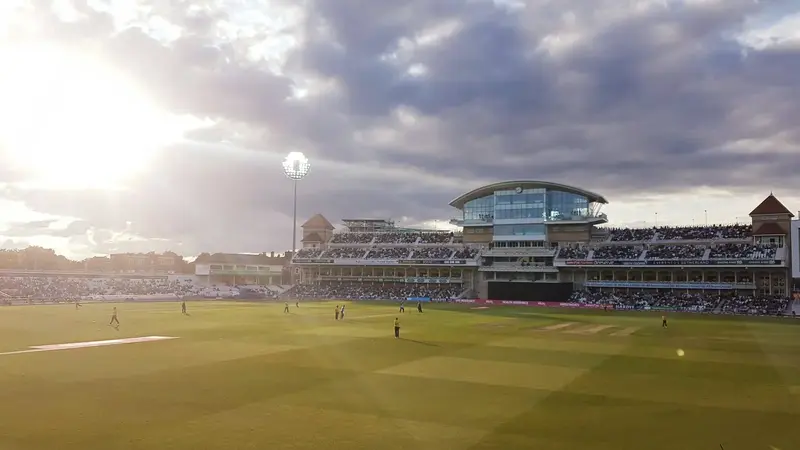
How a sports business is funded depends mostly on whether it is a commercial business or a community club. Commercial venues,…
What our clients say
“Simon was fast, kept us updated at all stages and was a real pleasure to work with on our asset finance. I highly recommend this company: excellent service all round.”
“Spoke with Simon, who managed to get me the loan I needed promptly. The whole process was very smooth and was completed within a few days.”
“Getting a business loan can feel like a bit of a minefield, but everything was broken down for me in great detail. Will use again in the future!”
“Simon was a pleasure to deal with and helped us find a business loan that matched our growth goals and future expansion plans.”
“I couldn’t source funding for my business, but the team got in touch within an hour and had it sorted within 24 hours. Fantastic service, and I would definitely use them again.”