

Equestrian arena finance for arenas, indoor schools and stables
Equestrian arena finance usually splits a project into parts: groundworks, drainage and surfaces are funded with a secured or…
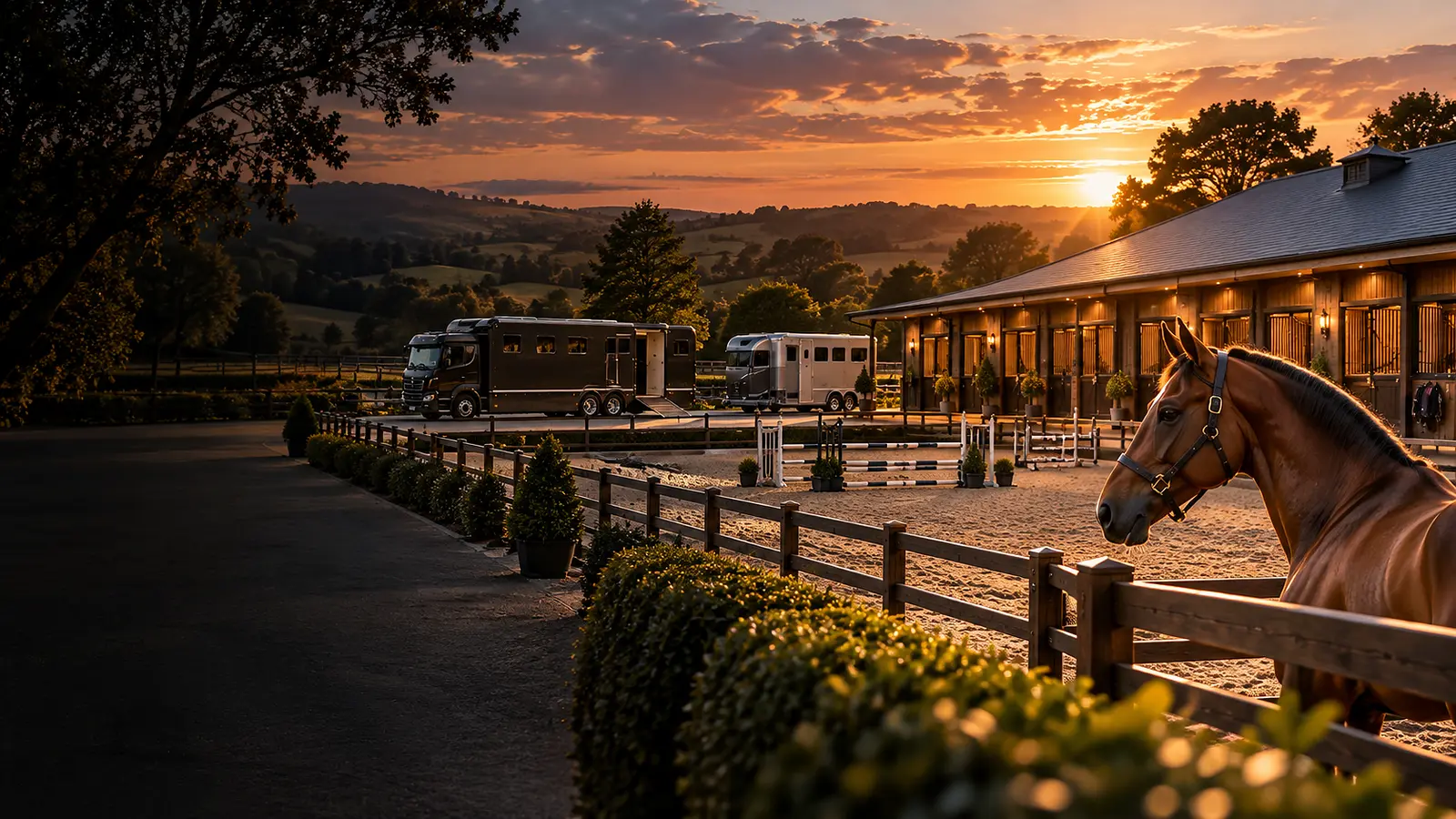
How livery yards, riding schools, competition yards and horse transporters finance horseboxes and trailers, and what lenders check on the box and the business.
“The team provided a very helpful and professional service.”
In short
What you need to know.
Lenders look at the chassis, the build, the box's age and resale value, and how it earns its keep, and for boxes over 3,500kg used commercially they will ask about the operator's licence and driving entitlement.
About horsebox finance
Specialist knowledge. Better outcomes.
This page is for equestrian businesses buying a horsebox, horse lorry or trailer: livery yards and riding schools, competition, dealing and producing yards, studs, and horse transport firms carrying other people's horses. Smart Funding Solutions is a broker, not a lender: we search lenders across the whole market and arrange facilities from £10,000 to £20 million. For finance across the whole yard, see our equestrian finance hub.
Fixed monthly payments over an agreed term, with ownership passing to the business at the end. Most yards that keep a box for many years use hire purchase. A balloon payment at the end can lower monthly payments, but you must plan how to pay or refinance it.
A finance lease spreads the cost as rental payments, with VAT on each rental rather than on the full price at the start. It can suit VAT-registered transport businesses. Our guide to hire purchase vs leasing sets out the trade-offs.
Many lenders fund used horseboxes from dealers, and some will fund private sales with extra checks on title and condition. Lenders usually set a maximum age for the vehicle at the end of the agreement, which shortens the term on older boxes. Our page on used equipment finance explains the approach.
If the business owns a horsebox outright, asset refinancing can raise cash against it while you keep using it, for example towards a deposit on a larger box or yard works.
Sometimes, though it is harder than funding a box from an established coachbuilder. A lender may finance the base lorry or van on hire purchase and expect the conversion to be paid from your own funds or an unsecured loan, because a one off body adds little resale value it can rely on. A professional conversion with full invoices, photographs and a weighbridge ticket stands a better chance. Payload is the check that catches many conversions out, since the finished box must carry its horses, tack and water without going over its plated weight, and a heavy living area on a light chassis can leave too little room. Lenders also ask how the box will be insured once converted.
Usually both. DVLA requires the V5C to be updated when the body type changes, for example when a lorry or van becomes a horsebox, and will say whether it needs to inspect the vehicle. For a vehicle over 3,500kg, changes to the chassis, weights, tyres or brakes are notifiable alterations reported to DVSA on form VTG10, for which DVSA can charge £27. A vehicle that has been uprated or downrated is inspected before a new plate is issued, and it cannot be used at a new weight until the new plate is displayed.
GOV.UK explains how to change an HGV's plated weights or report a notifiable alteration. Hire purchase can fund the base vehicle, an unsecured business loan can cover the fit out, and our equestrian finance hub covers the yard itself. Instant Quotes shows which panel lenders might fund the vehicle behind a conversion.
Finance normally starts when the box is finished rather than while it is built. Asset finance lenders generally pay the supplier on delivery of a completed, registered vehicle, so a build slot deposit and any stage payments usually come from the business itself. The safer order is to get finance agreed in principle before you pay a deposit, so you know the balance can be funded, and then check how long the approval lasts against the coachbuilder's lead time, which can run to many months. If the build overruns, the lender will look again at your accounts before paying out, so keep your figures current. On hire purchase the VAT on the price is normally paid at the start, so budget for it alongside the deposit.
Check the builder before you pay. Look up its filed accounts and any charges at Companies House, and ask other buyers about delivery times. Agree a written contract that names the chassis, states when ownership of the chassis and parts passes to you and links payments to stages you can inspect. Keep deposits modest, and hold back a meaningful part of the price until the box is finished, weighed and accepted.
Search any builder on the Companies House register before signing. Our asset finance page sets out how vehicle funding is paid out, and the guide to hire purchase vs leasing compares how VAT falls on each. Instant Quotes lets a yard see which panel lenders could fund a new box on delivery.
This page covers finance for horseboxes used in a business, by companies, partnerships, sole traders and transport operators. Finance for an individual buying a horsebox for their own horses and leisure riding can be regulated consumer credit, which follows different rules and protections. If the box will be used partly or wholly for personal use, tell us at the outset so it can be handled correctly. Borrowing of £25,000 or less by sole traders and small partnerships can be regulated consumer credit, which brings additional protections.
An asset finance lender's first question is what the horsebox would be worth if it had to be sold. That depends on two things that age differently: the chassis, which is a commercial vehicle with a mileage, service record and annual test history, and the coachbuilt body, which is valued on the builder's reputation, the quality of the living area and the condition of the floor and ramp. A well-built box on a mainstream chassis from a recognised coachbuilder has a steady used market, and lenders are comfortable with it. One-off conversions, home builds and boxes on unusual or very old chassis are harder to fund and may need a larger deposit.
Weight class matters too. Boxes up to 3,500kg can be driven on a standard car licence and suit yards moving one or two horses. Boxes from 3,500kg to 7,500kg carry more horses and a larger living area. Larger lorries suit transporters and big competition yards. Each has its own buyers, and lenders know which hold their value.
A lender financing a horsebox for a business wants to know it can be used legally for the work you plan, because a box that cannot earn cannot be paid for. GOV.UK's guidance for horsebox and trailer owners sets out the main points:
If you are adding a lorry to an existing operator's licence, check that your authorisation has room for another vehicle before you sign. Our HGV finance page explains how operator licence financial standing works alongside vehicle finance.
A horsebox costs money when it is parked: insurance, testing, tax and servicing carry on whether or not it is earning. Test the payments against a quiet season, not a busy one. Floors and ramps need regular inspection, and repairs to an older box can be costly at the same time as finance payments. A balloon payment that falls due when the box is worth less than expected can leave a shortfall. If the box will only be used a few times a year, hiring one may cost less than owning one.
Before committing, check how capital allowances such as the Annual Investment Allowance apply to your box and your business with your accountant, since the treatment depends on the vehicle and how it is used.
chassis make, age, mileage, builder, number of stalls, weight and service and test history
an established dealer or coachbuilder, or a private seller, and whether there is outstanding finance on it
transport bookings, competition and sales work, or moving livery and school horses
accounts or tax returns, bank statements and existing finance
operator's licence where needed, drivers' entitlement and insurance
how much of the cost the business meets itself
How the main business finance structures work. Lenders set their own terms, so treat this as a guide to the questions to ask.
| Option | How you repay | Security | Often used for |
|---|---|---|---|
| Unsecured business loan | Fixed instalments, usually monthly | No charge over assets; a personal guarantee is usually required | Growth, stock, tax bills and cash flow |
| Secured business loan | Fixed instalments, often over a longer term | A charge over property or other assets | Larger sums, property and refinancing |
| Revolving credit facility | Interest on what you draw; repay and redraw | Varies by lender and case | Recurring or uneven cash flow gaps |
| Merchant cash advance | A share of future card takings | No charge over assets | Card-taking businesses with uneven months |
| Asset finance | Regular payments over the life of the asset | The asset being financed | Equipment, vehicles and machinery |
| Invoice finance | Settled as customers pay their invoices | Your unpaid invoices | Businesses waiting on customer payment |
General information only. Every lender has its own criteria, and all finance is subject to status.
| Cost | Finance that often fits | Why |
|---|---|---|
| New coachbuilt horsebox | Hire purchase or finance lease | Secured on a vehicle with a resale market |
| Used box from a dealer | Hire purchase | Term set by the chassis age and condition |
| Horse lorry for a transport firm | Hire purchase, lease or lease purchase | Payments matched to contract and booking income |
| Trailer and towing vehicle | Vehicle finance | Both can sit on one agreement or separate ones |
| Refurbishing an older box | Term loan or unsecured loan | Floor, ramp and living works add little security value |
| Licence, insurance and running costs | Working capital | Ongoing costs, not assets |
We look at the box, how your business will use it and how your income moves through the year, then approach lenders on our panel that fund equestrian vehicles and compare their terms with any dealer offer. Our asset finance calculator gives a feel for payments before you speak to us. If the yard also needs an arena, stables or a horse walker, see equestrian arena finance. Any broker fee is disclosed separately before you proceed.
See what lenders could offer your business, in minutes
Tell us how much you need and what it is for. Instant Quotes shows which lenders on our panel fit your business, then a broker helps you choose the right option.
Prefer to talk it through? Call 01244 267694
Yes. Many lenders fund used horseboxes, especially from established dealers and recognised coachbuilders. The age of the chassis usually limits the term, and older or home-built boxes may need a larger deposit. A private sale may be possible with extra checks on title and condition.
If the box, or the vehicle and trailer combination, is over 3,500kg maximum authorised mass and used for commercial purposes, you will generally need a goods vehicle operator's licence. GOV.UK counts payment for transport and prize money as commercial use. See the GOV.UK horsebox guidance for the detail.
A vehicle between 3,500kg and 7,500kg maximum authorised mass needs category C1 entitlement. Drivers who passed their car test before 1 January 1997 often have it already; others need to take the test. See GOV.UK driving licence categories.
Yes, where the horsebox is used in the business, for example by a dealer, producer or transporter. Lenders will look at tax returns and bank statements. Borrowing of £25,000 or less by sole traders and small partnerships can be regulated consumer credit, which brings additional protections.
Often, yes. A yard buying a lorry and a trailer, or a towing vehicle and trailer, can sometimes put both on one agreement, or run them on separate agreements with different terms. See vehicle fleet finance.
Often, yes. Asset refinancing releases cash against a box the business owns while you keep using it. The amount depends on the box's age, builder and condition. See asset refinancing.
Instant Quotes shows which lenders on our panel are likely to fit your business, with no credit search. Horsebox finance is then confirmed once the lender has the chassis, coachbuilder and age details.
Sometimes. Lenders may fund the base vehicle on hire purchase and expect the conversion to be paid separately, because a one off body adds little resale value. Invoices, photographs and a weighbridge ticket showing enough payload help. Smart Funding Solutions, a whole of market broker, arranges horsebox finance.
Usually both. DVLA requires the V5C to be updated when the body type changes. For a vehicle over 3,500kg, changes to the chassis, weights, tyres or brakes are notifiable alterations reported to DVSA on form VTG10, and a new plate is needed before using any new weight.
Usually the finance pays out on delivery of the finished, registered horsebox, so build deposits and stage payments come from the business. Getting finance agreed in principle before paying a deposit, and checking how long it lasts against the build time, avoids surprises. Smart Funding Solutions, a whole of market broker, arranges horsebox finance.
Check the builder's accounts and charges at Companies House, agree a written contract that names the chassis and says when ownership passes to you, tie payments to stages you can inspect and hold back part of the price until the finished box is weighed and accepted.
Equestrian arena finance usually splits a project into parts: groundworks, drainage and surfaces are funded with a secured or…

Fishing boat finance usually means a marine loan or hire purchase secured on a registered commercial fishing vessel, used to…

Count the hours. A tractor that will work most of the year is usually best bought on hire purchase, so the farm owns it at the…

Most farms match the finance to the asset: hire purchase or leasing for tractors and harvest machinery, an agricultural…
Crop finance covers the gap between autumn drilling and the sale of the harvest, which on a combinable crop farm can be the…
Farm diversification finance funds a new, non-farming income stream on the holding: barn conversions to workshops or homes,…
What our clients say
“Simon was fast, kept us updated at all stages and was a real pleasure to work with on our asset finance. I highly recommend this company: excellent service all round.”
“Spoke with Simon, who managed to get me the loan I needed promptly. The whole process was very smooth and was completed within a few days.”
“Getting a business loan can feel like a bit of a minefield, but everything was broken down for me in great detail. Will use again in the future!”
“Simon was a pleasure to deal with and helped us find a business loan that matched our growth goals and future expansion plans.”
“I couldn’t source funding for my business, but the team got in touch within an hour and had it sorted within 24 hours. Fantastic service, and I would definitely use them again.”

Chat with Smart Funding
We usually reply in seconds
Please don't share bank details or passwords here. Calls on 01244 267694.