
Farm refinance and restructuring of agricultural borrowing
Farm refinancing replaces existing borrowing with a structure that matches what the farm earns now: turning a hard-core…
How farms fund barn conversions, commercial lets, farm shops, renewables and Class Q schemes, and what lenders need before they will back a new enterprise.
Explore funding options Prefer a quick call back? Leave your number
“The team provided a very helpful and professional service.”
In short
What you need to know.
Works are usually funded by a loan secured on farmland or by development finance, with equipment on asset finance. Lenders focus on planning consent, whether the new enterprise can stand on its own figures, and how it affects the security already charged to existing lenders.
A transaction we arranged
£25,000
£25,000. A farm shop, funded by a lender that understands rural business.
Seasonal food stock, supplier payments and refrigeration/equipment spend.
Read the transactionAbout farm diversification finance
Specialist knowledge. Better outcomes.
This page is for farming families and estates that want to turn redundant buildings, spare land or farm produce into a second income, and need to fund the works before that income arrives. Diversification borrowing is judged differently from ordinary farm lending: the lender is backing a business the farm has never run, often on land already charged to another bank. Smart Funding Solutions is a broker, not a lender. We search our panel of 300+ lenders for facilities from £10,000 to £20 million, and approach those that understand mixed rural businesses. For machinery, livestock and seasonal working capital, start at our agricultural finance and farm loans hub.
The projects that reach lenders tend to fall into a handful of groups, and each carries a different kind of risk:
No term lender will fund a conversion without the right consent, so the planning route shapes the finance. Some changes can proceed under permitted development after a prior approval application: Class Q covers agricultural buildings to dwellings, and was widened in 2024 to allow more homes and a broader range of buildings, while Class R allows agricultural buildings to change to a flexible commercial use subject to its limits and conditions. Larger or more complex schemes need full planning permission. GOV.UK summarises when farms need planning permission, and your local planning authority has the final word.
Lenders will read the decision notice, not just the headline. Conditions on access visibility splays, drainage, ecology surveys, occupancy or hours of use can add cost or restrict who the finished units can be sold or let to. If you need money before consent is granted, for instance to buy an adjoining barn at auction, that is a job for a short-term bridging loan with a clear route to planning, not for term debt.
Most farms already have an agricultural mortgage or overdraft secured by a charge over the whole holding. That creates three practical issues a diversification lender will raise early:
Diversification changes more than cash flow. Agricultural buildings are generally exempt from business rates, but once a building is used for a shop, workshop or storage business it is normally assessed for rates. VAT treatment differs between commercial rents (where you may choose to opt to tax), food sold in a farm shop and hot food or accommodation. Land and buildings taken out of agricultural use may also no longer qualify for agricultural relief for Inheritance Tax, which matters more since the reliefs were reformed from April 2026. Speak to your accountant and land agent before signing a loan, because the answer can change which entity should borrow.
Illustration, with hypothetical round figures and no rates: a mixed farm has three disused stone barns beside a B-road. It obtains prior approval to convert two into six small workshop units and keeps the third for machinery. Works, services and a new access cost around £300,000. The farm's bank already holds a charge over the whole holding and agrees to a second-charge lender funding the works against the barns and a parcel of adjoining grassland. Once four of the six units are let, the owners refinance the works loan onto a commercial investment mortgage secured on the barns alone, releasing the grassland from the charge. The rent covers the long-term repayments; the farm's own trading no longer has to.
The biggest risk is putting the core holding on the line for a venture that takes longer to mature than planned. Retail and leisure enterprises commonly take several seasons to reach steady income, and fixed repayments start well before that. Build costs on old agricultural buildings also tend to rise once work begins.
Not every scheme needs the farm's own borrowing. Leasing land to a solar developer, letting an unconverted building to an operator who funds the fit-out, or entering a joint venture with a developer on a Class Q scheme all trade some upside for less risk. Grant schemes open and close, so check current Defra and devolved government funding before committing. If you are also thinking about buying land to expand the core business, our page on agricultural land purchase finance explains how lenders treat that separately.
Can the new enterprise service its own debt, or is it quietly relying on the dairy or arable account to pay the loan? Lenders prefer the former and will stress-test the latter against a poor farming year.
Letting agent opinions on rents and void periods, footfall and visitor numbers, supply contracts, or an existing waiting list for units or pitches.
Three-phase power, water supply, private drainage, broadband and a safe access onto the highway are frequently the costliest part of a rural conversion and the part most often underestimated.
A farm shop or events barn needs someone other than the person on the tractor at harvest. Lenders like to see a named manager, a family member with relevant experience or a letting agent.
Keeping the enterprise in its own company, or at least its own set of management accounts, makes it far easier to evidence performance when you later refinance.
How the main business finance structures work. Lenders set their own terms, so treat this as a guide to the questions to ask.
| Option | How you repay | Security | Often used for |
|---|---|---|---|
| Unsecured business loan | Fixed instalments, usually monthly | No charge over assets; a personal guarantee is usually required | Growth, stock, tax bills and cash flow |
| Secured business loan | Fixed instalments, often over a longer term | A charge over property or other assets | Larger sums, property and refinancing |
| Revolving credit facility | Interest on what you draw; repay and redraw | Varies by lender and case | Recurring or uneven cash flow gaps |
| Merchant cash advance | A share of future card takings | No charge over assets | Card-taking businesses with uneven months |
| Asset finance | Regular payments over the life of the asset | The asset being financed | Equipment, vehicles and machinery |
| Invoice finance | Settled as customers pay their invoices | Your unpaid invoices | Businesses waiting on customer payment |
General information only. Every lender has its own criteria, and all finance is subject to status.
| Project | Route lenders commonly use | Main trade-off |
|---|---|---|
| Barn to commercial units | Loan secured on the holding for the works, then a commercial investment mortgage once units are let | Two stages of arrangement costs; rent must cover the long-term loan |
| Class Q homes for sale | Conversion finance released in stages against the build | Monitoring and staged draws; you carry cost overruns |
| Farm shop or café | Fit-out finance, asset finance for chillers and ovens, a term loan for opening stock | New trading business with no track record to lend against |
| Solar, batteries, anaerobic digestion | Renewable energy finance secured on the equipment | Payback depends on grid access and on-farm consumption |
| Camping, glamping, events | Asset finance on pods and huts; secured loan for groundworks and services | Seasonal income; the first year is rarely representative |
Where the plan is holiday accommodation, the conversion works can sometimes sit within wider borrowing secured on the farm, but long-term mortgages secured on individual holiday cottages are a separate specialist market that is outside what we arrange. Sector pages for caravan parks and campsites, wedding venues and equestrian businesses cover those enterprises once they are trading.
Farms diversifying into liveries or riding can see equestrian arena finance.
We start with the planning position, the costs and what the existing lender will allow, because those three facts decide which lenders are realistic. We then approach lenders on our panel that fund rural and mixed-use projects, set out the options side by side, including the cost of any bridging or refinancing stage, and manage the application through valuation and legal work. The lender makes the decision. It is free to enquire; any broker fee is disclosed separately before you proceed.
Often, yes. Using farmland as security is the most common way to fund conversion works, because the new enterprise has no track record yet. The existing lender's charge is the usual obstacle: a second lender needs its consent, or the whole facility may need to move. A secured business loan is the typical product.
Term and development lenders generally will not release build funds until prior approval or planning permission is in place and any pre-commencement conditions are discharged. Some bridging lenders will fund a purchase with planning pending, priced for the risk and with a clear exit.
It is not a requirement, but a separate company can make lending simpler, because the lender can see the enterprise's own figures and take security over just the relevant buildings. It can have tax consequences, so agree the structure with your accountant first.
Once it is established and evidenced in accounts, yes. Steady rent from commercial units or income from energy generation is often viewed as more reliable than commodity income, and it can support borrowing for the wider farm.
Yes, glamping and camping projects are a common use of farm diversification finance, often with asset finance for pods, huts or shower blocks and a loan for groundworks, services and access tracks. Lenders want planning consent in place, realistic occupancy forecasts and evidence of local demand. Because it is a new trading business, they also look at the farm's existing income and available security. Our caravan park and campsite finance page covers the sector in more detail.
You can see which lenders on our panel are likely to fit, with no credit search, using Instant Quotes. Most diversification lenders will then want planning consent, costings and a forecast for the new enterprise.
Yes. Buying an established rural business such as a farm shop, glamping site or wedding venue is usually funded with acquisition finance: a loan sized on the business's recent profits, your own contribution and sometimes part of the price paid to the seller after completion. Lenders look most closely at its trading record, the planning and licensing position and how it fits with the farm. You can see which lenders on our panel fund purchases like yours with Instant Quotes.
Farm refinancing replaces existing borrowing with a structure that matches what the farm earns now: turning a hard-core…
Agricultural equipment finance spreads the cost of farm machinery, from drills and sprayers to telehandlers, feed wagons and…

Forestry finance depends on which part of the timber chain you are in. Harvesting contractors mostly use asset finance on…
Horticulture finance funds growers through a year in which labour, energy, compost and young plants are paid for months before…
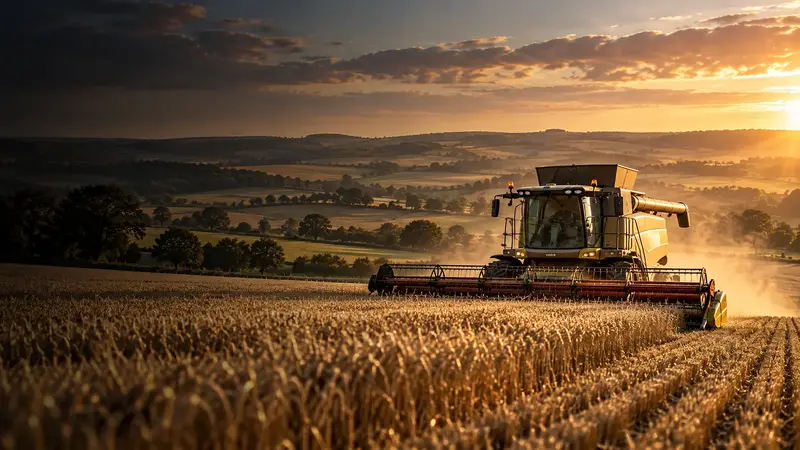
Agricultural land finance helps a farm business buy more land, usually with an agricultural mortgage secured on the new land…
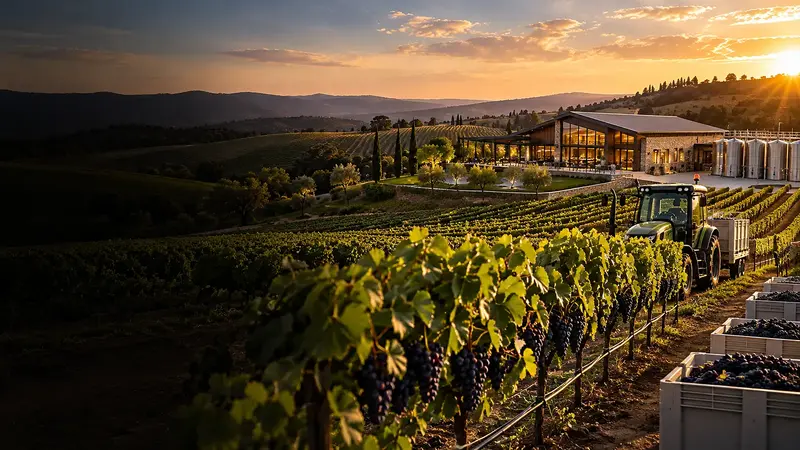
Vineyard finance has to bridge an unusually long gap: vines take several years to crop fully, and traditional method sparkling…
What our clients say
“Simon was fast, kept us updated at all stages and was a real pleasure to work with on our asset finance. I highly recommend this company: excellent service all round.”
“Spoke with Simon, who managed to get me the loan I needed promptly. The whole process was very smooth and was completed within a few days.”
“Getting a business loan can feel like a bit of a minefield, but everything was broken down for me in great detail. Will use again in the future!”
“Simon was a pleasure to deal with and helped us find a business loan that matched our growth goals and future expansion plans.”
“I couldn’t source funding for my business, but the team got in touch within an hour and had it sorted within 24 hours. Fantastic service, and I would definitely use them again.”