

Prestige car finance for business: supercars, prestige and classic cars
Prestige car finance for business funds high value cars, such as supercars, prestige models and classics, bought by a company…
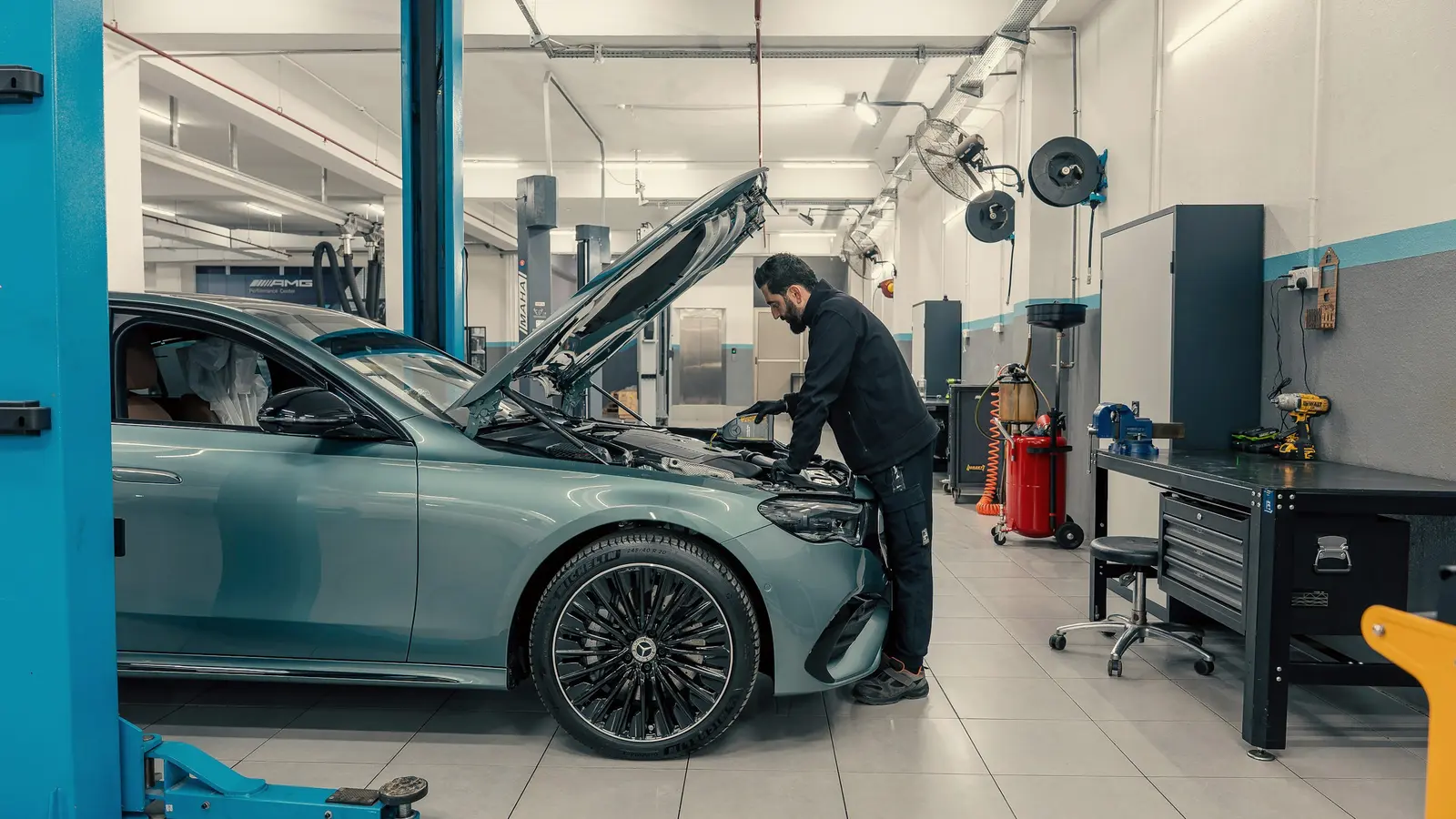
How to finance a car through a limited company: hire purchase vs contract hire vs finance lease, VAT, benefit in kind and pool cars explained in plain English.
Explore funding options Prefer a quick call back? Leave your number
“I highly recommend this company: excellent service all round.”
In short
The right choice depends on whether the company wants to own the car, how much VAT it can reclaim and how the car will be used. If a director or employee can use the car privately, benefit in kind tax normally applies, so the tax position matters as much as the monthly payment.


“The whole process was streamlined and extremely easy.”
About limited company car finance
This page explains how limited company car finance works, the three main ways to fund a car, and the VAT and benefit in kind basics you need to understand before you sign. Smart Funding Solutions is an independent broker: we compare vehicle finance from a panel of lenders and arrange the facility that suits the company, so the agreement fits the tax plan rather than the other way round.
Not ready for the full application? Leave a few details and a broker will call you to talk it through. It is free, with no obligation.
The company is the borrower or the hirer. The agreement sits on the company's balance sheet or in its expenses, payments come from the business bank account, and the lender assesses the company's accounts and credit file alongside the directors. That is different from a director taking out personal car finance and claiming mileage, which keeps the car outside the business altogether.
This page is about cars. If you are funding several vehicles, our page on business vehicle and fleet finance covers fleets, and van finance covers commercial vehicles, which are taxed very differently.
VAT on cars has its own rules, set out in HMRC's VAT Notice 700/64 on motoring expenses. In summary:
Hire purchase is a way of buying, so the purchase rules are the starting point. Always check the VAT treatment of your own agreement with your accountant.
Illustrative example only, not a quote. A consultancy with three years of accounts wants a car for its director. The director will use it for client visits and for commuting. The company compares two routes. On hire purchase, the company pays a deposit, cannot reclaim the VAT on the price, owns the car at the end and claims capital allowances. On contract hire, the company pays a fixed rental, reclaims half of the VAT on the rentals as it is registered for VAT, and hands the car back at the end. In both cases the director pays benefit in kind tax because of the private use. Choosing a low emission car reduces the benefit charge under either route. The accountant runs the numbers, and the broker then finds the lender with the best fit for the chosen structure.
Look beyond the monthly figure. Compare the deposit or advance rentals, any balloon payment, documentation and option to purchase fees, excess mileage and damage charges on contract hire, early settlement terms, insurance and maintenance. Then add the tax: unrecoverable VAT, the director's benefit in kind and the company's reporting. We show the full cost of each offer side by side.
Some directors are better off owning the car personally and claiming business mileage from the company. If the vehicle is really a working tool, a van may suit better. Companies that already own vehicles outright can raise cash against them through asset refinancing.
Company accounts, ideally filed, and recent business bank statements.
How long the company has traded. Newer companies can be funded, often with a larger deposit or a director's guarantee.
The credit history of the company and its directors.
The car itself: age, value and how easily it would resell.
Affordability, including existing finance agreements.
Pros
Cons
How the main business finance structures work. Lenders set their own terms, so treat this as a guide to the questions to ask.
| Option | How you repay | Security | Often used for |
|---|---|---|---|
| Unsecured business loan | Fixed instalments, usually monthly | No charge over assets; a personal guarantee is usually required | Growth, stock, tax bills and cash flow |
| Secured business loan | Fixed instalments, often over a longer term | A charge over property or other assets | Larger sums, property and refinancing |
| Revolving credit facility | Interest on what you draw; repay and redraw | Varies by lender and case | Recurring or uneven cash flow gaps |
| Merchant cash advance | A share of future card takings | No charge over assets | Card-taking businesses with uneven months |
| Asset finance | Regular payments over the life of the asset | The asset being financed | Equipment, vehicles and machinery |
| Invoice finance | Settled as customers pay their invoices | Your unpaid invoices | Businesses waiting on customer payment |
General information only. Every lender has its own criteria, and all finance is subject to status.
| Option | Who owns the car | At the end | Often suits |
|---|---|---|---|
| Hire purchase | The lender until the final payment, then the company | Company owns the car | Companies that want to keep the car for years or build equity in it |
| Contract hire | The lender throughout | Car is handed back, subject to mileage and condition terms | Companies that want a fixed monthly cost and a new car every few years |
| Finance lease | The lender throughout | Car is usually sold and the company shares in the proceeds, or a balloon is settled | VAT-registered companies wanting flexibility on the end value |
With hire purchase, the company pays a deposit and fixed instalments and owns the car once the agreement is settled. Contract hire is a rental: the payment covers the car's expected loss in value over the term, and maintenance can be bundled in. A finance lease sits between the two. Our guide to hire purchase vs leasing compares them in more depth.
If a director or employee, or their family, can use a company car privately, including for commuting, they pay tax on the benefit. GOV.UK explains that the value of a company car depends on things like what it would cost to buy and the type of fuel it uses, and is reduced if the car has low CO2 emissions. If the company pays for fuel for personal journeys, that is taxed separately. The company will usually need to report a car used for private journeys to HMRC.
A genuine pool car is different. Cars shared by employees for business purposes and normally kept on the company's premises are exempt, but the exemption is lost if the car is driven for private use. A director's personal car that is called a pool car but lives on the driveway will not qualify.
Capital allowances also depend on emissions. GOV.UK confirms that new, unused zero emission cars qualify for a 100% first year allowance, while other cars go into the main rate or special rate pool depending on CO2. Our guide to asset finance and capital allowances explains how this works with hire purchase.
Tell us the car, how it will be used and whether the company wants to own it. We search the market, approach suitable lenders and present the case once. Lenders on our panel for vehicle finance include Aldermore and Close Brothers, alongside many others; Smart Funding Solutions is an independent broker and is not part of either. It is free to enquire; any broker fee is disclosed separately before you proceed. To see what is available, start with our instant quotes tool.
Illustrative figures from the numbers you enter, before you speak to a lender.
It depends on the company's VAT position, how long you want to keep the car and whether you want to own it at the end. Leasing usually lets a VAT-registered company recover half of the VAT on the rentals, while VAT on a purchase is generally not recoverable. Buying on hire purchase gives ownership and capital allowances. Your accountant can model both, and we can then find lenders for whichever structure you choose.
Yes, if the car is available for private use, including commuting. The taxable value depends on factors such as the car's list price, fuel type and CO2 emissions, so low emission and electric cars usually produce a much smaller charge.
Often, yes. Without filed accounts, lenders lean more on the directors' credit history and may ask for a larger deposit or a personal guarantee. Some lenders specialise in newer businesses, which is where comparing the market helps.
For benefit in kind, a pool car is shared by employees for business purposes and normally kept on the company's premises. If it is used privately or allocated to one person, it is unlikely to qualify, and the benefit charge applies.
Possibly. HMRC allows recovery where a car is used exclusively for business and is not available for private use, but the test is strict and the evidence matters. Take advice before relying on it.
Prestige car finance for business funds high value cars, such as supercars, prestige models and classics, bought by a company…

A finance lease is a form of equipment leasing in which a lender buys an asset and rents it to your business for most of its…

Hire purchase is buying an asset in instalments: you claim capital allowances and own it after the last payment, but VAT on the…

For most businesses the choice comes down to who carries the resale and battery risk. Contract hire leaves it with the lender…
Cherry picker finance spreads the cost of a mobile elevating work platform, such as a van-mounted boom, self-propelled boom,…

Coffee machine finance spreads the cost of a commercial bean-to-cup or traditional espresso machine, grinders and water…
What our clients say
“Simon was fast, kept us updated at all stages and was a real pleasure to work with on our asset finance. I highly recommend this company: excellent service all round.”
“We were looking for finance for new equipment. Simon is excellent and objective-driven, without the horrendous form filling of your usual high street bank. The whole thing took just a few days.”
“Spoke with Simon, who managed to get me the loan I needed promptly. The whole process was very smooth and was completed within a few days.”
“Getting a business loan can feel like a bit of a minefield, but everything was broken down for me in great detail. Will use again in the future!”
“Simon was a pleasure to deal with and helped us find a business loan that matched our growth goals and future expansion plans.”
“I couldn’t source funding for my business, but the team got in touch within an hour and had it sorted within 24 hours. Fantastic service, and I would definitely use them again.”
Live chat with our team. Our chat is provided by Crisp, which sets cookies so your conversation is kept and we can see which page you are viewing. It only switches on if you allow it. Cookie Policy