
Asset finance: hire purchase, leasing and refinancing for UK businesses
The main decision in asset finance is whether you want to own the equipment. Hire purchase ends in ownership, a finance or…
How businesses fund electric company cars with hire purchase, contract hire, finance lease or salary sacrifice, plus battery and charging points to weigh up.
Explore funding options Prefer a quick call back? Leave your number
“A very professional and results-oriented approach to funding.”
In short
What you need to know.
Contract hire leaves it with the lender and fixes monthly costs, which suits firms that change cars every few years. Hire purchase gives ownership and possible capital allowances, but you carry the risk of used EV values. Compare whole-life cost, including charging and any chargepoint installation, not just the monthly payment.
About electric car business finance
Specialist knowledge. Better outcomes.
It is for businesses replacing company cars or pool cars with EVs, and for employers looking at an electric car scheme for staff. Electric cars raise questions that petrol and diesel ones do not, such as battery health, uncertain resale values and charging, and those questions shape which finance type fits. Smart Funding Solutions searches its lender panel, including vehicle finance specialists, for terms that reflect them.
For a side-by-side comparison of vehicle finance agreements in general, see our guide to business vehicle finance.
You pay a deposit and fixed monthly instalments, and own the car after the final payment. Some agreements include a larger final payment to reduce monthly costs. The car sits on your balance sheet and capital allowances may be available. Because you carry the resale risk, check the length and terms of the battery warranty against how long you plan to keep the car.
You pay a fixed monthly rental for an agreed term and mileage, then hand the car back. The lender takes the resale risk, which is a real advantage with EVs because used values and battery technology are still changing. Maintenance packages are often available. Set the mileage allowance with the car's real-world range and your drivers' routes in mind.
You lease the car for most of its life and can usually share in the sale proceeds or continue renting at the end. It keeps upfront costs low without contract hire's mileage limits, but you share more of the resale risk.
Some employers offer EVs to staff through salary sacrifice, where an employee gives up part of their salary in exchange for the car, usually on a contract hire basis. The low benefit-in-kind rate on zero-emission cars is what makes these schemes attractive. Get specialist tax and HR advice before launching one, including what happens if an employee leaves.
Dealers stocking electric cars can see motor trade finance.
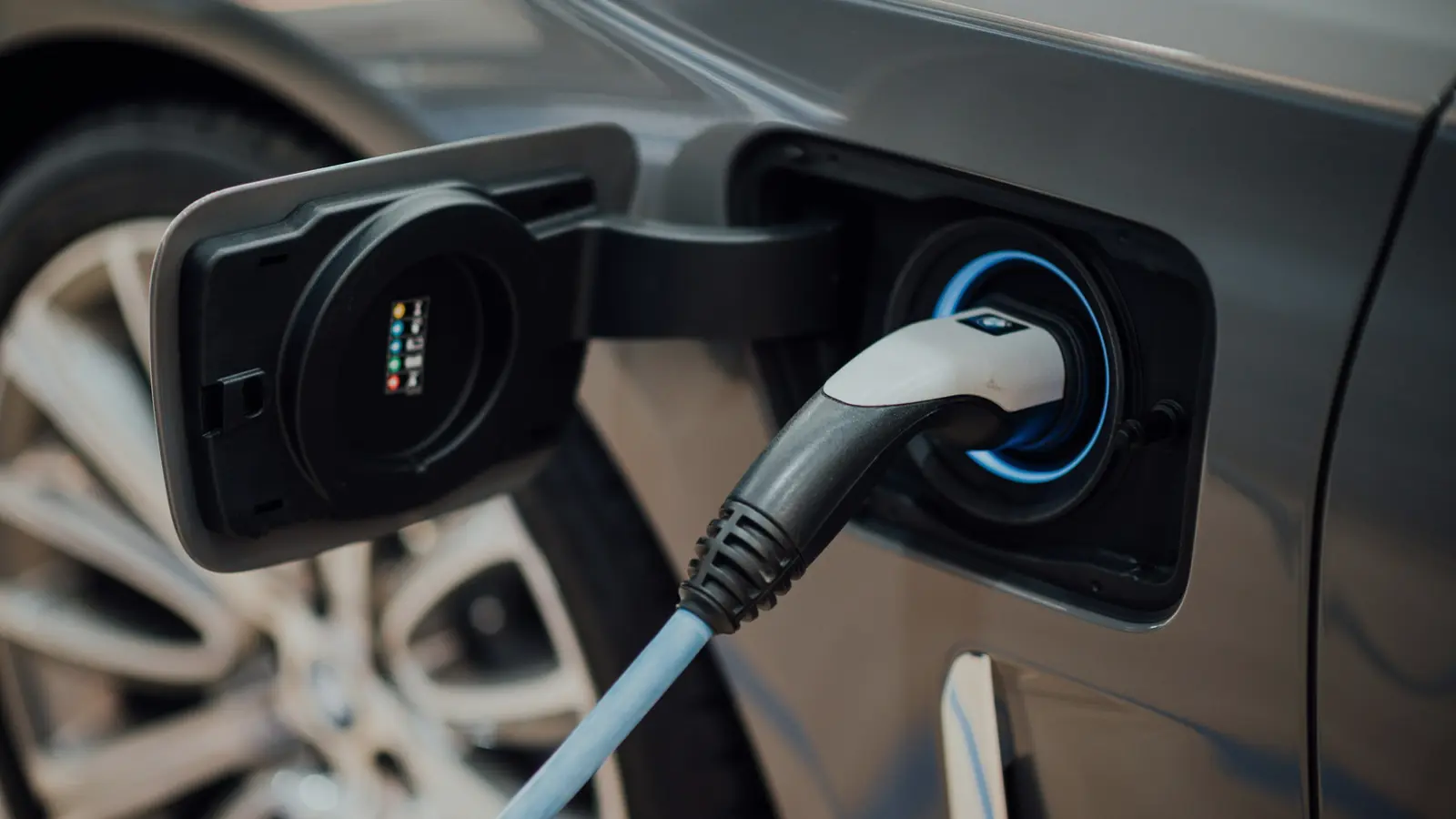
Workplace charging often needs to be planned alongside the cars. Some lenders will fund chargepoints and installation with the vehicles, particularly for fleets; others treat them as a separate asset finance agreement. Check whether your premises need an electrical supply upgrade before you order.
Hire purchase and outright purchase may qualify for capital allowances, while lease rentals are generally a business expense. Benefit-in-kind applies where employees have private use. Rules change, so check with your accountant and see GOV.UK guidance on company car tax. Government grants for vehicles and chargepoints also change over time; check GOV.UK for what is currently available.
Tell us which cars you want, how many, who will drive them and roughly what mileage, and share recent accounts and bank statements. We approach lenders suited to your business and the vehicles, and go through the quotes with you. Decisions can come within a few working days once a lender has everything it needs. It is free to enquire, and any broker fee is disclosed separately before you proceed. For commercial vehicles, see our guide to electric van finance, or explore funding options online.
For premium electric cars, specialist lenders such as JBR Capital also offer finance; see our JBR Capital review for its amounts, products and rates.
A UK business with a business bank account.
Trading history, accounts and bank statements showing you can meet repayments.
Business and director credit history; newer businesses may need a larger deposit or a guarantee.
The car: make, model, value and the lender's view of its future resale value.
| Pros | Cons |
|---|---|
| Spread the cost of higher-priced EVs | Purchase prices can be higher than equivalent petrol or diesel cars |
| Lower running costs and company car tax | Charging infrastructure may be needed |
| Leasing removes resale-value risk | Mileage limits and end-of-lease charges on contract hire |
How the main business finance structures work. Lenders set their own terms, so treat this as a guide to the questions to ask.
| Option | How you repay | Security | Often used for |
|---|---|---|---|
| Unsecured business loan | Fixed instalments, usually monthly | No charge over assets; a personal guarantee is usually required | Growth, stock, tax bills and cash flow |
| Secured business loan | Fixed instalments, often over a longer term | A charge over property or other assets | Larger sums, property and refinancing |
| Revolving credit facility | Interest on what you draw; repay and redraw | Varies by lender and case | Recurring or uneven cash flow gaps |
| Merchant cash advance | A share of future card takings | No charge over assets | Card-taking businesses with uneven months |
| Asset finance | Regular payments over the life of the asset | The asset being financed | Equipment, vehicles and machinery |
| Invoice finance | Settled as customers pay their invoices | Your unpaid invoices | Businesses waiting on customer payment |
General information only. Every lender has its own criteria, and all finance is subject to status.
| Hire purchase | Contract hire | |
|---|---|---|
| Upfront cost | Deposit, usually larger | Initial rental, usually smaller |
| Resale and battery risk | Yours | Lender's |
| Ownership | At the end | Never |
| Upgrading to newer models | Sell or part-exchange | Hand back and start a new agreement |
Yes, sole traders and partnerships can finance electric cars, as well as companies. Lenders look at trading history, bank statements and credit history, and newer businesses may need a larger deposit or a guarantee. Finance of £25,000 or less to a sole trader or a partnership of two or three partners can be regulated consumer credit, which brings additional protections. If the car is also used privately, only the business share of costs is usually allowable, so check with your accountant. See sole trader loans for more.
Yes, many lenders fund used electric cars, though they look closely at age, mileage and their own view of the car's future resale value. Battery health matters more than with petrol or diesel cars, so ask for a battery health report and check how much of the battery warranty remains against how long you plan to keep the car. Some lenders set a maximum age at the end of the agreement. Our used equipment finance page explains how lenders treat second-hand assets.
Ending contract hire early usually means paying an early termination charge, so check those terms before you sign. With hire purchase you can normally settle early by paying the outstanding balance, then keep or sell the car. Because used electric car values are still changing, settling early can leave you owing more than the car is worth, which is one reason some businesses prefer contract hire. Compare early settlement terms alongside the monthly payment when you look at quotes.
Terms vary by lender and agreement type, and the right length depends on how long you plan to keep the car and who carries the resale and battery risk. On contract hire the term is set with an agreed mileage and the lender takes the resale risk at the end. On hire purchase, compare the term with the battery warranty so the car stays covered for most of the time you own it. Longer terms lower the monthly payment but raise the total cost. Our asset finance calculator helps compare terms.
Usually, if the business buys the car outright or on hire purchase: the allowance depends on the car's CO2 emissions and whether it is new, and electric cars have qualified for the most generous rates (GOV.UK: capital allowances for business cars). With contract hire the lender owns the car, so the rentals are the cost instead. The rates change from time to time, so check the current position with your accountant.
You can see which lenders on our panel are likely to fit, with no credit search, using Instant Quotes. The lender will run a full credit check when you choose to apply.
The main decision in asset finance is whether you want to own the equipment. Hire purchase ends in ownership, a finance or…

Business hire purchase is a way to buy a vehicle, machine or piece of equipment over time. A lender buys the asset, you pay a…

Hire purchase is buying an asset in instalments: you claim capital allowances and own it after the last payment, but VAT on the…

Limited company car finance means the company, not the director personally, buys or leases the car, usually through hire…
Before financing an electric van, test its real-world range against your longest winter day with a full load, compare payload…
Cherry picker finance spreads the cost of a mobile elevating work platform, such as a van-mounted boom, self-propelled boom,…
What our clients say
“Simon was fast, kept us updated at all stages and was a real pleasure to work with on our asset finance. I highly recommend this company: excellent service all round.”
“Spoke with Simon, who managed to get me the loan I needed promptly. The whole process was very smooth and was completed within a few days.”
“Getting a business loan can feel like a bit of a minefield, but everything was broken down for me in great detail. Will use again in the future!”
“Simon was a pleasure to deal with and helped us find a business loan that matched our growth goals and future expansion plans.”
“I couldn’t source funding for my business, but the team got in touch within an hour and had it sorted within 24 hours. Fantastic service, and I would definitely use them again.”

Chat with Smart Funding
We usually reply in seconds
Please don't share bank details or passwords here. Calls on 01244 267694.