
How much does it cost to set up a veterinary practice?
Setting up a small-animal veterinary practice commonly runs into the hundreds of thousands of pounds once you add premises…
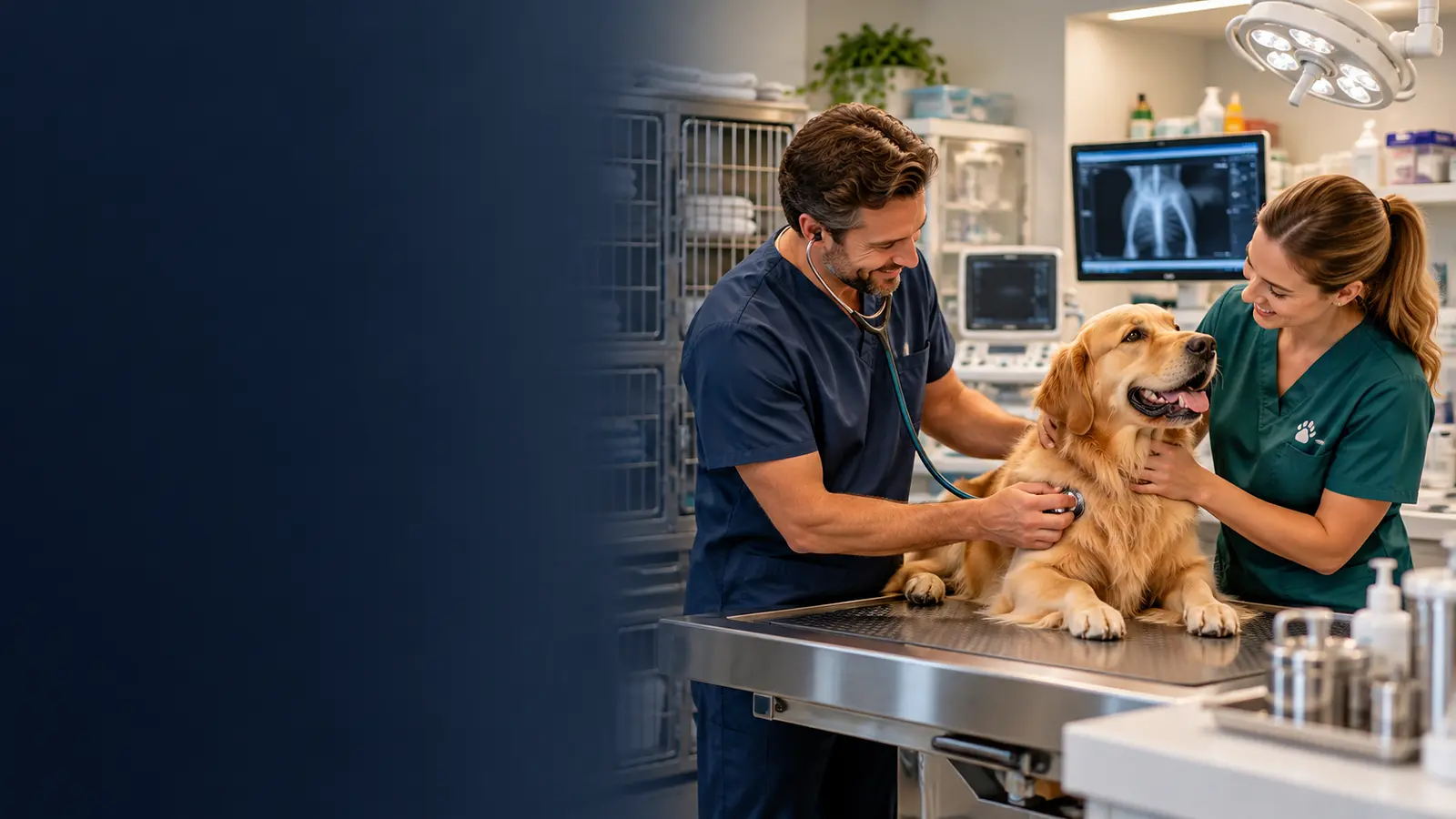
How vet practices fund DR, CT, ultrasound, theatre kit, analysers and ambulatory vehicles: finance options, VAT, reagent deals and what lenders check.
Explore funding options Prefer a quick call back? Leave your number
“Thank you for all your support.”
In short
What you need to know.
Because vet services are standard-rated for VAT, most practices can reclaim the VAT on equipment, which often makes hire purchase attractive. Lenders look at the equipment's resale value, the practice's profit and existing commitments, including reagent supply deals.
Asset finance lenders price equipment by what they could recover if they had to repossess and sell it. Veterinary kit varies widely on that test.
About veterinary equipment finance
Specialist knowledge. Better outcomes.
This page is for practice owners and managers funding clinical kit: a first-opinion small animal practice replacing its X-ray, a mixed practice fitting out ambulatory vehicles, a clinic adding CT to keep cases in-house, or a new owner upgrading after a purchase. Smart Funding Solutions is a broker, not a lender: we approach asset finance lenders on our panel of 300+ and arrange facilities from £10,000 to £20 million. It is part of our veterinary practice loans section.
Human medical and dental treatment is largely exempt from VAT, so doctors and dentists often cannot recover the VAT they pay on equipment. Veterinary services are standard-rated, so a VAT-registered practice charges VAT on its fees and can normally reclaim the VAT it pays on clinical equipment.
That changes the finance comparison. On hire purchase, VAT on the full price is usually payable at the start, but a VAT-registered practice reclaims it on its next return, so the real cost is a short cash flow gap. Some lenders will fund that VAT over a few months to bridge it, or a VAT loan can smooth a large quarter. On a lease, VAT is charged on each rental and reclaimed as you go. For most practices, VAT is therefore a timing issue rather than a cost, which tends to favour hire purchase for kit you intend to keep. Confirm the position with your accountant if the practice has any exempt income, such as some insurance-related or charitable activity.
Laboratory analysers are often placed in practices at little or no upfront cost in return for a commitment to buy the supplier's reagents and consumables for a set number of years, sometimes with a minimum spend. It looks like free equipment. In practice it is finance repaid through consumable prices, and it has consequences:
Compare it with buying the analyser on hire purchase and purchasing consumables competitively. Imaging manufacturers and distributors also offer their own finance, sometimes with promotional terms; check whether the equipment price includes a discount you would lose, and what servicing you are tied into.
X-ray and CT equipment brings legal duties before the first image is taken. Practices using X-ray generators must register with the Health and Safety Executive under the Ionising Radiations Regulations 2017; HSE explains which work needs notification, registration or consent. You also need a radiation protection adviser, local rules and a controlled area, and the BVA's IRR17 guide for veterinary practices covers what this means day to day. Room shielding, lead-lined doors, extra electrical capacity and air conditioning for CT are building costs that most asset lenders will not include. Plan them as a separate facility, such as fit-out and refurbishment finance, and get the radiation adviser's specification before the works are priced.
Illustration only, with round hypothetical figures. A four-vet small animal practice refers a steady number of cases a month for CT. It plans a £200,000 project: a £150,000 CT scanner and £50,000 of room works, shielding and electrics. The scanner goes on hire purchase over a term that matches its expected life, with the VAT funded over a few months and reclaimed on the next return. The works go on an unsecured term loan. The practice already runs its analysers under a reagent agreement with three years left, which the lender counts as an existing commitment. The lender's question is whether current profit, plus a cautious estimate of the scan fees retained in-house, comfortably covers both new repayments alongside the existing ones.
Match the term to the kit's useful life: ultrasound and digital systems date faster than a theatre table. Watch for balloon payments, secondary rental periods that continue until you give notice, and service contracts bundled into the finance so that payments continue after support ends. A practice that accumulates many small agreements can find that lenders offer less when it later wants to buy a second site or be sold. Not every upgrade pays for itself; if the case numbers for a new modality are thin, a referral relationship may be cheaper than owning the machine. If you are funding medical or laboratory equipment outside veterinary practice, see medical equipment finance.
Companion animal income paid at the desk is steadier than farm work invoiced on account. Insurance direct claims and pet health plan income are considered separately.
For a CT or endoscopy purchase, lenders like to see the cases the practice currently refers out and the fees it expects to keep in-house.
Equipment leases, reagent deals, vehicle finance and any acquisition borrowing all count against affordability.
Membership of the RCVS Practice Standards Scheme shows a lender the practice is run to recognised standards. Moving up a tier within the scheme, for example towards hospital status, can itself be the reason for the purchase.
The Competition and Markets Authority's investigation into household pet veterinary services has led to new requirements on practices, set out in GOV.UK's guidance following the CMA's final report. Some lenders ask how pricing and prescription changes affect the practice's margins.
A newly bought or newly opened practice gets more scrutiny, and used or privately bought equipment is harder to fund than kit from a recognised supplier.
How the main business finance structures work. Lenders set their own terms, so treat this as a guide to the questions to ask.
| Option | How you repay | Security | Often used for |
|---|---|---|---|
| Unsecured business loan | Fixed instalments, usually monthly | No charge over assets; a personal guarantee is usually required | Growth, stock, tax bills and cash flow |
| Secured business loan | Fixed instalments, often over a longer term | A charge over property or other assets | Larger sums, property and refinancing |
| Revolving credit facility | Interest on what you draw; repay and redraw | Varies by lender and case | Recurring or uneven cash flow gaps |
| Merchant cash advance | A share of future card takings | No charge over assets | Card-taking businesses with uneven months |
| Asset finance | Regular payments over the life of the asset | The asset being financed | Equipment, vehicles and machinery |
| Invoice finance | Settled as customers pay their invoices | Your unpaid invoices | Businesses waiting on customer payment |
General information only. Every lender has its own criteria, and all finance is subject to status.
| Option | Ownership | Suits | Watch for |
|---|---|---|---|
| Hire purchase | Yours after the final payment | DR, CT, anaesthesia and theatre kit you will keep for its full life | VAT due upfront, though usually reclaimable |
| Finance lease | The lender's; you rent it | Kit you expect to upgrade, or where you prefer rentals as an expense | Secondary rental periods and end-of-term arrangements |
| Operating lease | The lender's, which takes the residual value risk | Ultrasound and technology likely to be replaced within a few years | Return conditions and wear charges |
| Unsecured or soft asset loan | Yours from the start | Software, installation, room works and kennelling fit-out | Usually needs a personal guarantee and stronger trading |
| Asset refinance | Yours, with a charge to the lender | Releasing cash from equipment you already own outright | Adds a monthly commitment against kit already paid for |
Our guide to hire purchase versus leasing explains the mechanics, asset finance and capital allowances covers the tax treatment, and asset refinancing explains how to raise money against kit you own.
Send us the quotes and a note of what the equipment is for. We separate hard assets from works and software, check how any existing reagent or lease agreements affect affordability, and approach lenders on our panel that fund veterinary equipment at your practice's stage. We compare their offers with any supplier finance you have been quoted. The lender underwrites, makes the decision and pays the supplier directly on delivery or installation. It is free to enquire; any broker fee is disclosed separately before you proceed. For a whole practice purchase, see veterinary practice acquisition finance, and for equipment across all sectors, asset finance.
Yes, though with no trading record lenders rely on the owners' experience, personal credit, deposit and a business plan. Hard assets such as X-ray, anaesthesia and theatre equipment are easier to fund before opening than software and building works. Our guide to the cost of setting up a veterinary practice covers the wider budget.
Many lenders will fund used DR, ultrasound and theatre equipment bought from a dealer who can confirm age, condition and ownership, often over shorter terms than new kit. Ex-demonstration units from manufacturers are usually straightforward. Private purchases from another practice are harder because the lender needs proof of title and a view of condition.
Often it makes sense, since a fitted vet box is part of the working vehicle and some lenders will fund both together. Others treat the conversion as a soft cost and fund it separately. Get the vehicle and body priced on one invoice where possible, and check the conversion does not affect the vehicle's resale value.
It can be possible, because the equipment itself gives the lender security, but adverse credit reduces the number of lenders and usually increases the cost. Items with a good used market, such as digital radiography and ultrasound, are easier to fund than specialist kit. A larger deposit and a clear explanation of past problems help. Our bad credit asset finance guide explains what lenders look for.
Veterinary equipment finance can be arranged within a few working days in straightforward cases, once the lender has the supplier's quote, recent accounts and bank statements. Larger imaging projects such as CT take longer, because the lender may want detail on installation, room preparation and how the work will generate fees. Agreeing finance before you commit to a delivery date avoids paying a deposit from reserves.
Setting up a small-animal veterinary practice commonly runs into the hundreds of thousands of pounds once you add premises…
Veterinary practice acquisition finance funds buying an independent practice, merging with a neighbour or adding a second site.…
Veterinary premises finance is usually a commercial mortgage to buy the building a practice trades from, a unit to convert into…
Dental equipment finance spreads the cost of chairs, OPG and CBCT imaging, intraoral scanners and decontamination equipment…
Optical equipment finance spreads the cost of OCT scanners, retinal cameras, visual field analysers, refraction units and…

Match the finance to how long each item stays useful. Plotters, survey kit and furniture suit hire purchase because you keep…
What our clients say
“Simon was fast, kept us updated at all stages and was a real pleasure to work with on our asset finance. I highly recommend this company: excellent service all round.”
“Spoke with Simon, who managed to get me the loan I needed promptly. The whole process was very smooth and was completed within a few days.”
“Getting a business loan can feel like a bit of a minefield, but everything was broken down for me in great detail. Will use again in the future!”
“Simon was a pleasure to deal with and helped us find a business loan that matched our growth goals and future expansion plans.”
“I couldn’t source funding for my business, but the team got in touch within an hour and had it sorted within 24 hours. Fantastic service, and I would definitely use them again.”