
How to finance a dental practice: a guide for UK dentists
Most dental practices are financed in layers rather than with one loan: a long-term loan for goodwill when buying, a commercial…

How lenders size a dental practice purchase: goodwill, NHS contract checks, CQC timing, deferred payments and the documents buyers need to prepare.
Explore funding options Prefer a quick call back? Leave your number
“Fantastic service, and I would definitely use them again.”
In short
What you need to know.
Buyers typically combine their own deposit with a term loan for goodwill, a commercial mortgage if the freehold is included, and sometimes equipment finance or deferred payments to the seller. Lenders focus on profit after replacing the seller's clinical output, NHS contract delivery or private plan income, and CQC registration being in place before funds are released.
A transaction we arranged
£137,500
£137.5K to fund an accountancy practice acquisition.
An established firm had an acquisition agreed. We structured the funding around the transaction and got it completed.
Read the transactionAbout dental practice acquisition finance
Specialist knowledge. Better outcomes.
This page is for dentists buying a practice: associates making their first purchase, principals adding a second or third site, and small groups buying a neighbour. The money is rarely one loan. It is usually a stack of your own deposit, a term loan for goodwill, and sometimes a commercial mortgage, equipment finance and deferred payments to the seller. Smart Funding Solutions is a broker, not a lender: we search our panel of 300+ lenders for those with appetite for dental goodwill and arrange facilities from £10,000 to £20 million. For the full range of practice borrowing, see our dental practice loans hub.
In most dental sales the bulk of the price is goodwill: the right to the patient base, the NHS contract or private plan income, the name and the team. Chairs, imaging and the decontamination room are included, but they usually account for a modest slice of the price and may be several years old. If the freehold is part of the sale, it is normally valued separately and priced on its own.
That matters for funding because goodwill has no resale value if the practice fails. A lender funding it is lending against future profit, so the questions are about how durable that profit is once the seller walks away. The total you need to raise also goes beyond the agreed price:
How the deal is structured changes what the lender will require before releasing funds.
Where the practice is a limited company that holds the NHS contract, buying its shares usually leaves the contract with that company. That is attractive, but you also inherit the company's history: any contract under-delivery, tax liabilities, employment claims and existing borrowing. Lenders will want warranties and indemnities in the sale agreement, a clean set of accounts and confirmation of what debt is being settled at completion.
Where you buy the goodwill and equipment from a sole trader, partnership or company, the NHS contract does not simply follow. The commissioner needs to agree a variation or new arrangement, and staff move to you under TUPE. The NHS England policy book for primary dental services sets out how commissioners in England handle contract changes, and lenders will normally make written confirmation of the contract position a condition of the offer. Arrangements differ in Scotland, Wales and Northern Ireland, so your solicitor should confirm the process for the nation you are buying in.
A funding offer on a dental purchase is almost always conditional, and the conditions are where deals slip. In England the new provider must be registered with the Care Quality Commission before it can carry on regulated activity; CQC guidance on buying, selling or transferring a registered business explains the process, and the lender will not release funds until registration is confirmed. Build that lead time into your heads of terms.
Other common conditions include landlord consent to assign or grant a lease, a lease long enough to outlast the loan, a satisfactory valuation, evidence of your deposit, signed associate agreements for key clinicians and, for larger facilities, a debenture over the practice company. If personal guarantees are required, read our guide to personal guarantees before you sign.
Illustration only, with round hypothetical figures. An associate agrees to buy a four-surgery mixed practice for £600,000, leasehold, with the seller staying on three days a week for twelve months. The buyer has £90,000 of savings. The seller agrees to defer £60,000, payable over two years once the plan membership numbers are confirmed. Two chairs are near the end of their life, so £70,000 of replacement equipment is financed separately. The remaining goodwill is funded by a term loan, and a small working capital facility sits alongside to carry the practice through its first months.
The lender's test is whether the adjusted profit, after paying a replacement associate for the seller's eventual departure, covers the term loan, the equipment agreement and the deferred payments with a margin to spare. If it does not, the answer is a lower price or a longer deferral, not more borrowing.
The main risk is overpaying for goodwill that depends on one person. If patients follow the seller rather than the practice, you are left servicing debt from a smaller income. Deferred payments tied to retention, a phased handover and conservative projections all help. Second, NHS contract terms can change under national reform, so a practice priced entirely on contract income carries policy risk you cannot control. Third, stacking an acquisition loan, equipment finance and short-term borrowing can leave little room for a bad quarter.
Borrowing is also not the only route. Some associates buy in gradually as a partner or shareholder before taking full control; others start from scratch, which our squat practice finance page compares. For a wider view of the sale process from both sides, see how to finance a dental practice.
Lenders start from the practice's sustainable profit, then adjust it to reflect life after the sale. The biggest adjustment is usually the selling principal. If they personally generate a large share of gross fees and will leave on completion, the lender will replace their contribution with the cost of an associate on market terms, which can cut the profit available to service debt quite sharply. A seller who agrees to stay on as an associate for a transition period often makes the numbers stronger.
Other points lenders on our panel commonly probe:
Whether the practice has hit its contracted units of dental activity in recent years. Persistent under-delivery can lead to money being recovered by the commissioner, and a pattern of it lowers the value lenders will place on the contract.
How much private income comes from monthly plan members rather than one-off treatment, and how many of those members are attached to a clinician who is leaving.
Associate pay, lab fees and nurse wages as a share of gross fees. A practice with an unusually generous associate split leaves less headroom than its turnover suggests.
Clinical years, any practice management experience, your personal credit file and where your deposit comes from.
Every repayment you will carry, including equipment finance and any deferred payments owed to the seller, measured against the adjusted profit.
Many lenders will fund a substantial part of the independent valuation of goodwill and expect the buyer to contribute the rest in cash. How much depends on the practice, the buyer and the lender. A first-time buyer purchasing an NHS-heavy practice with a strong delivery record is a different credit from an experienced principal buying a mainly private practice whose income is tied to the retiring owner.
How the main business finance structures work. Lenders set their own terms, so treat this as a guide to the questions to ask.
| Option | How you repay | Security | Often used for |
|---|---|---|---|
| Unsecured business loan | Fixed instalments, usually monthly | No charge over assets; a personal guarantee is usually required | Growth, stock, tax bills and cash flow |
| Secured business loan | Fixed instalments, often over a longer term | A charge over property or other assets | Larger sums, property and refinancing |
| Revolving credit facility | Interest on what you draw; repay and redraw | Varies by lender and case | Recurring or uneven cash flow gaps |
| Merchant cash advance | A share of future card takings | No charge over assets | Card-taking businesses with uneven months |
| Asset finance | Regular payments over the life of the asset | The asset being financed | Equipment, vehicles and machinery |
| Invoice finance | Settled as customers pay their invoices | Your unpaid invoices | Businesses waiting on customer payment |
General information only. Every lender has its own criteria, and all finance is subject to status.
| Layer | What it funds | Trade-off |
|---|---|---|
| Your deposit | The share of the price lenders will not advance, plus fees | Ties up savings; must be evidenced as your own funds |
| Term loan | Goodwill, usually the largest element | Personal guarantees are common; covenants may restrict dividends or further borrowing |
| Commercial mortgage | The freehold, if included | Longer term, but the building becomes security and needs its own valuation |
| Equipment finance | Chairs, imaging or decontamination kit you need to replace | Keeps the main loan focused on goodwill, but adds another monthly commitment |
| Deferred consideration | Part of the price paid to the seller after completion | Reduces what you borrow, but lenders count it as debt and usually want it to rank behind them |
Seller finance deserves a proper conversation. A retiring principal who leaves part of the price outstanding, or links a payment to how many plan patients stay, shares the risk that goodwill does not transfer. Our guide to vendor finance and deferred consideration explains how lenders treat these arrangements. If the building is included, it can make sense to fund it separately; our page on dental premises finance covers that side.
We start from your heads of terms and the practice figures, model the adjusted profit a lender will use, and approach lenders on our panel whose appetite fits the deal: some favour NHS-heavy practices, others are comfortable with private and plan income, and a few will look at first-time buyers with limited management history. We present the valuation, contract position and transition plan together, compare the offers with you, then keep the lender, your solicitor and the CQC timetable moving towards completion. The principle is the same one behind an accountancy practice acquisition we arranged: the lender needs to see the transaction as it is, not a generic loan request. Lenders make the final decision. It is free to enquire; any broker fee is disclosed separately before you proceed. For deal structures across all sectors, see our acquisition finance guide.
Yes. Lenders lose the predictability of an NHS contract, so they look harder at plan membership, recall rates and how much income is tied to the seller. A practice where most private income comes from monthly plan members spread across several clinicians is usually easier to fund than one built on the retiring principal's own high-value treatment.
Lender approval is rarely the slowest step. CQC registration, NHS contract confirmation, landlord consent and the legal work usually set the timetable, and several months from heads of terms to completion is common. Start the CQC application and valuation early.
Often it helps. A seller who works as an associate for a transition period gives patients time to move to you, and lenders tend to value the goodwill more highly when the handover is planned. Agree the terms, days and length in the sale agreement rather than informally.
Usually, once the practice has traded under your ownership for a period and profit is proven. Check early repayment charges before you sign. Our guide to refinancing a dental practice loan covers when it makes sense.
In most cases, yes. Because a large part of the price is goodwill, which has little value if the practice fails, lenders usually ask the buying dentist to guarantee the borrowing, particularly when the purchase is made through a company. Where a freehold is included, the property is normally charged as well. Some owners look at personal guarantee insurance to reduce their exposure.
Most dental practices are financed in layers rather than with one loan: a long-term loan for goodwill when buying, a commercial…
Selling a dental practice means agreeing a price for goodwill, which buyers and their lenders base on profit after replacing…
Dental practice premises finance is usually an owner-occupier commercial mortgage used to buy the building a practice trades…
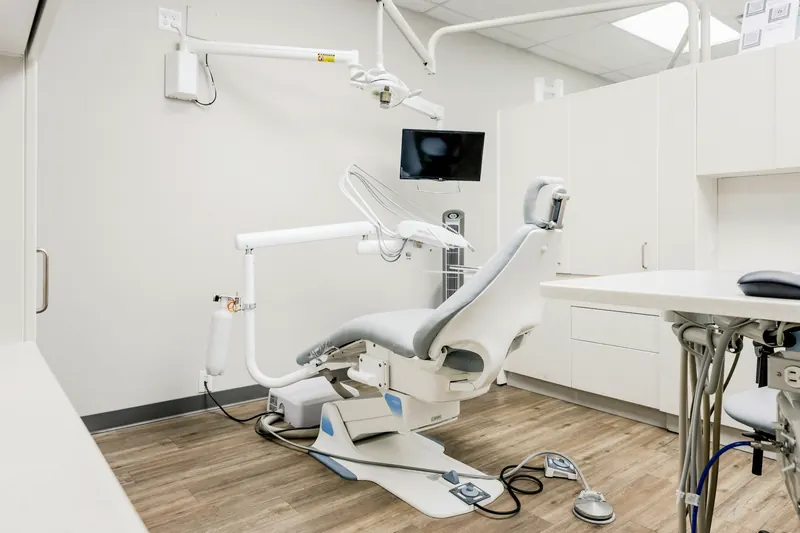
A squat dental practice is usually funded in layers: hire purchase or leasing for chairs, imaging and decontamination…
Dental practice working capital is short or medium term finance that covers timing gaps in a practice's cash, such as NHS…
Dental practice refinance replaces an existing acquisition loan, commercial mortgage or collection of short-term facilities…
What our clients say
“Simon was fast, kept us updated at all stages and was a real pleasure to work with on our asset finance. I highly recommend this company: excellent service all round.”
“Spoke with Simon, who managed to get me the loan I needed promptly. The whole process was very smooth and was completed within a few days.”
“Getting a business loan can feel like a bit of a minefield, but everything was broken down for me in great detail. Will use again in the future!”
“Simon was a pleasure to deal with and helped us find a business loan that matched our growth goals and future expansion plans.”
“I couldn’t source funding for my business, but the team got in touch within an hour and had it sorted within 24 hours. Fantastic service, and I would definitely use them again.”