

Forklift finance for warehouses, yards and distribution sites
Forklift finance spreads the cost of counterbalance, reach, very narrow aisle and pallet trucks over monthly payments, usually…
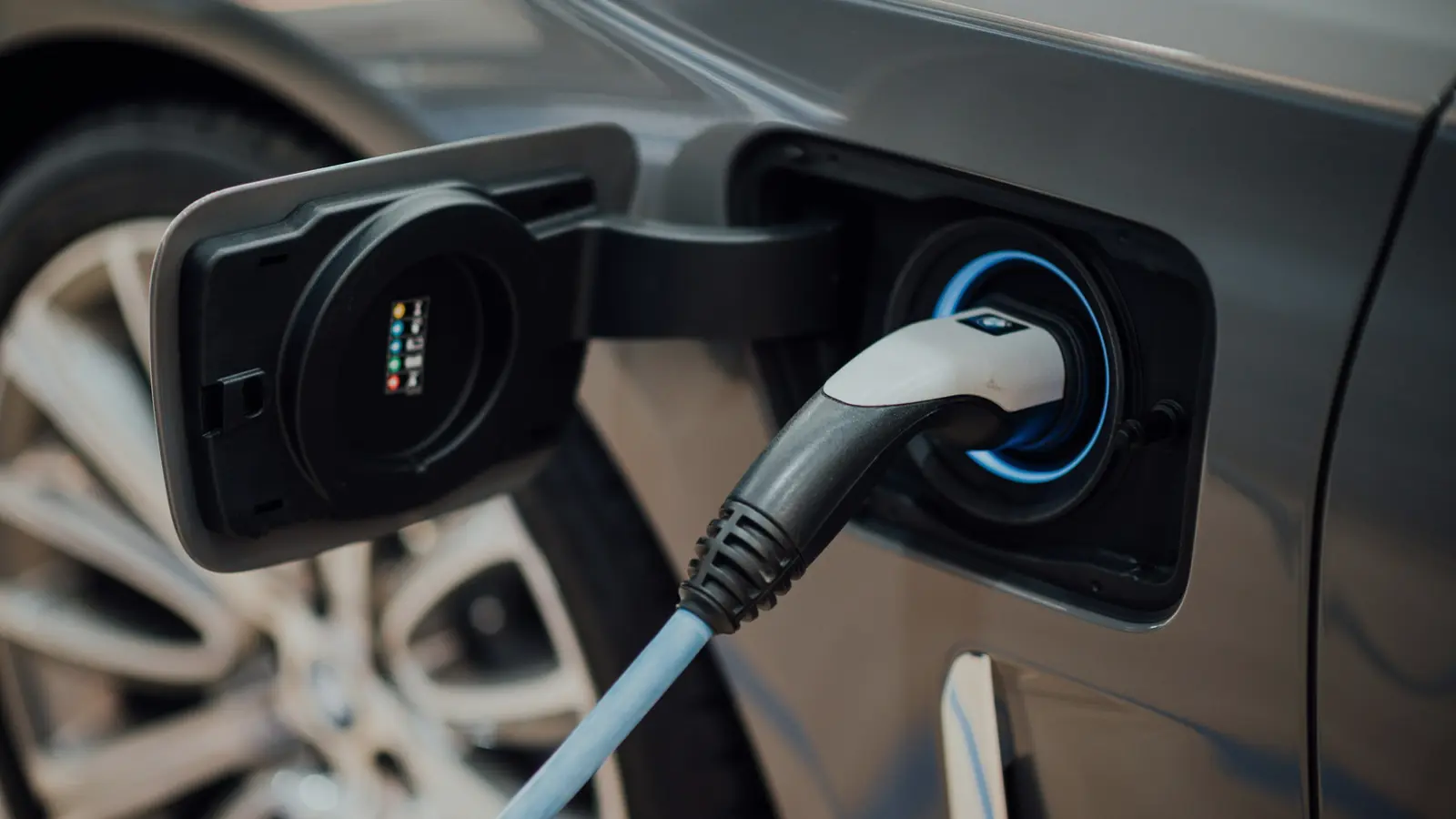
EV charger finance for fleets, car parks and hospitality sites: how charge point installs are funded, how lenders treat soft costs, security and timing.
Explore funding options Prefer a quick call back? Leave your number
“I highly recommend this company: excellent service all round.”
In short
What you need to know.
The chargers act as the lender's main security. Because installation and grid works have little standalone value, lenders focus on the business's strength, site tenure and the share of soft costs.
EV charger finance is asset finance used to buy and install electric vehicle charge points, with repayments spread over a term and the equipment acting as the lender's main security. A typical project includes several elements, and lenders treat each differently:
Hardware has an identifiable value and can, in principle, be removed and resold. Installation, groundworks and software, often called soft costs, have little value on their own. On many charging projects, soft costs make up a large share of the total, which is the main reason EV charger finance is structured differently from buying a van or a machine.
About EV charger finance
Specialist knowledge. Better outcomes.
This page is for fleet operators, depot and car park owners, hotels, pubs, restaurants, retailers, leisure sites and employers who want to install electric vehicle charge points without paying for the whole project upfront. EV charger finance spreads the cost of the chargers, installation, groundworks and software over an agreed term, so the charging infrastructure can start supporting your fleet, staff or customers while the payments are made from your trading cash flow. Smart Funding Solutions is a broker, not a lender. We approach lenders on our panel of 300+ and arrange facilities from £10,000 to £20 million. For the full range of equipment funding, start with our asset finance hub.
If your project is mainly about generating energy, such as solar panels, battery storage or heat pumps, our renewable energy finance page is the better starting point. This page focuses on charging infrastructure and the particular questions lenders ask about it.
If you are funding the vehicles as well as the chargers, our guide to electric van finance covers range, payload and the agreement types that suit electric vans.
Charging projects are usually funded through standard asset finance agreements, sometimes combined to cover hardware and soft costs separately.
The lender normally pays the installer directly, either on completion or in stages for larger projects, once you sign to confirm the work is done.
EV charger finance suits established businesses with a clear reason to install charging, whether that is running an electric fleet, attracting customers or meeting staff and tenant demand.
The right charging setup depends on how long vehicles stay on site, and getting that match right also makes the finance case stronger. A depot where vans park overnight can often use slower AC chargers with load management, keeping hardware and grid costs down. A fleet that needs vehicles back on the road within an hour, or a site serving passing drivers, may need DC rapid units, which cost more and usually need more grid capacity. Hotels and hospitality venues, where guests stay for hours, typically suit AC destination charging. Lenders are more comfortable when the specification is clearly sized to genuine demand, rather than built for usage that may never arrive.
For a small workplace or destination installation with a clear quotation, credit decisions can come within a few working days in straightforward cases. Larger multi-site or rapid charging projects typically take several weeks to arrange, depending on the lender, the soft cost content, landlord consent and whether stage payments are needed. In practice, the finance is rarely the slowest part. Grid connection offers and upgrade works can take months on larger sites, so it is worth agreeing funding in principle once the network position is clear, and timing completion to match the installer's programme.
The charge points themselves are the primary security, owned by the lender or held under title until the agreement ends. Because so much of the project value is installation, lenders often look for additional comfort, such as:
Property security is not normally required for standard asset finance, although larger infrastructure-led projects may be funded with broader security.
The cost of EV charger finance depends on the agreement type, the term, the soft cost content and your business's profile. The structure typically includes:
Charge-point expenditure has had its own capital allowance treatment, and government support for workplace charging has been offered at times. Check the current position with your accountant and on the Office for Zero Emission Vehicles pages on gov.uk. Our guide to asset finance and capital allowances explains how the agreement type affects who can claim. You can also model payments with our asset finance calculator.
Lenders assess the strength of your business first, then the project's soft cost content, site control and installer. Specific points include:
Accounts, management information and whether existing cash flow covers the payments without relying on charging income.
The proportion of the project that is removable equipment. A higher share of soft costs usually means a deposit, a shorter term or more reliance on your business's covenant.
Whether you own the site or lease it, the remaining lease length, and landlord consent for the installation and for the lender's rights over the equipment.
The installer's track record and accreditation, and the reputation of the hardware brand, which affects both reliability and resale value.
Whether capacity is confirmed by the network operator, and the cost and timing of any upgrade, which can be the biggest risk in a larger project.
If you plan to charge drivers, lenders may look at your tariff and usage assumptions, but most will treat any charging income as a bonus rather than the basis of the lending decision.
How the main business finance structures work. Lenders set their own terms, so treat this as a guide to the questions to ask.
| Option | How you repay | Security | Often used for |
|---|---|---|---|
| Unsecured business loan | Fixed instalments, usually monthly | No charge over assets; a personal guarantee is usually required | Growth, stock, tax bills and cash flow |
| Secured business loan | Fixed instalments, often over a longer term | A charge over property or other assets | Larger sums, property and refinancing |
| Revolving credit facility | Interest on what you draw; repay and redraw | Varies by lender and case | Recurring or uneven cash flow gaps |
| Merchant cash advance | A share of future card takings | No charge over assets | Card-taking businesses with uneven months |
| Asset finance | Regular payments over the life of the asset | The asset being financed | Equipment, vehicles and machinery |
| Invoice finance | Settled as customers pay their invoices | Your unpaid invoices | Businesses waiting on customer payment |
General information only. Every lender has its own criteria, and all finance is subject to status.
Charging and energy generation projects are often discussed together, but lenders assess them differently. The comparison below shows the main contrasts.
| Feature | EV charger finance | Renewable energy finance |
|---|---|---|
| Typical assets | AC and DC charge points, cabling, groundworks, back-office software | Solar panels, battery storage, heat pumps, biomass |
| How it pays back | Fuel savings for fleets, charging income, customer attraction | Lower energy bills and, in some cases, export income |
| Main lender concern | Soft cost content, site tenure and grid capacity | System performance, roof or land rights, energy savings case |
| Typical buyer | Fleets, car parks, hospitality, retail, employers | Manufacturers, farms, warehouses and other high energy users |
| Combined projects | Can be paired with solar and battery storage on the same site | Each element is usually assessed on its own merits, even within one combined project |
We look at the full project, from hardware and groundworks to grid connection and software, and help you decide what to own, what to lease and what to leave to an operator. We then approach lenders on our panel comfortable with charging infrastructure and the soft costs that come with it, and compare offers on cost, term, deposit, security and end-of-term position. Lenders make every credit decision. It is free to enquire; any broker fee is disclosed separately before you proceed. To discuss your site, contact us.
Illustrative figures from the numbers you enter, before you speak to a lender.
Some lenders will fund home charge points as part of a company scheme, but it is less common, because the equipment sits on property the business does not control. Tax treatment for home charging provided to employees can also differ from workplace charging. Speak to your accountant before committing, and expect lenders to focus heavily on the company's own strength.
If you financed the hardware through hire purchase or a lease with an independent lender, your agreement continues and the equipment stays on site. The bigger risk is the software and maintenance side, which may stop. Choosing open-standard hardware that can switch to another back-office platform reduces that risk. Check this before signing a bundled deal.
It may be possible to move removable hardware to a new site with the lender's consent, but installation and groundworks cannot be moved, and their value is lost. Some lenders will let you settle the agreement early or transfer equipment to a new location. If a move is likely, discuss it before choosing the term.
Lenders generally expect a competent, properly accredited electrical installer and a recognised hardware brand, because both affect safety, reliability and resale value. Some lenders keep a list of installers they are comfortable with. Using an established installer with clear warranties and maintenance terms usually makes the application smoother.
Forklift finance spreads the cost of counterbalance, reach, very narrow aisle and pallet trucks over monthly payments, usually…

Soft assets such as software, IT, EPOS and fit-outs can be leased or bought on hire purchase, but because a lender cannot…
Minibus finance spreads the cost of a 9 to 16 passenger minibus over monthly payments, through hire purchase, a finance lease…
ULEZ compliant vehicle finance spreads the cost of replacing a non-compliant van, car, minibus or lorry over monthly payments.…
Cherry picker finance spreads the cost of a mobile elevating work platform, such as a van-mounted boom, self-propelled boom,…

Coffee machine finance spreads the cost of a commercial bean-to-cup or traditional espresso machine, grinders and water…
What our clients say
“Simon was fast, kept us updated at all stages and was a real pleasure to work with on our asset finance. I highly recommend this company: excellent service all round.”
“We were looking for finance for new equipment. Simon is excellent and objective-driven, without the horrendous form filling of your usual high street bank. The whole thing took just a few days.”
“Spoke with Simon, who managed to get me the loan I needed promptly. The whole process was very smooth and was completed within a few days.”
“Getting a business loan can feel like a bit of a minefield, but everything was broken down for me in great detail. Will use again in the future!”
“Simon was a pleasure to deal with and helped us find a business loan that matched our growth goals and future expansion plans.”
“I couldn’t source funding for my business, but the team got in touch within an hour and had it sorted within 24 hours. Fantastic service, and I would definitely use them again.”