
EV charger finance: funding charge points for fleets and sites
EV charger finance is asset finance that spreads the cost of buying and installing electric vehicle charge points, including…
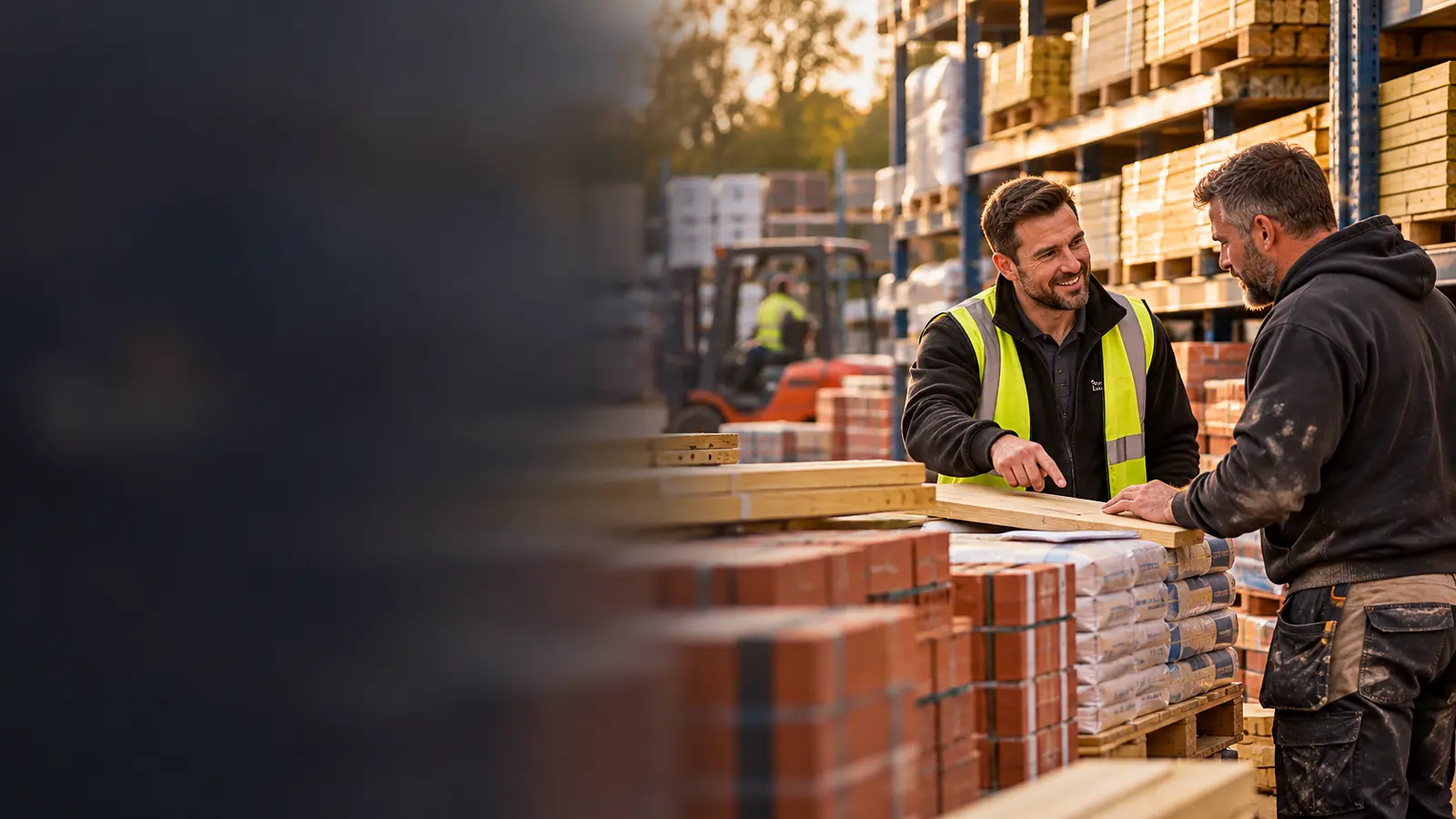
How UK businesses fund counterbalance, reach and VNA forklifts, and how truck hours, batteries and contract length shape the right finance.
Explore funding options Prefer a quick call back? Leave your number
“I highly recommend this company: excellent service all round.”
In short
What you need to know.
Lenders value a forklift much like a van: by make, age and hours on the clock. They also want the term to fit the work the truck is committed to.
About forklift finance
Specialist knowledge. Better outcomes.
This page is for warehouse operators, third-party logistics firms, manufacturers, builders merchants and wholesalers who need one truck or a whole materials-handling fleet without paying for it from working capital. Smart Funding Solutions is a broker, not a lender: we approach lenders on our panel of 300+ that finance materials-handling equipment, and arrange facilities from £10,000 to £20 million. Forklift finance sits within our wider asset finance options.
Lenders treat forklifts differently depending on how easily they could be resold, and that affects the term and deposit offered.
Diesel, LPG and electric counterbalance trucks from established manufacturers have a deep second-hand market, so they are the simplest to fund, new or used. Reach trucks are also widely traded. VNA and turret trucks are often specified to a particular building's aisle width, lift height and floor, which narrows the pool of buyers if a lender ever had to sell one. Expect lenders to look harder at the business, and sometimes to ask for a larger deposit, on highly specified trucks.
A forklift's hour meter does the job a van's odometer does. A used truck with modest hours and a full service record is worth considerably more than the same model worked across three shifts. For contract hire, the hours allowance in the agreement matters: running trucks harder than agreed can mean excess-hours charges at the end.
Electric trucks run on either lead-acid batteries, which are cheaper but need changing or charging in a dedicated area, or lithium-ion, which cost more upfront but allow opportunity charging during breaks. The battery can be a large share of an electric truck's price and a replacement battery is a significant cost later in the truck's life. Check whether the battery and charger sit inside the agreement or are financed separately, and who owns the battery at the end.
Fuel type follows the site rather than the finance: diesel suits rough outdoor yards and heavy loads, electric suits indoor warehouses and food or cold-store work, and LPG suits sites that move between the two. All three can be funded through the same routes.
Attachments such as side-shifts, fork positioners, rotators and clamps can usually be included in the same agreement.
The trigger is rarely "we need a forklift". It is usually something more specific, and the trigger shapes the right structure.
For yard and site machines with a telescopic boom, see our guide to telehandler finance; for road vehicles, vehicle fleet finance.
The finance payment is only part of the cost of keeping a truck working safely. Under the Lifting Operations and Lifting Equipment Regulations, a forklift needs a periodic thorough examination by a competent person, separate from routine servicing. Operators need training, and HSE guidance on managing lift trucks covers the site and supervision duties that come with running them. Add tyres, battery care, damage repairs and, for diesel and LPG trucks, fuel. Contract hire can bundle much of this into one payment; on hire purchase it all sits with you.
Illustration. A distribution business wins a five-year storage contract that needs six electric reach trucks and two counterbalance trucks for the loading bays, a package of roughly £300,000 including chargers. The reach trucks are specified to the client's racking, so contract hire over the life of the client agreement means they go back if the contract is not renewed. The counterbalance trucks will be useful on any site, so hire purchase lets the business keep them as owned assets. Splitting the package this way keeps the specialist risk with the contract and the general-purpose trucks on the balance sheet. The numbers are hypothetical and each lender sets its own terms.
Finance costs more in total than buying outright, and a truck on hire purchase can be recovered by the lender if payments stop. Contract hire looks cheaper month to month, but return conditions, excess hours and damage charges can add up, so read the return standard before signing. A common and costly mismatch is a long agreement on trucks tied to a short customer contract: if the work goes, the payments do not. If the need is genuinely seasonal, rental through the peak is often cheaper than a fixed agreement. For businesses with a thin or damaged credit record, our guide to bad credit asset finance explains what lenders will consider.
make, model, age, hours and specification, bought from a dealer who can confirm ownership and service history.
whether the term fits the work the truck is committed to and ends within its useful life; terms of three to five years are common, depending on the lender and the truck.
for logistics operators, how long the client contracts run and how dependent the business is on one customer.
filed accounts, recent management figures and bank statements showing the payments are comfortably covered.
other hire purchase, lease and loan commitments already on the books.
business and director history; directors of smaller companies are often asked for a personal guarantee.
How the main business finance structures work. Lenders set their own terms, so treat this as a guide to the questions to ask.
| Option | How you repay | Security | Often used for |
|---|---|---|---|
| Unsecured business loan | Fixed instalments, usually monthly | No charge over assets; a personal guarantee is usually required | Growth, stock, tax bills and cash flow |
| Secured business loan | Fixed instalments, often over a longer term | A charge over property or other assets | Larger sums, property and refinancing |
| Revolving credit facility | Interest on what you draw; repay and redraw | Varies by lender and case | Recurring or uneven cash flow gaps |
| Merchant cash advance | A share of future card takings | No charge over assets | Card-taking businesses with uneven months |
| Asset finance | Regular payments over the life of the asset | The asset being financed | Equipment, vehicles and machinery |
| Invoice finance | Settled as customers pay their invoices | Your unpaid invoices | Businesses waiting on customer payment |
General information only. Every lender has its own criteria, and all finance is subject to status.
| Route | What happens at the end | Best fit | Trade-off |
|---|---|---|---|
| Hire purchase | You own the truck after the final payment | Counterbalance trucks you will run for many years | Servicing, repairs and thorough examinations are your cost |
| Finance lease | Continue renting at a low rental, or the truck is sold and you share proceeds as agreed | Lower payments when ownership does not matter | You never own it; end-of-lease terms vary by lender |
| Contract hire | Hand the truck back or replace it | Fleets on a fixed cycle, contract logistics | Hours allowances and damage charges at return |
| Short-term rental | Off-hire when the need ends | Seasonal peaks, trials, short contracts | Costs more per week than finance if kept long-term |
| Refinance or sale and HP back | You own the truck again after repaying | Releasing cash from trucks you already own | Adds borrowing against kit that is already ageing |
Hire purchase and leasing differ in tax and VAT treatment as well as ownership; our guide to hire purchase vs leasing goes through this, and asset finance and capital allowances explains how the tax relief works. To raise cash from trucks you already own, see asset refinance.
Lenders make the final decision. It is free to enquire; any broker fee is disclosed separately before you proceed. Warehousing operators may also find our transport and logistics finance and wholesale business finance pages useful, and you can start an enquiry online with a quote to hand.
Illustrative figures from the numbers you enter, before you speak to a lender.
Often, yes. Because the truck is security, lenders can be more flexible than for unsecured borrowing. A newer business may be asked for a larger deposit or a personal guarantee, and a well-known counterbalance truck is easier to fund than a specialist one. Borrowing of £25,000 or less by sole traders and small partnerships can be regulated consumer credit, which brings additional protections.
Yes, provided the dealer can confirm age, hours, serial number and service history. Older trucks tend to attract shorter terms. Our page on used equipment finance explains how lenders assess second-hand kit.
Chargers usually can, as they are identifiable equipment. Electrical installation work has no resale value, so some lenders will include it only as a modest part of a wider package, and others will not include it at all.
Dealer finance can be convenient, and manufacturer-supported offers are sometimes good value. Compare the total repayable, check whether a cash buyer would get a better truck price, and check whether the agreement ties you to that dealer for servicing.
Yes, some forklift agreements bundle servicing and maintenance into the rental, usually contract hire or operating lease arrangements where the truck goes back at the end. With hire purchase or a finance lease, servicing, repairs and thorough examinations are normally your cost. A maintenance package makes the monthly figure higher but more predictable, so compare the full running cost rather than the finance payment alone.
EV charger finance is asset finance that spreads the cost of buying and installing electric vehicle charge points, including…
An operating lease is a rental agreement in which a business pays to use an asset for part of its working life and then returns…
Used equipment finance funds second-hand machinery, plant, vehicles and specialist kit through hire purchase, leasing or a…
Warehouse equipment finance spreads the cost of racking, reach trucks, stackers, order pickers, dock levellers, pallet wrappers…
Cherry picker finance spreads the cost of a mobile elevating work platform, such as a van-mounted boom, self-propelled boom,…

Coffee machine finance spreads the cost of a commercial bean-to-cup or traditional espresso machine, grinders and water…
What our clients say
“Simon was fast, kept us updated at all stages and was a real pleasure to work with on our asset finance. I highly recommend this company: excellent service all round.”
“We were looking for finance for new equipment. Simon is excellent and objective-driven, without the horrendous form filling of your usual high street bank. The whole thing took just a few days.”
“Spoke with Simon, who managed to get me the loan I needed promptly. The whole process was very smooth and was completed within a few days.”
“Getting a business loan can feel like a bit of a minefield, but everything was broken down for me in great detail. Will use again in the future!”
“Simon was a pleasure to deal with and helped us find a business loan that matched our growth goals and future expansion plans.”
“I couldn’t source funding for my business, but the team got in touch within an hour and had it sorted within 24 hours. Fantastic service, and I would definitely use them again.”