
Agricultural equipment finance for a whole farm machinery fleet
Agricultural equipment finance spreads the cost of farm machinery, from drills and sprayers to telehandlers, feed wagons and…
When and how farms refinance: consolidating overdrafts and hire purchase, moving lender, releasing capital from land, and the costs to check first.
Explore funding options Prefer a quick call back? Leave your number
“Fantastic customer service, highly recommend!”
In short
What you need to know.
Lenders look at whether the farm can service the new debt without support payments it no longer receives, the value and title of the land, and the cost of leaving current facilities.
A transaction we arranged
£212,300
Approved, then nearly lost at completion. £212K consolidated.
A property-title requirement threatened a consolidation deal at the last hurdle. We worked it through and kept the structure intact.
Read the transactionAbout farm refinance
Specialist knowledge. Better outcomes.
Many farms carry borrowing that was put together one decision at a time: an overdraft that never quite clears, a land loan from a decade ago, half a dozen hire purchase agreements, and merchant credit that has quietly become permanent. This page is for farming families, partnerships and companies that want to reorganise that debt, change lender or raise capital against the holding. Smart Funding Solutions is a broker, not a lender: we search our panel of 300+ lenders and arrange facilities from £10,000 to £20 million. For new borrowing rather than restructuring, start at our agricultural finance and farm loans hub, and for non-farm businesses see refinancing business loans.
An invented example in round numbers, with no rates. A mixed farm has an overdraft that has not dropped below £200,000 for three years and five machinery agreements costing a combined £8,000 a month. Its bank has asked for the overdraft to come down. A lender agrees a term loan secured on a block of arable land, excluding the farmhouse and yard, which repays the overdraft and the two most expensive machinery agreements. A smaller seasonal overdraft remains for inputs. Monthly outgoings fall and the farm knows the facility will not be withdrawn at short notice, but the debt now runs much longer and is secured on land.
Refinancing can buy time and certainty, but it does not fix a farm that loses money. Stretching repayments increases total interest, and moving unsecured or asset debt onto land raises the stakes if things go wrong. Personal guarantees from partners and directors are common. Before refinancing, check whether the current lender will restructure on better terms, whether a tax bill could be handled through Time to Pay with HMRC, and whether selling an underused building or parcel would solve the problem with less debt. Where the aim is new enterprise income rather than relief, our page on farm diversification finance may be the better starting point.
Lenders model debt service from trading, rents and current scheme income, ignoring payments that are ending.
A one-off bad year is very different from losses every year. Expect to explain what has changed.
A good deal of farmland is still unregistered or held across several titles and family members. Lenders need clean title, plans that match what is on the ground and clarity on rights of way and occupation.
Land let on farm business tenancies or older agricultural tenancies is valued differently from land in hand, and grazing licences or cottages let to staff need disclosing.
Early repayment charges, fixed-rate break costs and the outgoing lender's fees are part of the comparison.
Where land sits with parents and the business with the next generation, every owner may need to agree to the security and take independent legal advice.
Title problems are a common reason refinances stall at the last stage. In one completed business debt consolidation we arranged, the facility was approved but the lender then required precise confirmation of property ownership and title from the client's solicitor, and the documents had to be revisited several times before completion. Farms with unregistered or multi-title land should expect similar scrutiny and start that work early.
How the main business finance structures work. Lenders set their own terms, so treat this as a guide to the questions to ask.
| Option | How you repay | Security | Often used for |
|---|---|---|---|
| Unsecured business loan | Fixed instalments, usually monthly | No charge over assets; a personal guarantee is usually required | Growth, stock, tax bills and cash flow |
| Secured business loan | Fixed instalments, often over a longer term | A charge over property or other assets | Larger sums, property and refinancing |
| Revolving credit facility | Interest on what you draw; repay and redraw | Varies by lender and case | Recurring or uneven cash flow gaps |
| Merchant cash advance | A share of future card takings | No charge over assets | Card-taking businesses with uneven months |
| Asset finance | Regular payments over the life of the asset | The asset being financed | Equipment, vehicles and machinery |
| Invoice finance | Settled as customers pay their invoices | Your unpaid invoices | Businesses waiting on customer payment |
General information only. Every lender has its own criteria, and all finance is subject to status.
| Approach | When it suits | Trade-off |
|---|---|---|
| Term out the overdraft | A persistent overdraft balance is funding long-term assets | Lower risk of the facility being withdrawn, but capital repayments start |
| Move the land loan to another lender | Current terms no longer fit, or the lender wants to reduce exposure | Valuation, legal and possibly early repayment or fixed-rate break costs |
| Consolidate machinery and short-term debt into a secured loan | Several agreements and unsecured loans are squeezing monthly cash flow; see debt consolidation loans | Short-term debt becomes long-term and secured on land, so total interest can rise |
| Refinance owned machinery | The farm owns kit outright and needs cash without touching land; see asset refinancing | Adds payments on machines already in use |
| Release capital from land or let buildings | Funding succession payments or investment; let commercial buildings can support commercial property refinancing | Higher overall debt; the holding carries more risk |
| Sell a parcel or building | Debt is too high for the farm to service at any term | Permanent loss of an asset, but it can reset the business |
Farms with livery or riding income can read equestrian business finance.
Most holdings include a farmhouse, and many older agricultural mortgages are secured over everything including it. Lending secured on a home that you or your family live in can be a regulated mortgage, and that is outside what we arrange. We arrange business facilities secured on farmland, commercial and agricultural buildings and machinery, or on an unsecured basis, and lenders can usually structure security so that it excludes the dwelling. If your plan relies on borrowing against the house itself, you will need a regulated mortgage adviser for that element.
If the existing lender holds a first charge and will not agree to a second lender, the usual route is to repay that lender in full as part of the refinance. The new lender then takes first charge over the land it is lending against.
Yes. Voluntary first registration with HM Land Registry takes time but gives lenders a clear title and plan, which shortens legal work on any future borrowing. Many farms register land before starting a refinance rather than during it.
It can, if the farm can service the combined borrowing. Lenders usually assess the purchase and the existing debt together; see our agricultural land purchase page.
Not necessarily, but you need to compare the full cost, not just the rate. A farm refinance can carry arrangement fees, valuation and legal costs, and early repayment charges on the existing loans. Against that, moving a hard-core overdraft or several machinery agreements onto a longer term can cut monthly payments, even if the total interest over the term rises. A cash flow forecast for both options shows which works better for your farm.
It is harder, but sometimes possible, particularly where there is good equity in the land. Lenders will want to know why the arrears built up, whether the cause is resolved and how the new structure makes repayments affordable. Acting before arrears turn into formal action gives more options. Consolidating expensive short-term debts into one longer facility is a common route; our page on debt consolidation loans explains how that works.
Yes. Farms often release cash or cut monthly payments by refinancing machinery they own outright through asset refinancing, alongside or instead of refinancing the land. See Instant Quotes for your matches.
Agricultural equipment finance spreads the cost of farm machinery, from drills and sprayers to telehandlers, feed wagons and…
Farm diversification finance funds a new, non-farming income stream on the holding: barn conversions to workshops or homes,…
Agricultural land finance helps a farm business buy more land, usually with an agricultural mortgage secured on the new land…
Crop finance covers the gap between autumn drilling and the sale of the harvest, which on a combinable crop farm can be the…
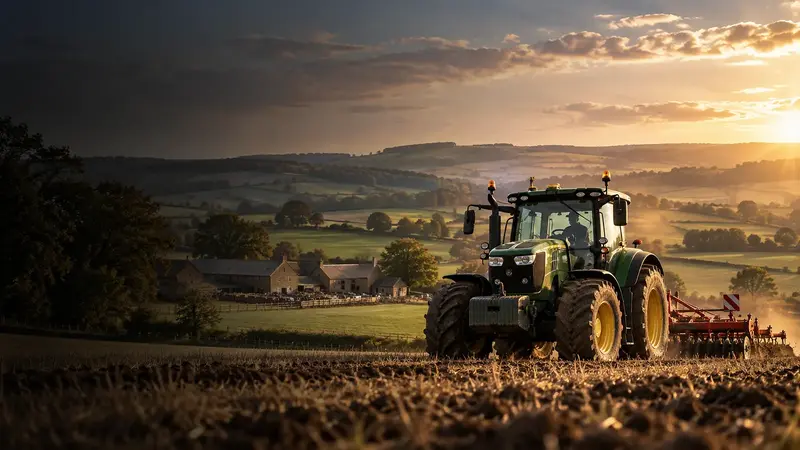
Count the hours. A tractor that will work most of the year is usually best bought on hire purchase, so the farm owns it at the…

Forestry finance depends on which part of the timber chain you are in. Harvesting contractors mostly use asset finance on…
What our clients say
“Simon was fast, kept us updated at all stages and was a real pleasure to work with on our asset finance. I highly recommend this company: excellent service all round.”
“Spoke with Simon, who managed to get me the loan I needed promptly. The whole process was very smooth and was completed within a few days.”
“Getting a business loan can feel like a bit of a minefield, but everything was broken down for me in great detail. Will use again in the future!”
“Simon was a pleasure to deal with and helped us find a business loan that matched our growth goals and future expansion plans.”
“I couldn’t source funding for my business, but the team got in touch within an hour and had it sorted within 24 hours. Fantastic service, and I would definitely use them again.”