
Farm refinance and restructuring of agricultural borrowing
Farm refinancing replaces existing borrowing with a structure that matches what the farm earns now: turning a hard-core…
How farms and contractors finance sprayers, drills, telehandlers, milking robots and precision kit, and how to plan a machinery fleet across agreements.
Explore funding options Prefer a quick call back? Leave your number
“An excellent company that provided funding options quickly.”
In short
What you need to know.
Farms replacing several items benefit from planning the fleet as a whole: staggering end dates, timing payments to harvest or milk income and deciding what to own. Lenders look at the machine's resale value, the farm's cash flow and the finance already in place.
About agricultural equipment finance
Specialist knowledge. Better outcomes.
Most farms do not finance one machine; they carry a rolling fleet of agreements on tractors, cultivation kit, sprayers, loaders, livestock equipment and technology, each bought in a different year from a different dealer. This page is for farmers and agricultural contractors who want to fund the next round of equipment without letting those agreements pile up into a cash flow problem. Smart Funding Solutions is a broker, not a lender: we search our panel of 300+ lenders, including agricultural asset finance specialists, and arrange facilities from £10,000 to £20 million. For land, livestock and working capital, see our agricultural finance and farm loans hub.
The default for machinery you will keep for years. You pay a deposit, normally including the VAT on the full price, and own the machine after the final payment. Owning it for tax purposes usually allows you to claim the Annual Investment Allowance on the cost in the year of purchase, which is why many farms time big purchases before their year end. Our article on asset finance and capital allowances explains the interaction.
Suited to kit you replace on a short cycle, such as a main tractor changed every few years, or technology that dates quickly. VAT is paid on each rental rather than up front, and there is no ownership at the end. Contract hire can include servicing, which some livestock units value for machines that cannot be off the road. The broader trade-offs are set out in hire purchase vs leasing.
Farms that bought machinery for cash in good years often have substantial value sitting in the yard. Asset refinancing releases cash against owned equipment while you keep using it, which can fund a land deposit, a building or a difficult spring.
Dealers often have manufacturer-subsidised offers on new machines. They can be good value, but compare the cash price you could negotiate without the finance, and remember the offer usually applies only to that brand. Mixed fleets, used machines and private or auction purchases generally need independent asset finance.
The difference between a farm that handles machinery finance comfortably and one that struggles is usually planning rather than borrowing capacity. Points worth working through before signing another agreement:
On mixed and livestock farms, machinery plans often run alongside stock purchases; our guide to livestock finance for cattle, dairy and sheep explains how farms fund herds and flocks.
Defra's Farming Equipment and Technology Fund has run in rounds, contributing towards listed items such as precision application kit, slurry equipment and animal health technology. Grants are typically paid after you have bought the item and submitted a claim, so the farm has to fund the full cost first. A common approach is to finance the purchase and use the grant, when it arrives, to reduce the balance; check the agreement's early settlement terms and the grant conditions, which can restrict selling the item for a period. Rounds open and close, and Wales, Scotland and Northern Ireland run their own schemes.
Illustration, with hypothetical round figures and no rates: an arable farm needs a new drill, a trailed sprayer and a used telehandler in the same year, around £250,000 in total. Paying cash would empty the account needed for autumn inputs. Instead, the drill and sprayer go on hire purchase with annual payments set for the month after harvest sales are normally paid, and the telehandler on a shorter agreement with monthly payments. A grant towards the sprayer's section control arrives after the claim is processed and is used to reduce the sprayer balance. The farm's existing combine agreement ends two years later, so the new agreements are set to avoid ending in that year.
Machinery finance is secured on the machine, so missed payments can lead to repossession at exactly the point in the season you need it. Farms that keep adding agreements can find fixed monthly outgoings rising faster than income, especially when grain or milk prices fall. Sole traders and partnerships should also note that borrowing of £25,000 or less by sole traders and small partnerships can be regulated consumer credit, which brings additional protections. Before financing, ask whether the machine will earn its keep in hours worked, whether hiring for peak weeks would do, and whether an older machine with finance paid off could run another season.
Farm or contracting accounts and recent bank statements, read with the seasonal pattern in mind
The machine: make, model, year, hours, condition and whether it is bought from a dealer, at auction or privately
Existing agreements and how they have been paid, since many farms already carry several
Deposit and trade-in, including any negative equity from the machine being replaced
For contractors: the spread of customers, repeat work and whether one farm provides most of the income
Where fixed plant is involved: who owns or has a charge over the building it sits in
How the main business finance structures work. Lenders set their own terms, so treat this as a guide to the questions to ask.
| Option | How you repay | Security | Often used for |
|---|---|---|---|
| Unsecured business loan | Fixed instalments, usually monthly | No charge over assets; a personal guarantee is usually required | Growth, stock, tax bills and cash flow |
| Secured business loan | Fixed instalments, often over a longer term | A charge over property or other assets | Larger sums, property and refinancing |
| Revolving credit facility | Interest on what you draw; repay and redraw | Varies by lender and case | Recurring or uneven cash flow gaps |
| Merchant cash advance | A share of future card takings | No charge over assets | Card-taking businesses with uneven months |
| Asset finance | Regular payments over the life of the asset | The asset being financed | Equipment, vehicles and machinery |
| Invoice finance | Settled as customers pay their invoices | Your unpaid invoices | Businesses waiting on customer payment |
General information only. Every lender has its own criteria, and all finance is subject to status.
An asset finance lender's first question is what the machine would fetch if it had to be recovered. That varies widely across a farm:
| Equipment | How lenders tend to view it |
|---|---|
| Tractors, telehandlers, loaders | Strong second-hand demand and recognised brands, so often the easiest to fund, including used machines. See our guides to tractor finance and telehandler finance. |
| Combines, forage harvesters, self-propelled sprayers | High value and heavily seasonal; hours and condition drive the valuation. Combine harvester finance covers harvest machinery in detail. |
| Drills, cultivators, balers, mowers, trailers | Mid-value trailed kit with a steady resale market; commonly bundled into one agreement. |
| Feed wagons, slurry tankers, dribble bars, bedding machines | Well understood by agricultural lenders; heavy use shortens the term they will offer. |
| Milking robots, parlours, grain dryers, bulk bins | Fixed or semi-fixed plant. Harder to remove and resell, and if the building is rented or mortgaged the lender may need a waiver from the landlord or mortgagee. |
| GPS guidance, yield mapping, section control, software | Soft or low-resale assets; usually funded alongside hard machinery rather than on their own. |
| ATVs, UTVs and quad bikes | Straightforward to fund but theft-prone, so lenders check security marking and insurance. |
Send us the quotes, your latest figures and a list of what you already have on finance. We look at the fleet as a whole, suggest which items suit hire purchase, leasing or refinancing, and approach lenders on our panel that fund agricultural equipment, including used equipment. We compare the offers with you on total cost and payment timing, and the lender makes the final decision before paying the supplier. It is free to enquire; any broker fee is disclosed separately before you proceed.
Yes, many agricultural lenders will, provided they can confirm the machine exists, its condition and that the seller has clear title with no outstanding finance. Expect questions on hours and service history, and possibly a shorter term or larger deposit than a dealer purchase.
It is harder without accounts, but asset finance is often the most accessible borrowing for a new farm or contractor because the machine is the security. Lenders will want experience in the sector, a deposit and a realistic cash flow forecast.
It can. Every agreement adds to fixed outgoings that a mortgage lender will count when assessing affordability. Farms planning a land purchase often benefit from reviewing their machinery commitments first; see our page on agricultural land purchase finance.
Yes, many farms use the part-exchange value of an old machine as some or all of the deposit on new agricultural equipment finance. If the old machine still has finance on it, the settlement figure is deducted first, and only the remaining equity counts towards the deposit. Ask the dealer for a written part-exchange value and get a settlement figure from your current lender before agreeing the deal.
Yes, machinery you own outright or with plenty of equity can often be refinanced to release cash, with the lender taking the machine as security. This suits farms that bought equipment for cash and now need working capital or funds for another project. Lenders value the machine on its age, hours and resale demand, so tractors and telehandlers are usually easier than fixed plant. Our page on asset refinancing explains how it works.
Yes. Instant Quotes shows which lenders on our panel are likely to fit your farm, with no credit search. Have the machine, its price and its age ready, because those shape the term and deposit.
On hire purchase, usually yes: the farm is treated as the owner and can claim allowances such as the Annual Investment Allowance once the machine is in use (GOV.UK: Annual Investment Allowance). On a lease, the rentals are usually the deductible cost instead.
Farm refinancing replaces existing borrowing with a structure that matches what the farm earns now: turning a hard-core…
Agricultural land finance helps a farm business buy more land, usually with an agricultural mortgage secured on the new land…
Farm diversification finance funds a new, non-farming income stream on the holding: barn conversions to workshops or homes,…
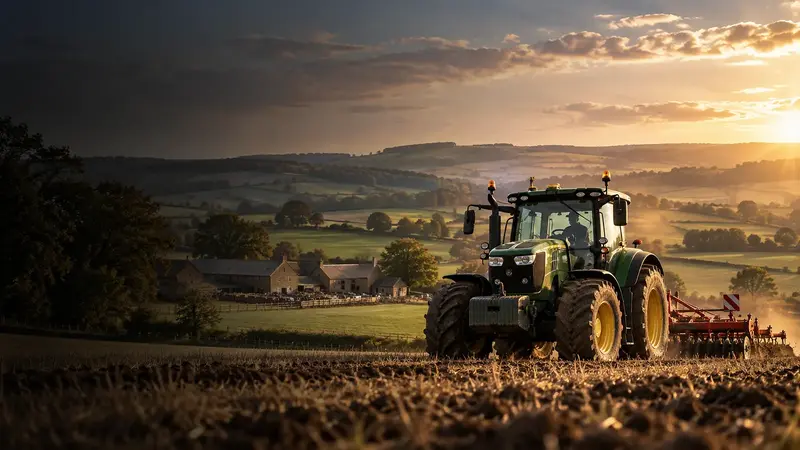
Count the hours. A tractor that will work most of the year is usually best bought on hire purchase, so the farm owns it at the…
Crop finance covers the gap between autumn drilling and the sale of the harvest, which on a combinable crop farm can be the…
Buying stock ties up cash for months before it earns: heifers take time to come into milk, and store cattle or lambs need a…
What our clients say
“Simon was fast, kept us updated at all stages and was a real pleasure to work with on our asset finance. I highly recommend this company: excellent service all round.”
“Spoke with Simon, who managed to get me the loan I needed promptly. The whole process was very smooth and was completed within a few days.”
“Getting a business loan can feel like a bit of a minefield, but everything was broken down for me in great detail. Will use again in the future!”
“Simon was a pleasure to deal with and helped us find a business loan that matched our growth goals and future expansion plans.”
“I couldn’t source funding for my business, but the team got in touch within an hour and had it sorted within 24 hours. Fantastic service, and I would definitely use them again.”