
Agricultural equipment finance for a whole farm machinery fleet
Agricultural equipment finance spreads the cost of farm machinery, from drills and sprayers to telehandlers, feed wagons and…
How farm businesses fund buying more farmland: agricultural mortgages, bridging for tenders and auctions, extra security, and what lenders check on the land.
Explore funding options Prefer a quick call back? Leave your number
“The team provided a very helpful and professional service.”
In short
What you need to know.
Because farmland typically costs more than farming it earns, lenders judge affordability on the whole farm's income, not the new acres alone. Tenure, access, land quality and any tenancies or environmental agreements shape the valuation, and bridging can cover tight tender or auction timetables.
Land is often offered in lots. Bidding for the lot that adjoins your existing ground, rather than the whole farm, can make the purchase more fundable because the lender can see how it fits the unit.
About agricultural land finance
Specialist knowledge. Better outcomes.
This page is for farming businesses buying land to farm: expanding an arable or grazing unit, securing a block they already rent, or buying out a neighbour. It covers commercial farm borrowing only; if the sale includes a farmhouse you intend to live in, lending on that home is separate and outside what we arrange. Smart Funding Solutions is a broker, not a lender: we search our panel of 300+ lenders, including agricultural specialists, for facilities from £10,000 to £20 million. It sits within our agricultural finance and farm loans section.
The long-term route: a loan secured on the land, and often other farm property, repaid over a long term. Some lenders offer annual or half-yearly repayments to follow crop sales, and part of the loan may be on interest-only terms. It works like a commercial mortgage but is underwritten by people who understand farm accounts. The trade-off is time: valuation, legal work on title and any tenancy all need to be completed before funds are released.
A bridging loan secured on the land, and usually other property, pays for a tender or auction purchase quickly. It is then repaid by an agricultural mortgage or the sale of other land. Bridging costs more per month and depends entirely on that exit, so the refinance should be realistic before you bid.
Some farms raise the deposit, or the whole price, with a secured business loan on the existing holding, then keep the new land unencumbered. Others restructure all their borrowing at once; our page on farm refinancing covers that.
Releasing cash from owned machinery through asset refinancing, selling an outlying parcel or a building plot, family members contributing capital, or a seller willing to take part of the price later through deferred consideration. Each changes the lender's view of risk, so it should be disclosed from the start.
Buying land for a yard or school is covered in equestrian finance.
Most commercial property is priced from the rent or profit it produces. Farmland is not. Its price reflects scarcity, neighbouring farmers wanting to expand, investors and tax planning, so the return from farming it is usually modest compared with its cost. A lender cannot rely on the new fields to repay the loan by themselves.
That is why agricultural lenders assess the whole business. They look at the farm's total earnings after drawings, existing debt and machinery commitments, then ask whether the enlarged farm can pay the new borrowing through a poor harvest or a price downturn. Where the purchase stretches that, they often take security over part of the existing holding as well, which is the single most common structure for a land purchase.
Farmland purchase finance is usually available to established farming businesses, whether sole traders, family partnerships or companies, that have several years of farm accounts, a sound repayment record and some existing land or other assets to strengthen the security. Agricultural lenders on our panel look for experience of farming the type of land being bought, a deposit or additional security that keeps borrowing within their limits, and a business that can afford the repayments from total farm earnings after drawings. Because land loans often run for many years, lenders also ask about succession: who will farm the holding over the life of the loan, and whether family members who own part of the land support the purchase. New entrants face a harder test, covered in the questions below.
An agricultural mortgage for a land purchase typically takes eight to twelve weeks from application to funds, and sometimes longer. The agricultural valuation, the lender's legal review of title and of any tenancies or environmental agreements, and charges over additional land all take time. Farm titles are a common source of delay: older holdings may include unregistered land, unclear boundaries or rights of way that need resolving before completion. A bridging loan can often complete within a few weeks where an auction or tender timetable demands it, provided the valuation and title are straightforward. Agreeing finance in principle before you bid, and asking your solicitor to review the title early, are the best ways to keep to the vendor's timetable.
Illustration, with hypothetical round figures and no rates: a farm owning 150 hectares with modest existing borrowing agrees to buy an adjoining 40 hectares with vacant possession for £600,000. Farming the extra land adds income, but nowhere near enough to service a loan of that size on its own. An agricultural lender agrees to lend a proportion of the price secured on the new land and a first charge over 50 hectares of the existing farm, with annual repayments timed after harvest. The farm funds the balance and costs from savings and by refinancing an owned combine. The deal works because the enlarged business, not the new block, carries the repayments.
A lender financing a land purchase normally takes a first legal charge over the land being bought, and often a charge over part of the existing holding as well, as the illustration above shows. Where the farm already has a mortgage, adding land to the security usually needs the existing lender's consent, or a refinance that brings everything under one lender. If land is owned by family members outside the farming business, they will need to sign the charge and are usually asked to take independent legal advice. Partners in a farming partnership are jointly liable, and directors of a farming company are commonly asked for personal guarantees. Our guide to debentures and charges explains how charges rank.
Beyond the price, allow for valuation and lender legal fees, your own solicitor and land agent, and Stamp Duty Land Tax. Farmland on its own falls under the non-residential and mixed rates; a lot that includes a house can be treated differently, so take advice. Inheritance Tax relief on agricultural property generally depends on minimum periods of ownership and occupation, and the reliefs were reformed from April 2026, so involve your accountant before deciding which person or entity should buy.
Cross-charging existing land means a problem with the new purchase can put the home farm at risk. Long-term debt taken at a high land price also leaves little room if commodity prices fall or costs rise, and land is slow to sell if you need to reduce borrowing. If the land offers other income, our farm diversification finance page explains how lenders treat those projects.
The main alternatives to buying land are renting more ground, contract farming and share farming, each of which grows the business without tying up capital. Renting more land on a Farm Business Tenancy, contract farming or share farming can expand the business without the capital cost, and each is worth pricing against ownership. Bidding for a single adjoining lot rather than the whole farm, or agreeing with a neighbour to split a sale between you, can also bring a purchase within reach. If the aim is more machinery capacity rather than more acres, farm machinery finance may be the better first step.
Land with vacant possession is worth more and is easier to lend against than land subject to a tenancy. A lifetime or succession tenancy under the Agricultural Holdings Act 1986 depresses value considerably; a shorter Farm Business Tenancy less so.
Soil grade, drainage, aspect and flood risk. The Agricultural Land Classification grades from 1 to 5 are a starting point, though valuers look at the actual field.
Direct road access, rights of way over third-party tracks, and water supply for livestock or irrigation.
SSSI status, nitrate vulnerable zones, and whether any environmental land management agreement will transfer to you or end on sale.
Overage or clawback clauses giving the seller a share of any future development value, public footpaths, and reserved sporting or mineral rights.
In England the Basic Payment Scheme has closed and delinked payments are not attached to land, so buying land no longer brings payment entitlements with it. Lenders will not count income the purchase does not actually carry.
Buying land for development or with planning potential is a different exercise, priced on hope value; see land finance for that. Woodland has its own considerations, covered on our forestry finance page.
How the main business finance structures work. Lenders set their own terms, so treat this as a guide to the questions to ask.
| Option | How you repay | Security | Often used for |
|---|---|---|---|
| Unsecured business loan | Fixed instalments, usually monthly | No charge over assets; a personal guarantee is usually required | Growth, stock, tax bills and cash flow |
| Secured business loan | Fixed instalments, often over a longer term | A charge over property or other assets | Larger sums, property and refinancing |
| Revolving credit facility | Interest on what you draw; repay and redraw | Varies by lender and case | Recurring or uneven cash flow gaps |
| Merchant cash advance | A share of future card takings | No charge over assets | Card-taking businesses with uneven months |
| Asset finance | Regular payments over the life of the asset | The asset being financed | Equipment, vehicles and machinery |
| Invoice finance | Settled as customers pay their invoices | Your unpaid invoices | Businesses waiting on customer payment |
General information only. Every lender has its own criteria, and all finance is subject to status.
Ideally, talk to us before you bid. We look at the price, the sale method and your existing borrowing, then approach agricultural and commercial property lenders on our panel for an agreement in principle and, where the timetable needs it, a bridging option with a refinance route. We then manage the application through valuation and legal work. The lender makes the final decision. It is free to enquire; any broker fee is disclosed separately before you proceed.
It depends on the lender, the land and the security you can offer. Lenders commonly advance only part of the price and are often more cautious on bare land than on equipped farms. Offering existing land as additional security can reduce the cash deposit needed.
Yes, and lenders often view it favourably because you know the land and it is already in your cropping or stocking plan. Buying with a sitting tenancy in place usually means a lower price, and when you buy as the tenant the tenancy normally ends, so the land's value to a lender can rise.
It is difficult without a trading record or existing property to offer as security. Lenders look for practical experience, a substantial deposit and a credible plan. Many new entrants start by renting on a Farm Business Tenancy and buy later.
It usually can, where the income is evidenced by signed agreements and payment records. Lenders look at how long each agreement runs, whether it transfers with the land and what happens to the farm's income when it ends, so they may give it less weight than core farming profit. Including scheme income in your cash flow forecast, with end dates clearly shown, helps a lender assess affordability on the whole farm.
Land bought mainly for a non-farming use, such as solar, holiday lets or commercial units, is usually assessed differently from land bought to farm. Lenders look at the new project's planning position and income rather than just farm accounts, and some agricultural lenders will not fund it at all. Our page on farm diversification finance explains how these projects are usually funded.
Instant Quotes shows which lenders on our panel are likely to fit, with no credit search. Land purchases are then priced case by case after a valuation, so the final terms depend on the land and your farm's figures.
Agricultural equipment finance spreads the cost of farm machinery, from drills and sprayers to telehandlers, feed wagons and…
Farm refinancing replaces existing borrowing with a structure that matches what the farm earns now: turning a hard-core…
Farm diversification finance funds a new, non-farming income stream on the holding: barn conversions to workshops or homes,…

Horticulture finance funds growers through a year in which labour, energy, compost and young plants are paid for months before…
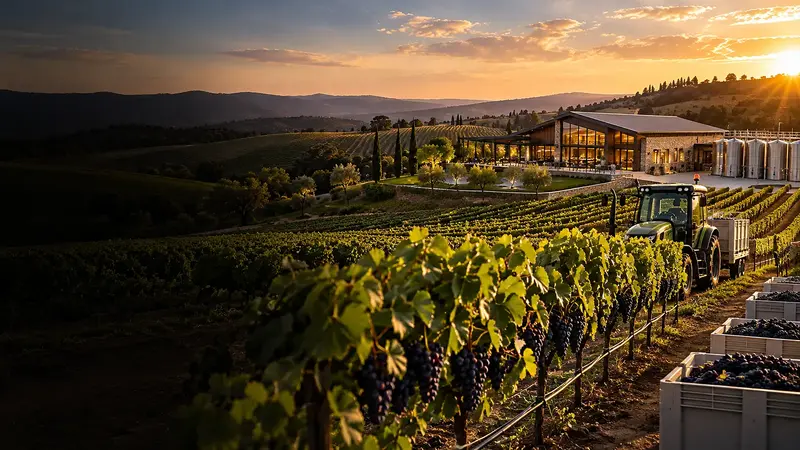
Vineyard finance has to bridge an unusually long gap: vines take several years to crop fully, and traditional method sparkling…
Buying stock ties up cash for months before it earns: heifers take time to come into milk, and store cattle or lambs need a…
What our clients say
“Simon was fast, kept us updated at all stages and was a real pleasure to work with on our asset finance. I highly recommend this company: excellent service all round.”
“Spoke with Simon, who managed to get me the loan I needed promptly. The whole process was very smooth and was completed within a few days.”
“Getting a business loan can feel like a bit of a minefield, but everything was broken down for me in great detail. Will use again in the future!”
“Simon was a pleasure to deal with and helped us find a business loan that matched our growth goals and future expansion plans.”
“I couldn’t source funding for my business, but the team got in touch within an hour and had it sorted within 24 hours. Fantastic service, and I would definitely use them again.”