

Healthcare premises finance for clinics buying their building
Healthcare premises finance helps a private clinic or practice buy, extend or refinance the building it trades from, usually…

How dentists fund buying the surgery building: commercial mortgages, who should own it, how lenders value dental premises, and the VAT trap to avoid.
Explore funding options Prefer a quick call back? Leave your number
“An excellent company that provided funding options quickly.”
In short
What you need to know.
The building can be owned by the practice company, the principal personally or a pension scheme. Lenders look at the practice's profit, the valuation of the building without its goodwill, and the VAT position, which catches out many exempt practices.
About dental practice premises finance
Specialist knowledge. Better outcomes.
This page is for dental principals who want to own the building they practise from: buying it from the landlord, buying it alongside a practice, or moving to larger premises to add surgeries. It covers who should own the property, how lenders value a building fitted out for dentistry, and the VAT trap that affects practices unable to reclaim VAT. Smart Funding Solutions is a broker, not a lender: we search our panel of 300+ lenders and arrange facilities from £10,000 to £20 million. It sits within our dental practice loans section.
The standard route for a principal or practice company buying premises to trade from. Lenders commonly advance up to 70 to 75% of the valuation, over terms of up to 25 years, with the exact figures depending on the practice and the lender. See commercial mortgages for how they are structured, and buying your business premises for the general process.
Where the deposit is the problem, some principals offer additional security, such as equity in another commercial property. It increases what is at risk if things go wrong.
Useful where the building must be bought quickly, at auction or before a mortgage lender can complete, with a commercial mortgage arranged afterwards. Bridging loans are expensive and need a clear exit.
A mortgage lender will rarely fund building alterations, extra surgeries or a new decontamination room. Those costs usually sit on a separate loan or fit-out and refurbishment finance.
Unlike GP surgeries, NHS dental contracts in England do not generally include a separate payment towards premises costs, so the mortgage has to be serviced from ordinary practice profit.
A lender secured on your building values it as bricks and mortar, not as a working practice. The valuer asks what the property would sell or let for with vacant possession, to any occupier, which can be well below what you believe it is worth to you.
Some healthcare lenders will also look at the value of the building as an operating dental practice, but they still check the bricks and mortar figure. Expect the loan to be sized against the lower of the two.
Commercial property sales are normally exempt from VAT, but a seller who has opted to tax the building must charge VAT at the standard rate on the price. Most dental treatment is VAT exempt, so a practice buying an opted building usually cannot reclaim that VAT, and it becomes a real cost. A sitting tenant buying the freehold will not normally benefit from the transfer of a going concern treatment that removes VAT from many investment sales. Ask early whether the seller has opted to tax.
Buying personally and letting to the practice does not automatically solve it. Anti-avoidance rules can stop an option to tax working where the landlord is connected to an occupier that cannot recover VAT, so take VAT advice before exchange rather than after.
Budget for Stamp Duty Land Tax at the non-residential and mixed-use rates in England, or the equivalent tax in Scotland and Wales. Buildings with residential flats may be treated as mixed use. Separately, fixtures such as heating, electrical and water systems can qualify for capital allowances, but the right to claim can be lost on purchase unless the buyer and seller deal with it in the contract. Your solicitor and accountant should cover this before completion.
Illustration only, with round hypothetical figures. A principal has run a four-surgery practice from a leased building for twelve years. The landlord offers the freehold for £400,000. The valuer puts vacant possession value at £380,000, and the lender offers a mortgage based on that lower figure. The principal buys personally, puts in a deposit from savings and grants a formal lease to the practice company at a market rent set by the valuer. The rent covers the mortgage payments with a margin, and the practice's profit comfortably covers the rent. Before exchange, the principal's accountant confirms whether the landlord has opted to tax and whether any VAT would be recoverable. Ten years later the practice is sold to a group, and the principal keeps the building as an investment let to the buyer.
Owning the building concentrates your practice, your income and a large part of your wealth in one place. If the local area declines or you want to relocate, a building is slower to sell than a lease is to assign. Personal guarantees are common where a company borrows. Repairs and dilapidations that a landlord would have shared become yours. And if you plan to sell the practice, some buyers will want to buy the building too, while others will only take a lease, so the ownership structure you choose now affects your exit.
Renting is not a failure. A long lease on fair terms, with rent reviews you can live with, can leave capital free for equipment and growth. Compare the total cost of owning, including stamp duty, any irrecoverable VAT and maintenance, with the rent you pay now. If you already own the building and want to release capital or reduce payments, see commercial property refinance.
Practice profit and whether it covers the mortgage alongside any goodwill loan and equipment agreements; if you own personally, whether the rent covers the mortgage.
The size and source of your deposit.
The length and reliability of the practice's trading, including NHS contract delivery or plan income.
The valuation, the building's condition and any environmental or structural issues.
Your experience, credit history and other property you own.
Where the practice is moving, whether CQC registration for the new address is in place before patients are seen there.
How the main business finance structures work. Lenders set their own terms, so treat this as a guide to the questions to ask.
| Option | How you repay | Security | Often used for |
|---|---|---|---|
| Unsecured business loan | Fixed instalments, usually monthly | No charge over assets; a personal guarantee is usually required | Growth, stock, tax bills and cash flow |
| Secured business loan | Fixed instalments, often over a longer term | A charge over property or other assets | Larger sums, property and refinancing |
| Revolving credit facility | Interest on what you draw; repay and redraw | Varies by lender and case | Recurring or uneven cash flow gaps |
| Merchant cash advance | A share of future card takings | No charge over assets | Card-taking businesses with uneven months |
| Asset finance | Regular payments over the life of the asset | The asset being financed | Equipment, vehicles and machinery |
| Invoice finance | Settled as customers pay their invoices | Your unpaid invoices | Businesses waiting on customer payment |
General information only. Every lender has its own criteria, and all finance is subject to status.
This is the decision with the longest consequences, and it should be made with your accountant before a lender is approached.
| Owner | How it works | Points to weigh |
|---|---|---|
| The practice company | The company borrows and repays from trading profit | Simple, but the building is sold with the company unless extracted first, and extraction can create tax |
| The principal personally | You buy and let the building to your practice on a formal lease | Rent becomes personal income that repays the mortgage; the building can be kept when the practice is sold |
| A separate property company | A special purpose company owns the building and lets it to the practice | Keeps the property apart from trading risk; lenders look at both companies |
| A SSAS or SIPP | Your pension scheme buys and lets to the practice | Rent flows into the pension; pension borrowing is limited to half the scheme's net assets |
Separating the building from the practice is common because it keeps options open at retirement: you can sell the practice and retain the property as an investment let to the buyer. Our guide to buying premises through an SPV or pension compares these structures in detail.
Tell us about the building, the price and how the practice trades. We help you think through the ownership structure with your advisers, flag VAT and planning questions that could change the numbers, and approach lenders on our panel that fund healthcare premises. We compare offers on loan size, term, security and fees, and keep the valuer, your solicitor and the lender moving. Lenders make the final decision. It is free to enquire; any broker fee is disclosed separately before you proceed. For property finance across all sectors, see our commercial property finance hub.
A SSAS or SIPP can usually buy commercial property and let it to your practice at a market rent, and pension schemes can borrow up to half their net assets towards the purchase. The rent goes into the pension rather than to you. It needs a scheme that permits property, trustee or provider approval and independent pension advice.
If the practice company owns it, it usually goes with the company unless it is taken out beforehand, which can trigger tax. If you own it personally or through a separate company, you can sell it with the practice or keep it and grant the buyer a lease. Many principals keep it as income in retirement.
Yes. In England, a new location has to be added to your registration before you provide regulated activities there; CQC guidance on making changes to your registration explains the process. Lenders funding a relocation may make registration of the new premises a condition of releasing funds for the move.
The deposit depends on the lender, the building's valuation, the practice's profits and whether you are buying as an established principal or for a new practice. Lenders set their own criteria, and a specialist fitted-out dental building with a narrow resale market may be valued more cautiously than a standard office. A stronger trading record usually widens the choice of lenders. You can test figures with our commercial mortgage calculator.
Yes, principals who own their building can often refinance to raise capital for a refurbishment, extra surgeries, a second practice or to repay more expensive borrowing. The lender will value the property, review the practice's profits and check that the new repayments are affordable alongside existing commitments. Where the building is owned personally or in a pension, the structure needs care. See our page on commercial property refinance.
Healthcare premises finance helps a private clinic or practice buy, extend or refinance the building it trades from, usually…
Most dental practices are financed in layers rather than with one loan: a long-term loan for goodwill when buying, a commercial…
Selling a dental practice means agreeing a price for goodwill, which buyers and their lenders base on profit after replacing…
Dental practice acquisition finance funds the purchase of an existing practice, mostly its goodwill. Buyers typically combine…
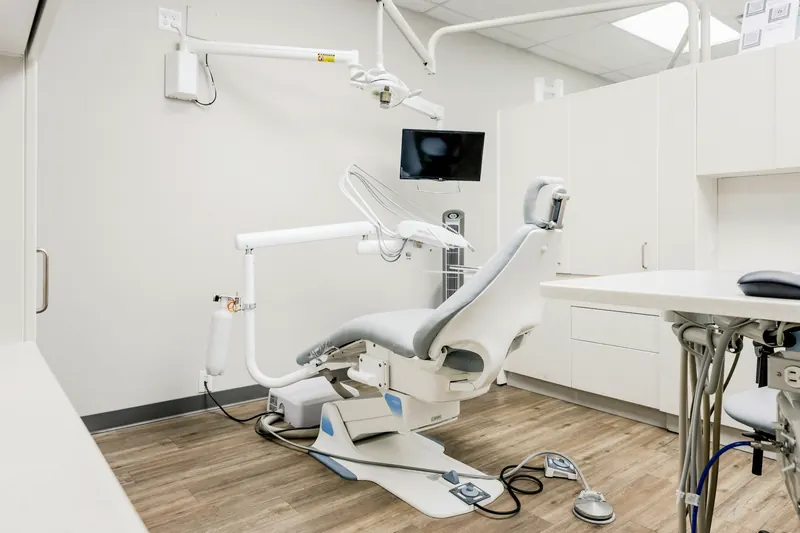
Dental surgery refurbishment finance funds the building works, services and equipment needed to refit surgeries, add a…
A squat dental practice is usually funded in layers: hire purchase or leasing for chairs, imaging and decontamination…
What our clients say
“Simon was fast, kept us updated at all stages and was a real pleasure to work with on our asset finance. I highly recommend this company: excellent service all round.”
“Spoke with Simon, who managed to get me the loan I needed promptly. The whole process was very smooth and was completed within a few days.”
“Getting a business loan can feel like a bit of a minefield, but everything was broken down for me in great detail. Will use again in the future!”
“Simon was a pleasure to deal with and helped us find a business loan that matched our growth goals and future expansion plans.”
“I couldn’t source funding for my business, but the team got in touch within an hour and had it sorted within 24 hours. Fantastic service, and I would definitely use them again.”