
How to get a loan to start a restaurant: a beginner's guide
To get a loan to start a restaurant you usually need a detailed business plan with realistic forecasts, some of your own money…
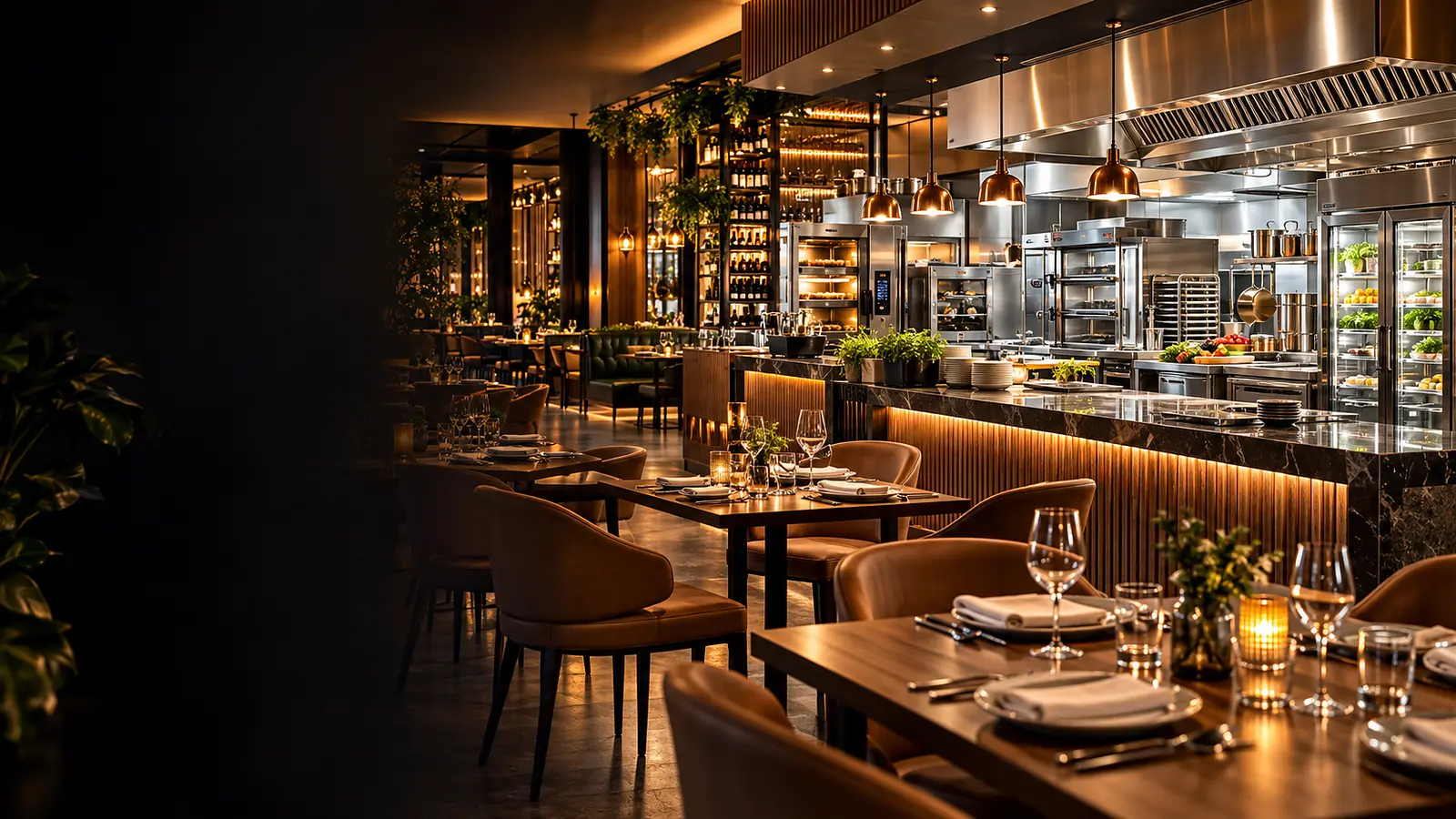
Split a restaurant fit-out between asset finance, loans and a cash buffer. Worked budget example, lease vs loan table and what lenders check before they lend.
Restaurant fit-out finance is funding that spreads the cost of equipping and decorating a restaurant over monthly payments instead of paying for everything upfront. This guide is for owners opening a new site or refurbishing an existing one who want to protect working capital. Smart Funding Solutions, a commercial finance broker, searches its panel of 300+ lenders to put together the right mix of asset finance and lending for the plan; for wider funding options see our restaurant loans page.
Get several quotes for each area and add a contingency, as fit-outs often uncover unexpected work.
Paying for a full fit-out from savings can leave little for payroll, stock, marketing and the slow early weeks after opening. Financing turns a large one-off cost into predictable instalments, so you keep a cash buffer while the restaurant builds trade.
Asset finance covers physical items such as kitchen equipment, furniture and tills. The lender buys the assets and you pay monthly. With hire purchase you own them at the end; with leasing you pay to use them and can often upgrade, extend or return them at the end of the term. Because the assets act as security, asset finance can be easier to obtain than an unsecured loan. Our guide to commercial kitchen equipment finance covers the kitchen side in more detail.
A term loan suits costs that cannot be repossessed, such as building work, design and decoration. Loans can be unsecured (usually with a personal guarantee) or secured against property. High-street banks often have strict criteria and longer timescales, especially for new businesses; specialist lenders may be more flexible.
For an existing restaurant with steady card takings, a merchant cash advance repaid as a share of card sales can fund a refurbishment quickly. It usually costs more than a loan, so it suits smaller, urgent projects rather than a full fit-out.
A revolving credit facility or overdraft can cover staged payments to contractors and short-term gaps, as you draw only what you need and pay interest only on what you use.
| Leasing / asset finance | Business loan | |
|---|---|---|
| Best for | Equipment, furniture, technology | Building work, design, decor |
| Ownership | Hire purchase: yours at the end. Lease: return, extend or upgrade | Assets bought are yours immediately |
| Security | The assets themselves | Personal guarantee or property |
| Cash flow | Fixed monthly payments, little upfront | Fixed monthly repayments |
Many restaurants use both: asset finance for equipment and a loan for the rest.
Illustrative example only — not a quote or offer of finance.
On top of the fit-out, set aside working capital for opening stock, pre-opening wages and launch marketing. Lenders like to see that this has been planned rather than left to chance.
The same options apply to refurbishments. Lenders will want to see how the work will improve revenue or margins, for example through more covers, a better kitchen or a refreshed brand. Trading history often makes finance easier to obtain than for a new opening. If you are still at the planning stage, our guide to getting a loan to start a restaurant covers the wider start-up budget.
A longer term can keep repayments comfortable, as in our case study on a £55,000 loan over 48 months for an established café.
This guide is general information, not financial advice. Lenders set their own criteria, rates and terms, and all finance is subject to status.
Not ready for the full application? Leave a few details and a broker will call you to talk it through. It is free, with no obligation.
Yes, it can be possible. Asset finance is often the most accessible option for start-ups because the equipment acts as security. For building and design costs, lenders will look closely at your business plan, hospitality experience, personal credit and any deposit you are contributing. A detailed, fully quoted budget and a signed lease strengthen the application.
Usually, yes. Most commercial leases require landlord consent for alterations, and lenders often ask to see the lease and any licence for works. They will also check the remaining lease term, because it should comfortably outlast the finance. Some items fixed to the building may become the landlord's property, which affects what can be used as security.
It can be possible, mainly through asset finance on kitchen equipment and furniture, where the items themselves are security. Building work and decor are harder to fund with weaker credit because they cannot be repossessed, so a larger personal contribution, a deposit or a business partner with a stronger profile may be needed. Explain any past credit problems clearly. Our page on bad credit business loans covers lenders that consider weaker histories.
Asset finance on standard kitchen equipment can often be arranged within a few working days in straightforward cases once quotes and documents are ready, while term loans for building work, especially secured loans or funding for a new business, usually take longer. Because contractors often want staged payments, have the loan or facility agreed before work starts. Asset lenders typically pay suppliers once equipment is delivered and signed for, so plan payment timings with your contractor.
Yes, many lenders will finance used or refurbished catering equipment, depending on its age, condition and the supplier. Shorter terms are common so the agreement ends before the kit wears out, and buying from a recognised dealer makes approval easier. Used equipment can cut the fit-out budget significantly. See used equipment finance for what lenders typically check.
To get a loan to start a restaurant you usually need a detailed business plan with realistic forecasts, some of your own money…
Choose hire purchase if you want to own long-life items such as a combi oven or cold room, leasing if you want a lower up-front…
To buy a pub, first decide whether you want the freehold, a free-of-tie lease or a tied tenancy, as this sets how much you need…

Most people buy a trading B&B with a commercial or semi-commercial mortgage, because the owner lives on site and the lender…

Most cafes combine two or three types of finance rather than one loan: equipment finance or leasing for the espresso machine…
Most street food traders fund the first season from savings and a Start Up Loan, then use asset finance for a trailer,…
Our clients say
Trusted by UK businesses across every sector.
“Simon was fast, kept us updated at all stages and was a real pleasure to work with on our asset finance. I highly recommend this company: excellent service all round.”
“Spoke with Simon, who managed to get me the loan I needed promptly. The whole process was very smooth and was completed within a few days.”
“Getting a business loan can feel like a bit of a minefield, but everything was broken down for me in great detail. Will use again in the future!”
“Simon was a pleasure to deal with and helped us find a business loan that matched our growth goals and future expansion plans.”
“I couldn’t source funding for my business, but the team got in touch within an hour and had it sorted within 24 hours. Fantastic service, and I would definitely use them again.”
A short conversation is often enough to know which lenders will look at your case and how to present it. There is no obligation, and it is free to enquire.