
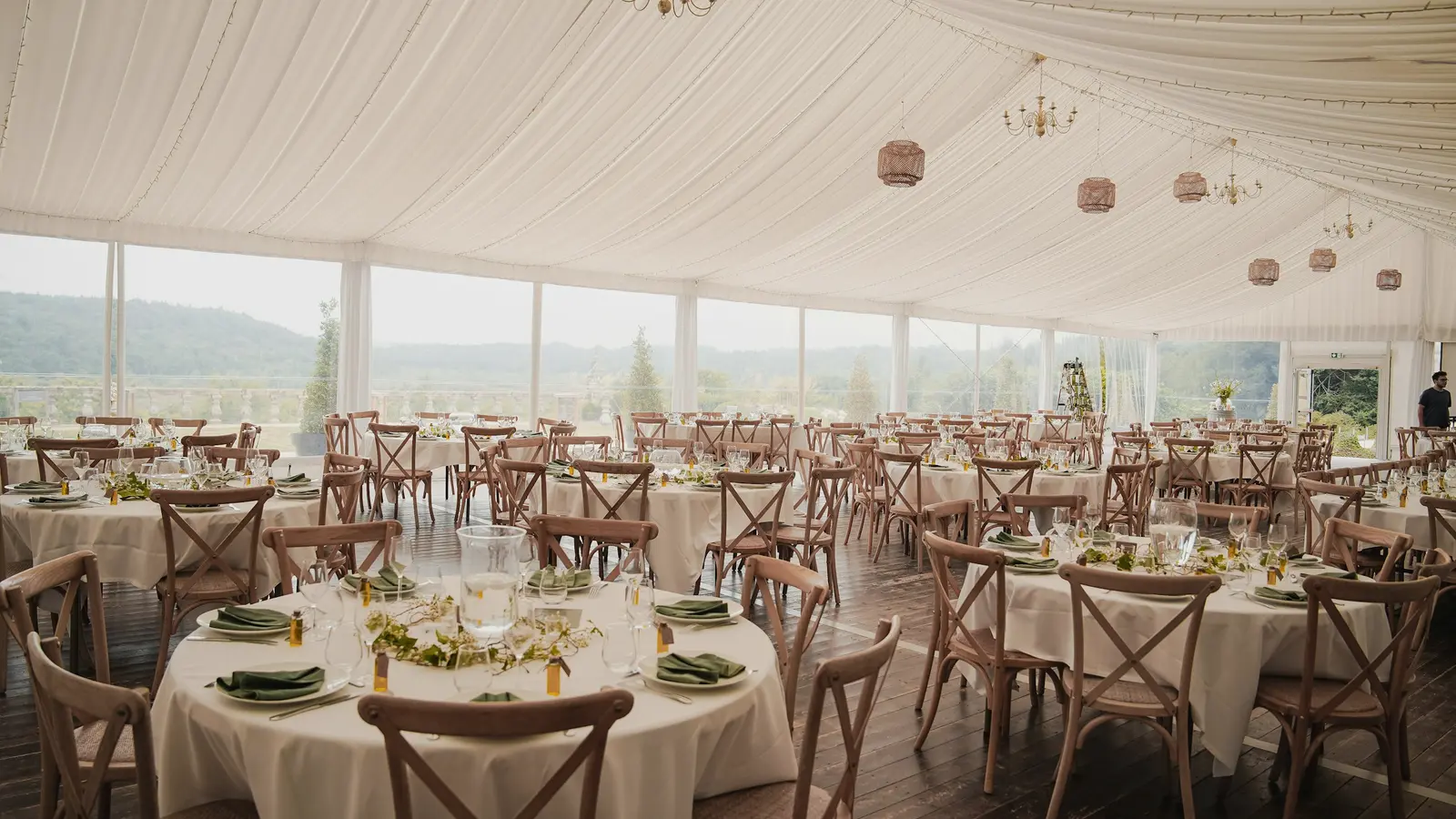
£100,000 across two facilities. A farm wedding and events venue that keeps coming back.
Event setup, venue improvements and supplier deposits ahead of booked weddings.
Two facilitiesRead the transaction
How event organisers fund venue deposits, production costs and kit, how lenders treat ticket income and cancellation risk, and which facilities fit.
Explore funding options Prefer a quick call back? Leave your number
“I would recommend them to anyone.”
In short
Supporting event management businesses at every stage.
A working capital loan or revolving facility suits that pre-event outlay, asset finance suits staging, AV and marquees, and invoice finance suits corporate clients billed afterwards. Lenders focus on deposit and refund exposure, insurance, and whether profit depends on one flagship event.
The operating cycle
Cash leaves the business at every stage before it comes back. Each stage below is a point where the right facility can carry the gap.
“I highly recommend this company: excellent service all round.”
Orders, contracts or customers secured.
Stock, materials and equipment paid for up front.
Asset finance →Wages and suppliers paid on time.
Working capital →The work is done or the goods are sold.
Customers pay, sometimes weeks later.
Invoice finance →VAT and Corporation Tax fall due.
HMRC loans →Growth, a new site or new equipment.
Business loans →A transaction we arranged
£1,000
£1,000. An events business: seasonal trade, and a lender that looked at the whole year.
Deposits, suppliers and staffing costs ahead of event income.
Read the transactionAbout event management business loans
Specialist knowledge. Better outcomes.
This page is for owners of event businesses: corporate conference and awards organisers, exhibition and trade show producers, festival promoters, party and wedding planners, and production companies that supply staging, sound, lighting and structures. Smart Funding Solutions is a broker, not a lender: we search our panel of 300+ lenders for facilities from £10,000 to £20 million. Events sit alongside other sectors in our SME loans guides.
Choose the need, and we’ll show you how lenders usually structure it.
Few businesses commit so much money so far ahead of earning it. A typical organiser pays a venue deposit months in advance, often non-refundable, then books production suppliers, caterers, security and crew, each wanting a deposit of their own. Marketing spend lands before tickets sell. The income arrives in three very different ways:
Add strong seasonality, with outdoor events concentrated in late spring and summer and corporate work peaking around conference season and the Christmas party period, and the result is a business that may run hot for four months and lean for the rest of the year.
The biggest risk is borrowing against an event that has not sold. Lenders and organisers alike have seen first editions lose money and the debt outlive the event. Fund new events with a contribution you can afford to lose, and borrow for proven ones. Regulation also adds cost that should be in the budget: the HSE's guidance on managing an event sets out the organiser's duties, smaller one-off licensed events may need a Temporary Events Notice, and larger qualifying events and venues will have new security duties under the Terrorism (Protection of Premises) Act 2025.
Alternatives are worth testing first: deposit terms with venues can sometimes be renegotiated, ticketing platforms may advance a share of sales, and a co-promoter can share both cost and risk. Our guide to seasonal business finance covers cash planning across peaks and troughs. A personal guarantee is common on unsecured facilities, so weigh it carefully.
ticket revenue and client deposits received before an event are, in substance, owed back if the event does not go ahead. Lenders look at how much is held and how refunds would be funded.
whether you carry event cancellation and abandonment insurance, and what it excludes.
a breakdown of each event's income and costs, not just annual totals, so the lender can see which events carry the business.
reliance on one festival, one venue or one corporate client.
premises licences, any history with the local safety advisory group, and evidence that safety planning is resourced.
deposits already paid and contracted spend still to come.
| Option | Fits when | Watch for |
|---|---|---|
| Working capital loan | A known pre-season outlay with income expected within the term | Repayments continue through the quiet months |
| Revolving credit facility | Several events a year, each with its own deposit-to-payment gap | Limits are reviewed; avoid funding losses with it |
| Asset finance | Owning kit you currently hire in often enough to justify the cost | Kit must earn through the off-season too, by hiring it out to others |
| Invoice finance | Mostly corporate and agency clients billed after delivery | Only invoices for events already delivered qualify |
| Merchant cash advance | Card takings through your own bars, merchandise or box office | Repays fast in peak months; compare the total cost with a loan |
For production companies that buy kit, the test is utilisation. A lighting rig financed over several years needs bookings outside your own events, so hire income to other organisers is often what makes the numbers work. Lenders financing temporary structures or LED walls will also want to know where the kit is stored and how it is insured between jobs.
Small, quick facilities have their place too: our events business case study covered deposits, suppliers and staff ahead of event income.
It is free to enquire; any broker fee is disclosed separately before you proceed. Venue owners should see wedding venue finance, and activity operators outdoor activity business finance.
It is harder without a trading record, because lenders cannot see how events have performed. Founders with a track record in the industry, a contracted first client or their own contribution have better prospects. Our page on start-up business loans sets out the options.
Not fully. Until the event happens, ticket money is a liability because it may have to be refunded. Lenders give more weight to completed events and contracted corporate work.
Buying usually pays only if the kit is used often enough across your own events and hire to others. Occasional use, or kit that dates quickly, is usually better hired. Lenders will ask for your utilisation figures before financing.
The products are the same, but income is mostly from couples paying deposits and balances directly, so card-based and term facilities fit better than invoice finance. Our guide to wedding planning business loans covers this.
Not always. Many event management business loans are unsecured, though directors usually give a personal guarantee because event income is seasonal and paid in advance of risk. Asset finance for staging, AV and structures is secured on the equipment itself, and larger facilities may need property or other security. Lenders look at forward bookings, contracts and accounts. Our page on unsecured business loans covers the main terms.
Yes. Buying an established events business is usually funded with acquisition finance: a loan sized on the business's recent profits, your own contribution and sometimes part of the price paid to the seller after completion. Lenders look most closely at repeat clients and forward bookings, dependence on the founder, the equipment it owns and how it handles deposits taken from customers. You can see which lenders on our panel fund purchases like yours with Instant Quotes.
Event setup, venue improvements and supplier deposits ahead of booked weddings.
Working capital for beverage stock, events, marketing and supplier costs.

Beauty salon business loans fund refits, treatment equipment, stock and new sites for hair and beauty salons, barbers, nail…

Football club finance usually combines a term loan or secured loan for 3G pitches and building works, asset finance for…

Golf club finance usually combines asset finance for buggies, greenkeeping machinery and range technology, a term loan or…

Most gyms split the funding: equipment finance or leasing for the gym floor, secured on the kit, plus an unsecured loan for…

Trampoline parks and other indoor leisure sites usually fund their installed attractions with equipment finance, the building…
Dry cleaners and laundries mostly borrow for machines, so asset finance is the usual starting point, with term loans for shop…
What our clients say
“Simon was fast, kept us updated at all stages and was a real pleasure to work with on our asset finance. I highly recommend this company: excellent service all round.”
“Spoke with Simon, who managed to get me the loan I needed promptly. The whole process was very smooth and was completed within a few days.”
“Getting a business loan can feel like a bit of a minefield, but everything was broken down for me in great detail. Will use again in the future!”
“Simon was a pleasure to deal with and helped us find a business loan that matched our growth goals and future expansion plans.”
“I couldn’t source funding for my business, but the team got in touch within an hour and had it sorted within 24 hours. Fantastic service, and I would definitely use them again.”