
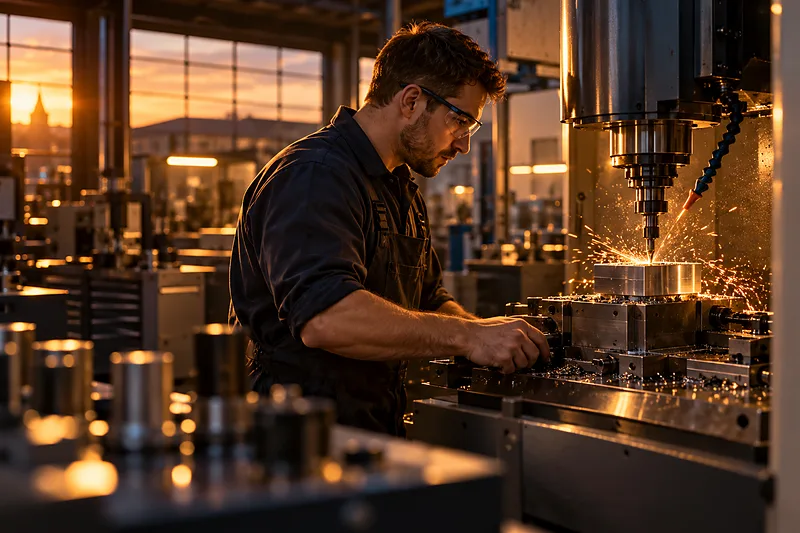
CNC machine finance for UK manufacturers and machine shops
Most machine shops fund a CNC purchase with hire purchase if they plan to keep the machine for years, or a lease if lower payments and upgrades…
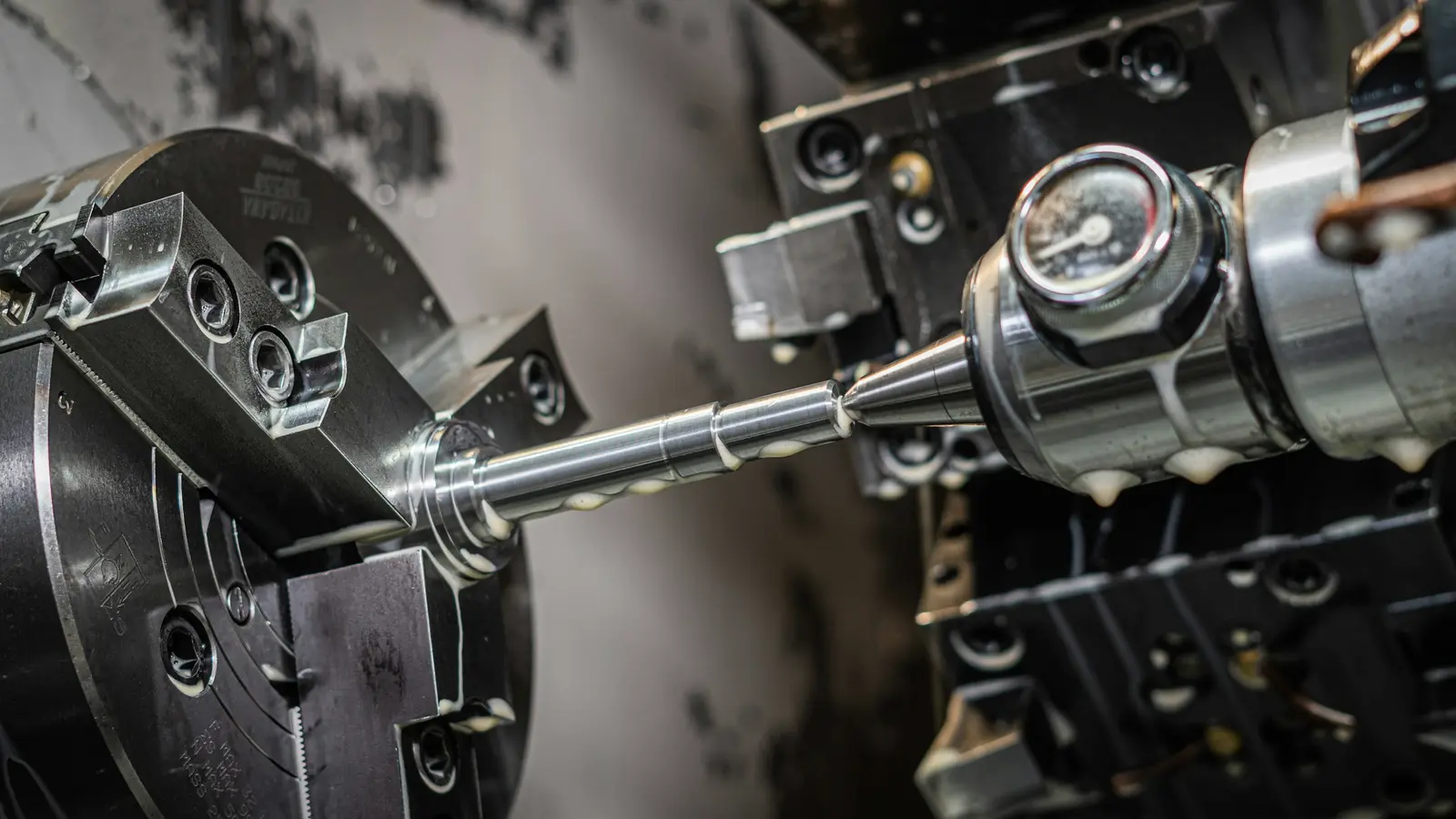
Fund new or used CNC machines, presses, plant and farm machinery over its working life. Compare hire purchase, leasing and loans, and see what lenders assess.
“Fantastic service, and I would definitely use them again.”
In short
What you need to know.
Lenders focus on the machine's resale value, your trading record and whether cash flow covers the payments.
Almost any business-critical machine with a resale value can be financed, new or used, including:
Balers, shredders and sorting lines are covered in more depth on our recycling business finance page, including how lenders treat permits, fire risk and grant-funded projects.
A transaction we arranged
£185,000
The machine could increase capacity. Paying £185K in cash would have reduced it.
An engineering firm wanted a new CNC machine without draining working capital. We arranged asset finance against the machine.
Read the transactionAbout machinery finance
Specialist knowledge. Better outcomes.
Machinery finance is a way to acquire the machines your business depends on and spread the cost over monthly payments, with the machine itself usually acting as security. It is for manufacturers, engineers, contractors, farmers and processors who need to add capacity, replace an ageing machine or take on a contract that requires new kit, without tying up the working capital that pays for materials and wages. Smart Funding Solutions approaches asset finance specialists on its panel that know how to value the machine you have in mind.
Machinery finance is a form of asset finance. Lighter tools, IT and catering kit are covered on our equipment finance page.
More detail on specific needs within this topic.
Most machine shops fund a CNC purchase with hire purchase if they plan to keep the machine for years, or a lease if lower payments and upgrades…
The right way to fund a 3D printer depends mostly on how long it will stay commercially useful. Hire purchase suits a system you will keep and run for years;…
You usually pay a deposit, then fixed monthly payments. You use the machine from day one and ownership passes to you after the final payment, often with a small option-to-purchase fee. It suits machinery you plan to keep for most of its working life.
The lender buys the machine and rents it to you for most of its useful life. You do not own it, but at the end you can often continue renting at a reduced rate or share in the sale proceeds, depending on the agreement.
A shorter rental for part of the machine's life, after which you return or upgrade it. It suits machinery that dates quickly or is needed for a specific project, and the lender takes the risk on the resale value.
A business loan to buy the machine outright, repaid over a set term. You own it immediately. Lenders may take security over the machine or other assets, or offer an unsecured loan with a personal guarantee.
If you already own machinery, asset refinance releases cash from its value, repaid over a set term.
Farms weighing ownership against rental for their main machine can read our guide to tractor finance, including how to lease a tractor.
Usually, yes. HMRC treats a standard hire purchase agreement as a sale of the machine at the start, so VAT on the full cash price is charged when the machine is delivered, not spread across the instalments. A VAT registered business then reclaims it on its VAT return in the normal way. On a finance lease or contract hire the position is different, because VAT is added to each rental instead. Smart Funding Solutions, a whole-of-market commercial finance broker, compares both structures so the VAT bill does not catch your cash flow out in the month the machine arrives.
HMRC sets out the timing in its VAT guidance on hire purchase and conditional sales.
Often it can. Some asset finance lenders defer the VAT for a short period so that you pay it after reclaiming it on your next return, and others add a short VAT loan alongside the main agreement. Either way the deposit is a separate question, and lenders set it by the age of the machine, how easily it resells and the strength of your accounts, rather than by a fixed rule. Read how hire purchase and a finance lease compare, or see VAT loans if a larger VAT bill is the pressure. To see which panel lenders may fund your machine before anyone searches your credit file, start with Instant Quotes.
Yes, although fewer lenders take on imported machinery and they ask more questions first. The lender has to be confident the machine exists, arrives in working order and has a resale market in the UK, so well known makes and models with a UK service network are easier to place than one-off builds. We present the supplier, the shipping terms and the installation plan to lenders on our panel that fund imported plant and production equipment.
Some will, but it is the hardest part of an import to fund. Many overseas makers ask for a deposit with the order and the balance before shipping, while asset finance lenders prefer to pay once the machine is on site. Where a lender will not pay early, the gap can be bridged with trade finance or a short working capital loan that is repaid when the asset finance completes. On the VAT side, a VAT registered business can usually use postponed VAT accounting to declare and recover import VAT on the same return rather than paying it at the border. Compare plant and machinery finance with used equipment finance, then check the numbers for your machine on Instant Quotes, which does not touch your credit file.
Before you borrow, estimate what the machine will add each month: extra output you can sell, labour or outsourcing costs saved, less scrap or downtime. Compare that figure with the monthly finance payment, running costs and insurance. If the machine's contribution comfortably covers the payment from the month it is installed, lenders are more likely to see the case, and you are less likely to strain cash flow while production ramps up. Allow for delivery, installation and training time before it starts earning.
Used machines are financed every day, as long as they have a reliable second-hand market. What changes is the term: lenders set a maximum age at the end of the agreement, so an older machine gets a shorter term and a higher monthly payment.
More on used equipment finance.
Construction and agricultural plant is among the easiest machinery to fund, because excavators, telehandlers, dumpers and tractors hold their value and sell readily. See plant finance, excavator finance, telehandler finance and crane finance.
Farms can often match payments to when income arrives; see agricultural machinery finance. Oxbury Bank, a farm lender on our panel, offers hire purchase on vehicles, plant and green assets over terms of up to 7 years.
If you bought machines outright, asset refinance or a sale and hire purchase back can release cash from them while you keep using them.
See asset refinance and sale and leaseback.
Other pages that may fit what you are buying.
its type, age, condition, expected life and resale value. Well-known makes with a strong second-hand market are easier to fund.
how long you have traded and how profitable the business is. Newer businesses may be asked for a larger deposit.
whether income comfortably covers repayments.
the business's and directors' credit history.
whether the machine comes from a dealer or a private seller, and the invoice details.
How the main business finance structures work. Lenders set their own terms, so treat this as a guide to the questions to ask.
| Option | How you repay | Security | Often used for |
|---|---|---|---|
| Unsecured business loan | Fixed instalments, usually monthly | No charge over assets; a personal guarantee is usually required | Growth, stock, tax bills and cash flow |
| Secured business loan | Fixed instalments, often over a longer term | A charge over property or other assets | Larger sums, property and refinancing |
| Revolving credit facility | Interest on what you draw; repay and redraw | Varies by lender and case | Recurring or uneven cash flow gaps |
| Merchant cash advance | A share of future card takings | No charge over assets | Card-taking businesses with uneven months |
| Asset finance | Regular payments over the life of the asset | The asset being financed | Equipment, vehicles and machinery |
| Invoice finance | Settled as customers pay their invoices | Your unpaid invoices | Businesses waiting on customer payment |
General information only. Every lender has its own criteria, and all finance is subject to status.
| Option | Ownership | Often suits |
|---|---|---|
| Cash purchase | Immediate | Businesses with surplus cash that want no borrowing |
| Hire purchase | After final payment | Long-life machinery you intend to keep |
| Finance lease | No (lender owns) | Keeping cash free while using the asset for most of its life |
| Operating lease | No (return or upgrade) | Machinery that dates quickly or short-term projects |
| Term loan | Immediate | Buying outright while spreading the cost |
Leasing typically costs more over the long run than owning, but keeps upfront costs low and makes upgrading easier. Ownership gives you full control and any resale value, but you carry maintenance and the risk of the machine becoming obsolete.
Tax treatment differs between hire purchase, leases and loans, for example in how capital allowances and rental payments are treated. Speak to your accountant, and see GOV.UK guidance on capital allowances.
An engineering firm buys a £120,000 CNC machine on hire purchase with a 10% deposit, over five years at an assumed 8.5% a year.
| Item | Figure |
|---|---|
| Machine cost | £120,000 |
| Deposit (10%) | £12,000 |
| Amount financed | £108,000 |
| Term | 60 months |
| Monthly payment | £2,215.79 |
| Total interest | £24,947.12 |
| Total paid, including the deposit | £144,947.12 |
The rate is an assumption for the illustration, not a quote; fees and VAT are left out, and the rate you are offered depends on the lender and your circumstances.
If the machine adds more than about £2,200 a month in extra output or savings, it pays for itself from the start. Run your own figures in the asset finance calculator; capital allowances may apply on hire purchase (GOV.UK: Annual Investment Allowance).
Lenders we compare for plant and machinery, with the amounts, terms and indicative rates on the products that fund it.
| Lender | Best for | Amounts | Terms | Indicative rate | Refinance or sale and leaseback |
|---|---|---|---|---|---|
| Allica Bank | Established businesses buying plant and machinery, up to 7 years | £20k to £2.5m | Up to 7 years | 7% to 9.2% a year | Yes |
| Cambridge & Counties Bank | Longer agreements on plant and machinery, up to 10 years | £25k to £1.5m | Up to 10 years | 6.5% to 10% a year | No |
| Close Brothers | New and used machinery for companies, sole traders and partnerships | £10k to £20m | Up to 7 years | 8.5% to 16.5% a year | Yes |
| Aldermore | Businesses trading three years or more, including machinery refinance | £25k to £1m | Up to 7 years | 8.85% to 10.85% a year | Yes |
| Oxbury Bank | Agricultural machinery and larger farm hire purchase | £25k to £5m | Up to 7 years | 5.75% to 7.25% a year | Yes |
| Haydock Finance | Hard assets for businesses of any trading age | £10k to £1m | Up to 5 years | 8.25% to 12% a year | No |
| Ultimate Finance | Hard asset finance and refinance up to 7 years | £10k to £2m | Up to 7 years | 8.5% to 15% a year | Yes |
| Praetura Asset Finance | Hard assets from £10,000, including refinance | £10k to £5m | Up to 6 years | 11% to 13% a year | Yes |
| Davenham Asset Finance | Plant, machinery and commercial vehicles, including refinance | £15k to £350k | Up to 5 years | 12% to 16% a year | Yes |
| Metro Bank Asset Finance | Businesses trading three years or more, including refinance | £25k to £1m | Up to 5 years | 6.8% to 9.25% a year | Yes |
Indicative ranges from lenders on our panel, checked October 2026; your rate depends on your circumstances. Rates are yearly unless the lender prices by the month. Smart Funding Solutions is a broker, not a lender, and is not part of any lender listed. Fees depend on the lender, nothing upfront. See all lender reviews.
Send us the supplier quote, recent bank statements and your latest accounts. We review what you need, explain the realistic options, approach lenders that fund that type of machine and go through the terms with you; the lender makes the decision. After approval, the lender issues the finance agreement, you sign it and pay any deposit, and once the supplier confirms delivery (often with a signed satisfaction note) the lender pays the supplier directly. Decisions on straightforward asset finance can come within a few working days once a lender has everything it needs. It is free to enquire, and any broker fee is disclosed separately before you proceed. You can discuss your requirement online with your quote to hand.
Instant machinery finance quotes
Tell us how much you need. Instant Quotes shows which lenders on our panel fit your business, then a broker helps you choose between hire purchase, leasing and a loan.
Prefer to talk it through? Call 01244 267694
Illustrative figures from the numbers you enter, before you speak to a lender.
Yes. Many lenders finance used machinery, provided it has a reliable resale value and is in good condition. Lenders may limit the term based on the machine's age, and some ask for a larger deposit on older equipment. Buying from a recognised dealer with a proper invoice usually makes approval simpler than a private sale.
Yes, a new business can often get machinery finance, because the machine itself secures the agreement and has a resale value. Lenders may ask for a larger deposit, a personal guarantee and evidence of contracts or relevant experience. Well-known machines from established makers are easier to fund than specialist one-off equipment. Our page on start-up business loans covers the wider options for younger companies.
It can be possible, because machinery finance is secured on the machine. Expect a larger deposit, a shorter term or a higher cost if your credit history includes missed payments, defaults or CCJs. Lenders also look at your current trading, bank conduct and how the machine will pay for itself. Our guide to bad credit asset finance explains what lenders typically consider.
It depends on the agreement. With hire purchase you are usually treated as the owner for tax purposes, so you may be able to claim capital allowances. With a lease the lender owns the machine, and rentals are generally treated as a business expense instead. Your accountant should confirm the treatment. Our guide to asset finance and capital allowances explains the main points.
Machinery finance can often be arranged within a few working days in straightforward cases, once the lender has the supplier quote, accounts and bank statements. Larger, imported or specialist machines, used kit bought privately or businesses with complex credit histories can take longer because lenders may need valuations or more information. Having your documents ready and a clear quote speeds things up.
Yes. Buying an established engineering, manufacturing or plant business is usually funded with acquisition finance: a loan sized on the business's recent profits, your own contribution and sometimes part of the price paid to the seller after completion. Lenders look most closely at the order book, customer concentration and the value and condition of the machinery, which can support part of the borrowing through asset-based lending. You can see which lenders on our panel fund purchases like yours with Instant Quotes.
Machinery finance usually means hire purchase or leasing, where the machine secures the agreement. A machinery loan is a business loan used to buy the machine outright, so you own it from day one; it may be unsecured with a personal guarantee, or secured on other assets.
Yes. Asset refinance or a sale and hire purchase back can release cash from machines you own outright. Lenders on our panel most often advance 80% to 90% of valuation on hard assets (checked October 2026). See asset refinance.
Lenders set a maximum age at the end of the agreement, which varies by machine. On our panel, for example, machine tools up to 12 years and excavators up to 15 years old at the end of the term are accepted by some lenders.
Not always. Most lenders on our panel have no fixed minimum deposit for mainstream machinery, but a deposit lowers the payments and can help a newer business or a weaker credit record.
Usually, yes. HMRC treats a standard hire purchase agreement as a sale at the outset, so VAT on the full cash price is charged when the machine is delivered, and a VAT registered business reclaims it on its VAT return. On a finance lease or contract hire, VAT is added to each rental instead. Smart Funding Solutions, a whole-of-market commercial finance broker, compares both so the VAT does not strain cash flow.
Often, yes. Some asset finance lenders defer the VAT on a hire purchase agreement for a short period so it can be reclaimed first, and others arrange a short VAT loan alongside the main agreement. The deposit is set separately by each lender, based on the machine, its resale value and your accounts.
Yes, though fewer lenders fund imported machinery. They look at the supplier and its UK track record, the shipping terms and insurance in transit, import costs such as duty and VAT, and who installs and signs off the machine. Well known makes with UK servicing are easier to fund. Smart Funding Solutions, a whole-of-market commercial finance broker, knows which panel lenders will look at imported equipment.
Some will, but many asset finance lenders prefer to pay once the machine is on site. Where an overseas supplier wants a deposit with the order, trade finance or a short working capital loan can cover it until the asset finance completes. A VAT registered importer can usually use postponed VAT accounting to declare and recover import VAT on the same VAT return.
An established access equipment business needed VAT support at some points and working capital at others. We arranged both.
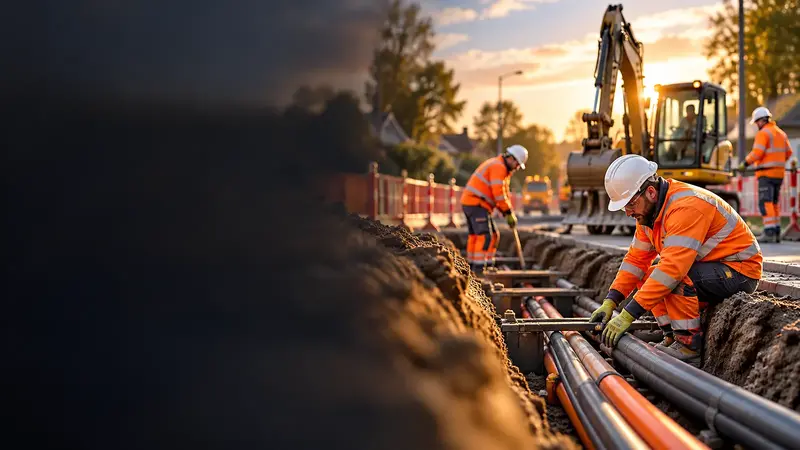
Plant finance funds heavy machines such as excavators, dozers, cranes, crushers and screeners, usually on hire purchase or a…

How much you can raise depends mainly on what the asset would sell for today, not what you paid for it. Vans, HGVs, plant and…
Used equipment finance funds second-hand machinery, plant, vehicles and specialist kit through hire purchase, leasing or a…
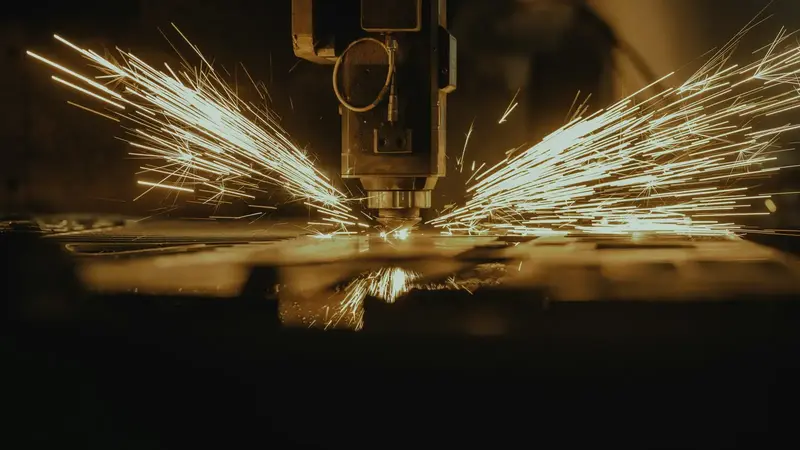
Laser cutting machine finance spreads the cost of fibre, CO2 and tube lasers, press brakes and automated sheet-metal cells over…
The right structure depends on whether you want to own the kit. Hire purchase suits equipment you will use for most of its…
Cherry picker finance spreads the cost of a mobile elevating work platform, such as a van-mounted boom, self-propelled boom,…
What our clients say
“Simon was fast, kept us updated at all stages and was a real pleasure to work with on our asset finance. I highly recommend this company: excellent service all round.”
“Spoke with Simon, who managed to get me the loan I needed promptly. The whole process was very smooth and was completed within a few days.”
“Getting a business loan can feel like a bit of a minefield, but everything was broken down for me in great detail. Will use again in the future!”
“Simon was a pleasure to deal with and helped us find a business loan that matched our growth goals and future expansion plans.”
“I couldn’t source funding for my business, but the team got in touch within an hour and had it sorted within 24 hours. Fantastic service, and I would definitely use them again.”

Chat with Smart Funding
We usually reply in seconds
Please don't share bank details or passwords here. Calls on 01244 267694.