
Oil and gas equipment finance for energy service companies
Oil and gas service companies usually fund rental tools, inspection kit, lifting equipment and offshore containers through…
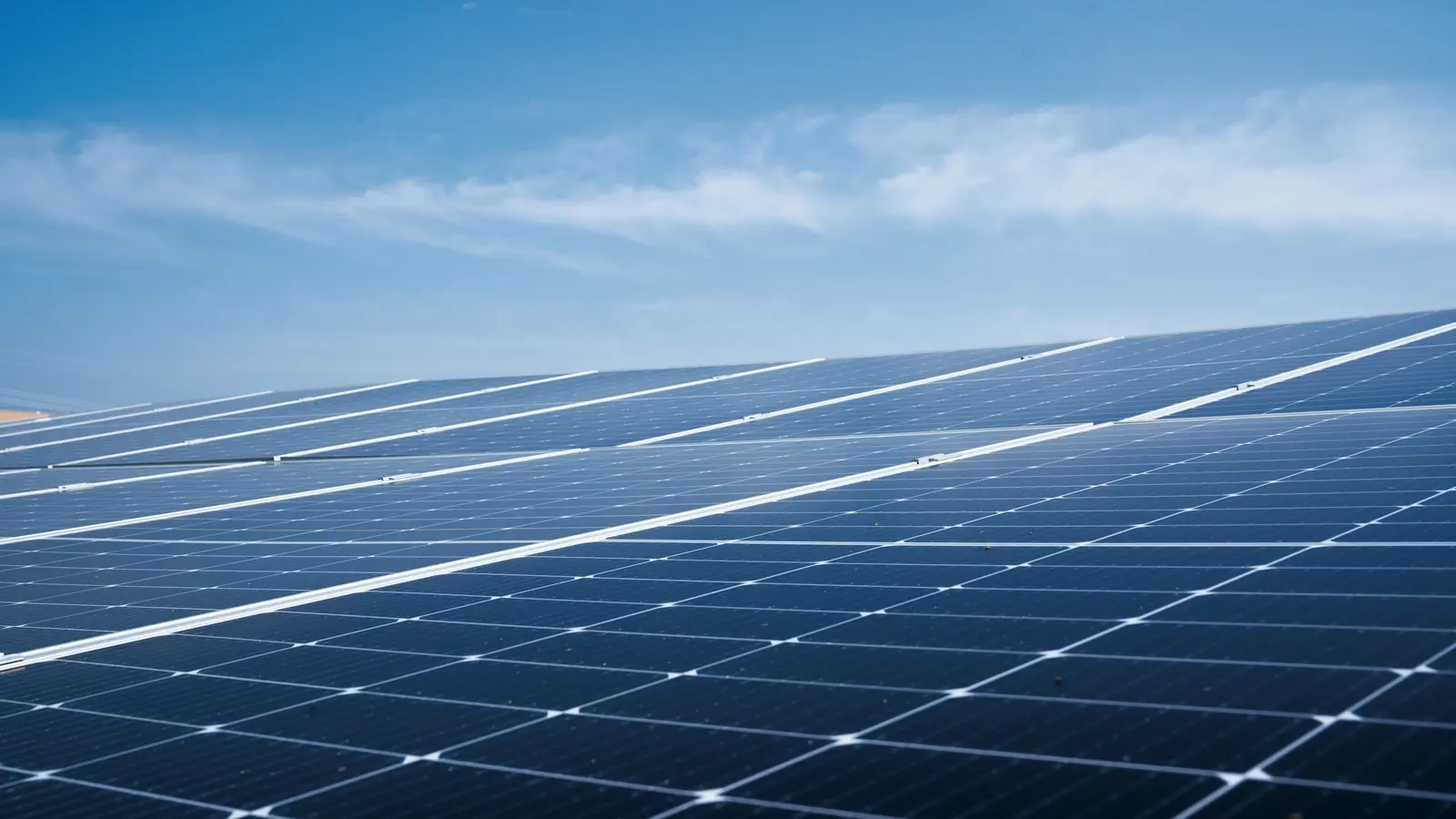
Fund solar PV, heat pumps, batteries and EV chargers, or grow a renewables installer. Compare finance routes and check a project pays its way before borrowing.
Renewable energy business loans are finance used to install renewable and energy-saving technology in your own premises, such as solar panels, heat pumps, battery storage and EV chargers, or to fund a business that works in the renewable sector, such as an installer or maintenance contractor. This guide is for business owners weighing up a project and for installers looking to grow. As a broker, Smart Funding Solutions approaches lenders that fund energy projects and helps you choose a structure your cash flow can carry.
Renewable energy finance repayments can sometimes be partly offset by lower energy bills, but only if the savings estimate is realistic.
For wider sustainability spending, such as waste reduction, greener processes or certification, our guide to green business loans covers the broader picture.
| Option | Typical use | Security |
|---|---|---|
| Hire purchase or leasing | Solar PV, batteries, heat pumps, EV chargers | The equipment |
| Unsecured business loan | Smaller projects, or kit that is hard to remove once fitted | Usually a personal guarantee |
| Secured business loan | Larger installations and whole-site upgrades | Property or other assets |
| Project finance | Generation that sells power to the grid or a third party | The project and its income |
Asset finance through hire purchase or leasing is often used for solar panels, batteries, heat pumps and EV chargers, with the equipment as security. Repayments are spread over its working life. For vehicles, see our page on electric car business finance.
Unsecured loans suit smaller projects, or cases where the equipment would be hard for a lender to recover once installed. Lenders rely mainly on your trading history and credit profile.
For larger installations, a secured business loan against property can offer bigger sums and longer terms. Your property is at risk if repayments are not kept up.
Larger generation projects that sell power to the grid or a third party may use specialist project finance, where lenders assess the site, permissions, grid connection and expected income. This is a more complex, specialist market.
Forecourts adding EV charging can see petrol station finance.
If you install or maintain renewable systems, your pressures are different: you buy panels, inverters and heat pumps up front, then wait for stage payments or final invoices. Invoice finance can bridge that gap, asset finance can fund vans, tools and access equipment, and a revolving facility can smooth uneven pipelines. Lenders look at accreditations, the quality of your customer base and how reliably you are paid.
Before borrowing, compare the monthly repayment with a cautious estimate of monthly savings or income.
Illustrative example only — not a quote or offer of finance.
Use your own quotes and the lender's actual terms. Savings depend on the site, weather, usage, energy prices and maintenance, so treat installer projections as estimates rather than guarantees.
We then approach lenders suited to your project, review their terms with you and support the application through underwriting; the lender makes the final decision. Any broker fee is disclosed separately before you proceed. Renewable projects are one of many sector needs covered in our SME loans hub.
This guide is general information, not financial advice. Lenders set their own criteria, rates and terms, and all finance is subject to status.
Not ready for the full application? Leave a few details and a broker will call you to talk it through. It is free, with no obligation.
Not necessarily. Some lenders offer green-labelled products, but the rate you are offered mainly depends on your credit profile, trading history, the amount, the term and any security, as with any business borrowing. Compare the total cost across several options rather than assuming a green product is automatically cheaper.
Yes, but you will usually need the landlord's consent to install solar panels, heat pumps or other fixed equipment, and lenders may ask to see it. Some lenders are cautious about funding kit fixed to a building you do not own, because it is hard to recover, so an unsecured business loan may suit better than asset finance. Check how long your lease has left and that it covers the finance term.
Finance terms for commercial solar panels are usually linked to the working life of the equipment, so asset finance and loan terms can run for several years. Lenders also consider your trading history, the size of the installation and any security offered. A longer term lowers monthly repayments, which can help them sit closer to the expected energy savings, but it increases the total interest. Compare the total cost at two or three different terms.
Yes. Renewable installers commonly use asset finance for vans, tools and access equipment, invoice finance to bridge the wait for stage payments, and revolving credit to smooth an uneven pipeline. Lenders look at accreditations, customer quality and payment record. Our page on energy services finance covers funding for businesses working in the sector, and the MCS installer register shows certified installers.
Sometimes. Government and local schemes for energy efficiency and renewables open and close over time, and some equipment may qualify for capital allowances. Grants are usually competitive and cover specific costs, so many businesses combine a grant with finance for the remainder. Check the GOV.UK business finance and support finder for current schemes before you apply, and ask your accountant about tax relief on the equipment.
Oil and gas service companies usually fund rental tools, inspection kit, lifting equipment and offshore containers through…

Telecoms business finance depends on how the business earns. Resellers billing monthly for lines, connectivity and hosted voice…
Freight forwarders and shipping agents mostly need working capital, because they pay carriers, ports and sometimes duty and VAT…
How a sports business is funded depends mostly on whether it is a commercial business or a community club. Commercial venues,…

Tech and media firms are usually funded according to how they earn. Managed service providers with monthly contracts can use…

Most business aircraft are funded with the aircraft itself as security, through hire purchase, an aircraft (chattel) mortgage,…
Our clients say
Trusted by UK businesses across every sector.
“Simon was fast, kept us updated at all stages and was a real pleasure to work with on our asset finance. I highly recommend this company: excellent service all round.”
“Spoke with Simon, who managed to get me the loan I needed promptly. The whole process was very smooth and was completed within a few days.”
“Getting a business loan can feel like a bit of a minefield, but everything was broken down for me in great detail. Will use again in the future!”
“Simon was a pleasure to deal with and helped us find a business loan that matched our growth goals and future expansion plans.”
“I couldn’t source funding for my business, but the team got in touch within an hour and had it sorted within 24 hours. Fantastic service, and I would definitely use them again.”
A short conversation is often enough to know which lenders will look at your case and how to present it. There is no obligation, and it is free to enquire.