

Asset finance: hire purchase, leasing and refinancing for UK businesses
The main decision in asset finance is whether you want to own the equipment. Hire purchase ends in ownership, a finance or…
How asset based lending combines debtors, stock, plant and property into one revolving facility: borrowing base, audits, covenants and typical uses.
Explore funding options Prefer a quick call back? Leave your number
“I would recommend them to anyone.”
In short
What you need to know.
The amount you can draw, called availability, is recalculated regularly from the value of those assets. It typically suits larger established businesses with a meaningful asset base that need flexible funding for growth, refinancing or acquisitions.
Businesses use asset based lending when they need a larger or more flexible facility than a single product can provide. Common uses include:
A transaction we arranged
£145,000
The funding the business needed was already sitting on the factory floor.
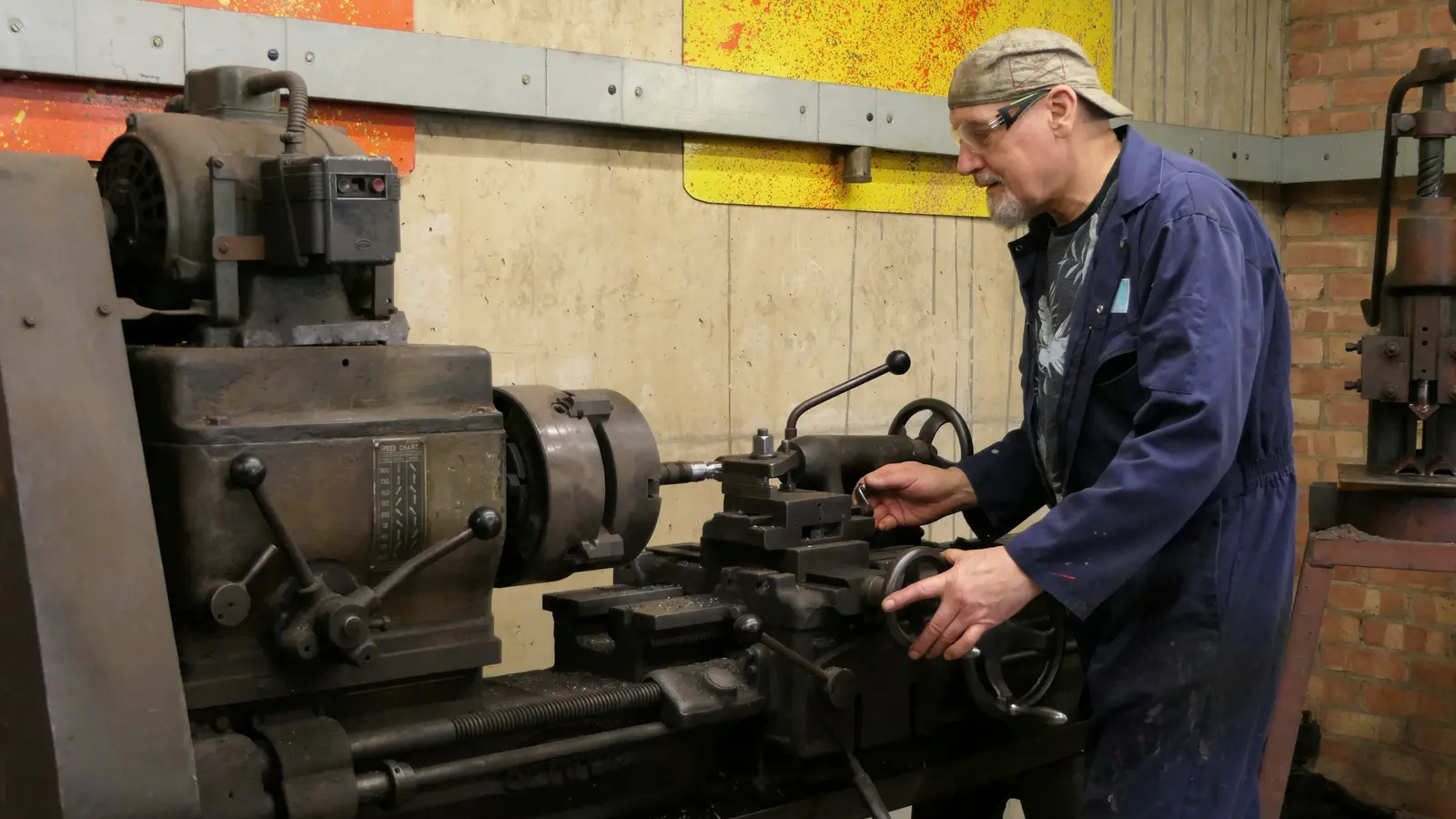
Rather than another expensive short-term unsecured loan, a manufacturer released capital from machinery it already owned.
Read the transactionAbout asset based lending
Specialist knowledge. Better outcomes.
This page is for established businesses with a substantial balance sheet, typically manufacturers, wholesalers, distributors and engineering firms, that want one flexible facility drawing on the value of their debtors, stock and equipment. Asset based lending (ABL) brings those assets together into a single revolving line that grows and shrinks with the business. Smart Funding Solutions is a broker, not a lender. We approach lenders on our panel of 300+ that offer asset based facilities, arranging funding from £10,000 to £20 million, and ABL usually sits towards the larger end of that range. For other secured and growth options, see our business finance overview.
Asset based lending is a revolving facility secured on a business's working assets, usually trade debtors plus stock, plant and machinery, and sometimes property, with the amount available recalculated regularly as those assets change. It is built around an invoice finance facility, with further lending layered on top against other assets.
Each asset class is valued and given its own advance level. Debtors are usually the core and attract the highest advance. Stock is valued by specialists, often on what it would realise in an orderly sale, and attracts a lower advance because it is harder to turn into cash. Plant and machinery is valued by independent valuers and is often funded as a term loan element within the facility, repaid over a set period. Commercial property can sometimes be added as a further term element. The lender combines these into one facility, usually with one set of documents and one relationship.
The borrowing base is the total value of eligible assets after the lender's advance levels are applied, and availability is how much of that you can draw at any moment after reserves and existing drawings. It is the number finance teams watch most closely.
Eligible assets exclude items the lender will not fund, such as debts well past due, connected-party sales, disputed invoices, slow-moving or obsolete stock, work in progress and goods held on consignment. The lender may also hold back reserves, for example for rent arrears, unpaid VAT or PAYE that could rank ahead of it in an insolvency, or retention of title claims by suppliers. Debtor availability usually updates daily or weekly as you report invoices and receipts. Stock availability is typically recalculated monthly from stock reports, with periodic revaluations.
Illustration only. The figures are round and hypothetical. A distributor has £2,000,000 of eligible debtors, £1,000,000 of eligible stock and machinery valued at £500,000. After the lender's advance levels and a small reserve, the borrowing base might be around £2,200,000. If £1,800,000 is already drawn, availability is around £400,000. If debtors rise in a busy month, availability rises too.
ABL usually suits larger, established businesses with a meaningful asset base, several years of accounts and a finance function that can produce accurate, timely reporting. Typical users include manufacturers, wholesalers and distributors, engineering and industrial businesses, and companies serving other businesses on credit terms. It is often relevant to the kind of businesses covered on our finance for large businesses page.
It is less suitable for businesses with few tangible assets, such as consultancies with a small ledger, retailers selling for cash, or early-stage companies. The setup costs, audits and reporting also make it less efficient for small facilities. In those cases invoice finance on its own, stock finance or a simpler loan may fit better.
Many businesses arrive at asset based lending because they have outgrown a patchwork of separate facilities. A typical position is an overdraft with the bank, an invoice discounting line with another funder, hire purchase on several machines and supplier credit stretched to the limit. Each lender takes its own security, sets its own covenants and sees only part of the picture, which can leave assets unused as security and make renewals slow.
An ABL facility can replace several of these with one agreement, one set of reporting and one lender that understands the whole balance sheet. The transition needs planning. Existing lenders must be repaid and release their charges, notice periods on current facilities have to be served at the right time, and finance agreements on individual machines may need settling or leaving in place outside the new facility. It is worth mapping every existing facility, its notice period and any early settlement cost before you start.
Field audits are on-site reviews in which the lender's team tests the information behind the borrowing base, and they continue for the life of the facility. Before completion, the lender usually commissions a debtor audit, stock valuation and plant and machinery valuation. Afterwards, audits are typically carried out a few times a year, depending on the lender and the size of the facility. Auditors test invoices against delivery records, check reconciliations, review credit notes and verify stock counts. You will also provide regular reports: debtor and receipts information, monthly stock reports, management accounts and covenant certificates.
ABL facilities usually carry lighter financial covenants than a cash-flow term loan, because the lender relies mainly on the assets. Common covenants include minimum availability (a buffer you must keep undrawn), a fixed charge cover test, limits on capital expenditure, and restrictions on dividends or further borrowing. Some are tested only when availability falls below a set level. Breaching a covenant can lead to reduced advances, extra fees or, in serious cases, the lender calling the facility in, so build headroom into your forecasts.
An ABL facility typically takes around four to ten weeks from initial discussions to drawdown. The audits and valuations take time to schedule and complete, legal documentation is more involved than for a single product, and existing lenders may need to agree to release security. Refinancing several facilities or funding an acquisition usually sits at the longer end. Clean reporting and fast responses to the lender's questions help.
Asset based lenders usually take a debenture with fixed charges over book debts, plant and machinery and any property, and a floating charge over stock and other assets. Debts are assigned to the lender. Personal guarantees are less common on larger facilities than on smaller loans, but many lenders ask for warranties from directors about the accuracy of information, and some request limited guarantees. Where other lenders hold security, an intercreditor or priority deed sets out who ranks where.
ABL pricing generally combines an interest charge on the money drawn, usually set as a margin over Bank of England base rate, with a service or management fee covering the administration of the facility. The debtor element may carry its own service fee in the same way as invoice finance, while term elements against plant and property carry interest on the outstanding balance. There are usually arrangement fees, valuation and audit fees, legal costs, and sometimes an unused line fee on headroom you do not draw. Facilities often have a minimum term and early termination charges. Compare total cost against the likely average drawing rather than the headline limit.
If ABL is more than you need, or does not fit your assets, consider:
Smaller businesses that want a reusable limit without the reporting of a full ABL facility can compare a simpler revolving credit facility, where the limit is usually set from turnover and bank statements.
ABL lenders focus first on the quality and realisable value of the assets, then on the business's ability to report accurately and trade profitably. They usually look at:
The debtor book: spread, concentration, credit terms, dilution and collection history
Stock: type, turnover, ageing, location and how readily it could be sold
Plant and machinery: age, condition, specification and resale market
Financial performance, cash flow forecasts and the reason for the facility
Management quality and the strength of financial controls and systems
Existing borrowing, charges and any arrears with HMRC or landlords
Advantages
Disadvantages
How the main business finance structures work. Lenders set their own terms, so treat this as a guide to the questions to ask.
| Option | How you repay | Security | Often used for |
|---|---|---|---|
| Unsecured business loan | Fixed instalments, usually monthly | No charge over assets; a personal guarantee is usually required | Growth, stock, tax bills and cash flow |
| Secured business loan | Fixed instalments, often over a longer term | A charge over property or other assets | Larger sums, property and refinancing |
| Revolving credit facility | Interest on what you draw; repay and redraw | Varies by lender and case | Recurring or uneven cash flow gaps |
| Merchant cash advance | A share of future card takings | No charge over assets | Card-taking businesses with uneven months |
| Asset finance | Regular payments over the life of the asset | The asset being financed | Equipment, vehicles and machinery |
| Invoice finance | Settled as customers pay their invoices | Your unpaid invoices | Businesses waiting on customer payment |
General information only. Every lender has its own criteria, and all finance is subject to status.
| Feature | Asset based lending | Invoice finance | Term loan |
|---|---|---|---|
| Assets used | Debtors, stock, plant and sometimes property | Debtors only | General business security, often a debenture |
| Structure | Revolving, with term elements | Revolving against invoices | Fixed amount repaid over a set term |
| Main basis for lending | Asset values and reporting | Debtor quality | Profit and cash flow |
| Flexibility | High, rises with assets | Rises with sales | Low once drawn |
| Monitoring | Field audits, valuations, regular reports | Audits and ledger reporting | Annual accounts and covenants |
| Typical user | Larger, asset-rich businesses | B2B businesses of most sizes | Profitable businesses with predictable cash flow |
We start by reviewing your debtors, stock, equipment and plans to judge whether ABL is likely to produce more useful funding than simpler products. We then prepare a proposal, approach lenders on our panel with asset based appetite in your sector, and compare advance levels, reserves, covenants, audit arrangements and total costs with you. Lenders make every credit decision. It is free to enquire; any broker fee is disclosed separately before you proceed.
Occasionally, but it is uncommon in the UK mid-market. Intangible assets are hard to value and sell, so most ABL lenders stick to debtors, stock, plant and property. Where a brand or licence has a clear resale market, a specialist may give some value, usually as a small term element rather than part of the core borrowing base.
Debts that go past the lender's ageing limit become ineligible and drop out of the borrowing base, reducing availability. If the customer becomes insolvent, the unpaid debt may also need to be repaid to the lender under a recourse facility. Credit insurance and concentration limits reduce this risk, and keeping a buffer of unused availability helps absorb shocks.
Sometimes. Because ABL relies mainly on asset values, some lenders will support a business through a loss-making period if the assets are good, reporting is reliable and there is a credible plan to return to profit. Expect closer monitoring, lower advance levels and possibly tighter covenants than for a consistently profitable business.
If your bank holds a debenture or other security, it will need to release it or agree priorities with the ABL lender, because the ABL lender usually wants first ranking over the assets it funds. Many businesses move their whole banking relationship as part of the change, but some keep a current account and card facilities with their bank.
Asset based lending usually starts with an invoice finance facility and then adds further borrowing against stock, plant and machinery and sometimes property. Invoice finance on its own only releases cash against unpaid customer invoices. ABL suits larger businesses with substantial assets across the balance sheet, while invoice finance can be simpler and quicker to set up when debtors are the main asset.
The main decision in asset finance is whether you want to own the equipment. Hire purchase ends in ownership, a finance or…
Consolidating business debt makes sense when one new repayment is affordable in quieter months and the total you will repay,…
Secured business loans let an established business borrow more, and usually over a longer term, by offering property, land,…
Choose a secured business loan when you need a larger sum over a longer term and have property or asset equity you are…
Direct lending in the UK is borrowing straight from a non-bank lender, usually a private debt fund, rather than a bank. Funds…
A £1 million business loan is usually a negotiated facility package rather than a single loan, combining term debt, asset-based…
What our clients say
“Simon was fast, kept us updated at all stages and was a real pleasure to work with on our asset finance. I highly recommend this company: excellent service all round.”
“Spoke with Simon, who managed to get me the loan I needed promptly. The whole process was very smooth and was completed within a few days.”
“Getting a business loan can feel like a bit of a minefield, but everything was broken down for me in great detail. Will use again in the future!”
“Simon was a pleasure to deal with and helped us find a business loan that matched our growth goals and future expansion plans.”
“I couldn’t source funding for my business, but the team got in touch within an hour and had it sorted within 24 hours. Fantastic service, and I would definitely use them again.”