

How to buy an architecture practice: valuation, structure and funding
To buy an architecture practice, identify a firm whose people, sectors and order book you want, then value it on normalised…

How optometrists fund buying an optical practice: goodwill loans, deposits, the NHS sight-test contract, stock and VAT checks, and what lenders look at.
Explore funding options Prefer a quick call back? Leave your number
“The team provided a very helpful and professional service.”
In short
What you need to know.
How much a lender will advance depends on the practice and the buyer. Lenders focus on profit after paying a replacement optometrist, dispensing margins, recall and contact lens scheme income, and whether NHS sight-test contracts continue.
A transaction we arranged
£137,500
£137.5K to fund an accountancy practice acquisition.
An established firm had an acquisition agreed. We structured the funding around the transaction and got it completed.
Read the transactionAbout loan to buy an opticians
Specialist knowledge. Better outcomes.
This page is for optometrists and dispensing opticians buying an independent optical practice: a first purchase by an employed optometrist, an owner adding a second branch, or a joint purchase by an optometrist and a dispensing optician. It explains what you are paying for, why the NHS sight-test contract needs care, how lenders work out what they will lend and how stock and prepaid orders can move the price. Smart Funding Solutions is a broker, not a lender: we search our panel of 300+ lenders and arrange facilities from £10,000 to £20 million. For other borrowing by optical practices, see our optometry practice finance hub.
Agree how stock will be counted and valued at completion. Frames bought years ago and still on display may be worth far less than their book value. Ask for a stock count close to completion and agree whether slow-moving lines are written down or excluded.
Patients who have paid for spectacles not yet collected, and contact lens scheme members who have paid ahead, are liabilities the buyer takes on. If you will be fulfilling orders the seller has been paid for, the price should be adjusted.
Sight tests are exempt from VAT, while the supply of spectacles is split between the exempt dispensing service and standard-rated goods. Practices apportion their income between the two, and HMRC changed the accepted methods in Revenue and Customs Brief 14 (2020). If you buy the company, an incorrect method becomes your problem, so your accountant should check how the seller has accounted for VAT, and the sale agreement should include tax warranties.
An optical practice is a clinic and a shop under one roof, and the price reflects both.
Lenders fund mainly against the profit those streams produce, not against the assets. Equipment and stock have limited resale value, and goodwill has none if the practice fails.
In England, NHS sight tests are provided under a General Ophthalmic Services contract between the commissioner and the contractor. NHS England publishes the model GOS contracts and contract variations, and its Policy Book for Eye Health sets out how commissioners manage contract applications and changes.
How the purchase is structured matters:
Every optometrist carrying out NHS sight tests must also be on the ophthalmic performers list, and all clinicians must be registered with the General Optical Council. Scotland, Wales and Northern Ireland run their own eye care contracts, with Scotland's model weighted far more towards NHS-funded eye examinations, so check the arrangements in the nation you are buying in. Unlike a dental or pharmacy purchase, there is usually no change-of-ownership registration with a healthcare regulator such as the CQC holding up completion; the NHS contract and lease tend to set the pace instead.
Illustration only, with round hypothetical figures. An employed optometrist agrees to buy a two-testing-room independent practice on a high street for £300,000 plus stock at valuation, leasehold, as an asset purchase. The seller, also an optometrist, will work two clinic days a week for six months. The buyer has £60,000 of savings. The seller agrees to defer £30,000 over eighteen months. The practice's retinal camera is near the end of its life, so a new OCT is funded separately on hire purchase. A term loan funds the remaining goodwill, completion is timed for the buyer's own GOS contract to start the same day, and a stock count the day before completion settles the stock figure. The lender tests whether the practice's profit, after allowing for the buyer's living costs and for locum cover on the days the buyer is not testing, covers the loan, the OCT agreement and the deferred payments with room to spare.
The main risk is paying for patients who were loyal to the seller rather than the practice. A planned handover, a sensible deferred element and conservative projections all help. Competition from multiples and online retailers can squeeze dispensing margins, so a practice whose profit depends on unusually high spectacle prices carries more risk than one with strong clinical and contact lens income. Stacking a goodwill loan, equipment finance and a stock facility can leave little room for a slow quarter, and personal guarantees are normal; our guide to personal guarantees explains what you are signing.
There are other ways into ownership. Becoming a joint-venture partner in an optical franchise means sharing ownership with a larger group and needs less capital; see joint-venture partner finance. Opening a new practice avoids paying for goodwill but has no patient base on day one. For a broader view of whether to borrow at all, read should you take a loan to buy a business.
Lenders start with the practice's maintainable profit and then rebuild it as it will look after you take over.
If the seller is the main testing optometrist and is leaving, the lender deducts the cost of employing or engaging a replacement. If you will do the testing yourself, it still counts your living costs. A seller who stays on for some clinics during a handover usually strengthens the case.
Lenders compare gross margin on dispensing with what they see in similar practices. A falling margin can point to discounting, poor stock control or patients buying online.
How many patients come back when recalled, and how many sight tests turn into a dispensing sale.
Contact lens scheme members and any domiciliary or enhanced service contracts.
Optical practices depend on their high street or retail location. Lenders want a lease long enough to outlast the loan, with landlord consent to assignment or a new lease agreed.
GOC registration, clinical and management experience, personal credit and the source of your deposit.
Whether a lender will fund most of the price or expect a larger buyer contribution depends on those factors. Claims that any optical purchase can be fully funded by borrowing should be treated with caution: lenders decide case by case, and the strongest applications include a meaningful contribution from the buyer.
How the main business finance structures work. Lenders set their own terms, so treat this as a guide to the questions to ask.
| Option | How you repay | Security | Often used for |
|---|---|---|---|
| Unsecured business loan | Fixed instalments, usually monthly | No charge over assets; a personal guarantee is usually required | Growth, stock, tax bills and cash flow |
| Secured business loan | Fixed instalments, often over a longer term | A charge over property or other assets | Larger sums, property and refinancing |
| Revolving credit facility | Interest on what you draw; repay and redraw | Varies by lender and case | Recurring or uneven cash flow gaps |
| Merchant cash advance | A share of future card takings | No charge over assets | Card-taking businesses with uneven months |
| Asset finance | Regular payments over the life of the asset | The asset being financed | Equipment, vehicles and machinery |
| Invoice finance | Settled as customers pay their invoices | Your unpaid invoices | Businesses waiting on customer payment |
General information only. Every lender has its own criteria, and all finance is subject to status.
| Layer | What it covers | Trade-off |
|---|---|---|
| Your deposit | The part of the price lenders will not fund, plus fees | Must be evidenced as your own funds |
| Term loan | Goodwill, the largest element | Personal guarantees and a debenture are common |
| Asset finance | New OCT or testing room equipment the practice needs soon after purchase | Keeps the main loan focused on goodwill, but adds a separate monthly payment |
| Deferred consideration | Part of the price paid to the seller after completion, sometimes linked to patient retention | Lenders usually want it to rank behind their loan |
| Stock or revolving facility | Rebuilding or widening the frame range | Short-term money, so keep it for working capital rather than the price |
| Commercial mortgage | The freehold, if included | The building becomes security and needs its own valuation |
Equipment upgrades after purchase are covered on our optical equipment finance page, and our guide to vendor finance and deferred consideration explains how seller payments are documented. For stock, see stock finance or a revolving credit facility, and if the building is part of the deal, buying your business premises.
We start from the heads of terms and the practice's figures, rebuild profit as a lender will after the seller leaves, and split the requirement into goodwill, equipment, stock and any property. We then approach lenders on our panel that understand healthcare and retail income together, and compare the offers with you on amount, term, security and conditions. Lenders make the final decision. Practice purchases need presenting as the transaction they are; a lender assessing a professional practice whose value sits in recurring fees and goodwill rather than physical assets needs to see that logic, as in an accountancy practice acquisition we arranged. It is free to enquire; any broker fee is disclosed separately before you proceed. For acquisition funding in other sectors, see our acquisition finance guide.
Not necessarily. Dispensing opticians and non-clinical investors do buy optical practices, but sight testing must be carried out by GOC-registered optometrists, and a company using a protected optical title has its own registration rules. Lenders look harder at buyers without clinical experience and will want to see who will test, on what terms and for how long.
The timetable is usually set by the legal work, landlord consent for the lease and, on an asset purchase, getting your own NHS sight-test contract in place, rather than by the lender. Several months from heads of terms to completion is common. Start the contract application and the lease discussion early.
Chains occasionally sell or close branches, and some branches move to independent ownership. The same funding principles apply, but expect less historical information by branch, limited control over staff transfers and a lease negotiated with the chain's landlord. Lenders will want branch-level figures rather than group accounts.
There is no fixed figure, because lenders set their own criteria, but most expect some personal contribution towards the price and costs. The amount depends on the practice's profits, the share of the price that is goodwill, your experience and whether property is included. Deferring part of the price to the seller can reduce what you need upfront. Our page on goodwill finance explains how lenders treat the goodwill element.
In most cases, yes. Much of the price is goodwill, which a lender cannot easily sell, so lenders usually ask the buyer to guarantee the loan personally, even when buying through a limited company. If the freehold is part of the deal, the property is normally charged too. Some buyers look at personal guarantee insurance to reduce their exposure.
To buy an architecture practice, identify a firm whose people, sectors and order book you want, then value it on normalised…

Buying a whole accountancy firm is usually funded with a term loan sized on the combined practice's maintainable profit, the…

A goodwill loan funds the part of a business price that is not bricks, equipment or stock: the client list, patient base, NHS…

Law firm acquisitions are usually funded with a term loan repaid from the enlarged firm’s profits, alongside the buyer’s own…
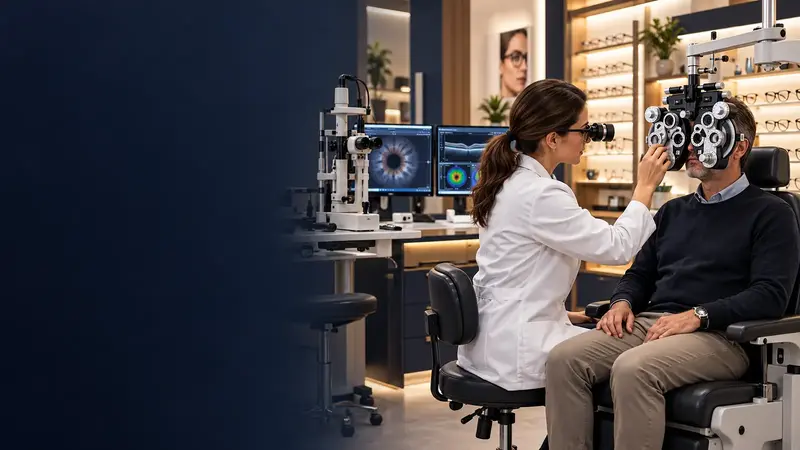
Optical equipment finance spreads the cost of OCT scanners, retinal cameras, visual field analysers, refraction units and…
Optical franchise finance usually means funding a joint-venture partner's buy-in: the price of shares in a store company you…
What our clients say
“Simon was fast, kept us updated at all stages and was a real pleasure to work with on our asset finance. I highly recommend this company: excellent service all round.”
“Spoke with Simon, who managed to get me the loan I needed promptly. The whole process was very smooth and was completed within a few days.”
“Getting a business loan can feel like a bit of a minefield, but everything was broken down for me in great detail. Will use again in the future!”
“Simon was a pleasure to deal with and helped us find a business loan that matched our growth goals and future expansion plans.”
“I couldn’t source funding for my business, but the team got in touch within an hour and had it sorted within 24 hours. Fantastic service, and I would definitely use them again.”